Category: Food

  • Sustainable Southern Living: A Guide

    Sustainable Southern Living: A Guide

    Here in the South, sustainable living was a way of life once upon a time. Our grandmothers and grandfathers were committed to being wasteless and resourceful. Nowadays, in the age of prepackaged foods and paper towels, life may be easier, but not necessarily healthier—for us or the earth.

    In this guide, we’re sharing easy lifestyle shifts you can make to live more sustainably, plus insightful points from Compost Nashville that’ll leave you ready to begin your journey to a greener life.

    photo of rotten vegetables
    Image: Yan Krukau

    Sustainability Starts in the Soil

    Compost Nashville is a company pioneering big changes in Nashville’s sustainability profile. “Compost” is essentially a nutrient dense combination of organic materials that can be used to improve soil health, grow better plants, and more.

    Micah Puncochar, founder of Compost Nashville, grew up gardening with his mom, and, like most kids, wasn’t completely sold at first with being one with the dirt-work.

    “I loved nature,” he says, “but I didn’t love the hard work that went into gardening.” Ironically enough,  Micah went on to later own a landscaping business after his time in the Peace Corps, where he learned many people were not composting in their yards. “I saw the real life impacts of composting. Farmers who used compost in their fields harvested more quickly, used fewer synthetic fertilizers and pesticides, and harvested more per plant than those grown without compost.”

    On the outside looking in, composting may seem easy—all you have to do is combine veggie, fruit, and gardening scraps with high-carbon items (fallen leaves, woodchips, sawdust). However, let’s clear the air: getting the correct ratio is not easy.

    “Getting that perfect mix is hard for people,” says Micah. “Lots of things can go wrong, many people try it, but it doesn’t go well, so they stop.”

    This is why Micah founded and created an easy way for people to not only repurpose their scraps, but also get a return value—a 100% positive-sum game.

    Catarina Muschaweck, director of marketing and communications for Compost Nashville, broke down how they have made composting as simple as taking the garbage out.

    “Instead of composting on their own, our composters simply place their food scraps and other compostable material inside the container we provide,” she says. “We collect the material and return the finished compost to our residential customers.”

    Micah and Catarina are both dutifully committed to spreading the good news of sustainable living, both agreeing that even the smallest changes can make the biggest waves over time.

    “New norms are created when a large enough group of people do an activity for a long enough duration—so we’re riding that wave until composting becomes a sustainable norm.”

    Image: Too Good to Go

    Treats and Eats…For Cheap!

    Unfortunately, not all food-waste salvaging can be done at home. Nashville is a blooming metropolis of the culinary world with new restaurants opening every day. And of course, it’s no secret the restaurant industry is a significant contributor to food waste.

    Joining in on the fight to end food waste is the Too Good To Go app, specifically curated to work with participating restaurants on selling “surprise bags” of surplus foods every day at a heavily discounted rate.

    End food waste… and eat delicious foods cheap? Count me in! Download the app to see what restaurants are participating in your city (in the South, that includes Nashville, Atlanta, Charlotte, Raleigh-Durham, Charleston, Columbia, and Memphis). You might find a few of your favorite local haunts.

    bag with green apples and eggplants
    Image: Anna Shvets

    Small Steps to Start Today

    As Micah and Catarina pointed out, small steps in the right direction are the best ways to make big impacts. Sustainable living practices need to be, well, sustainable!

    Here are a few of our favorite ways to live a little greener (and maybe save some money too):

    1. Buy Reusable: Single-use items are overrated, expensive, and bad for the environment. Cloth paper towels, silicone bags, glass water bottles, stainless steel straws, and reusable grocery bags are easy purchases you can make once instead of once every week.
    2. Source Local: Sourcing your favorite produce and meats from local farmers and ranchers is a great way to live a little greener. Supporting locally grown and raised products has a positive impact on the environment and your local economy.
    3. Turn the Tap: A lot of us (including myself) have a bad habit of leaving the water running, whether we’re washing dishes, brushing our teeth, or cooking and just forget it’s on. Be mindful of how much you leave the water running, run full loads in the dishwasher and washing machine, and collect rainwater to use in your gardening to ease up on the water bill and your carbon footprint.
    4. Low Power Mode: High energy bills are annoying and harmful to the environment. Let the sun emit its natural light, unplug items not in use, light some candles for a fun ambiance, and find energy-efficient bulbs to better your day-to-day life.
    5. Make it Fun: Turning tasks into games is the best way to make habits enjoyable. Compete with family and friends to win a prize at the end of the month or download apps like JouleBug to gamify sustainable living practices.

    Want to see sustainability in practice around the region? Click here.

  • Planning on Canning This Season? Woodhill Cottage Shares Insider Tips to Improve Your Process

    Planning on Canning This Season? Woodhill Cottage Shares Insider Tips to Improve Your Process

    Strawberry season is here, and it’s as sweet as ever. If you’ve ever visited a u-pick farm, you know that berries are the sweetest this time of year right off the plant. If we could preserve that freshness in a jar to enjoy year-round, most of us would. But we have good news: canning at home makes it possible. 

    Although the process of canning and preserving might seem daunting at first, we’ve gathered a few pro tips to help you pick up a time-honored craft. Birmingham-based Jenny McCain, owner and founder of Woodhill Cottage—the gold standard for small-batch conserves and jams—says smart techniques make all the difference.. 

    She would know—her bustling jam business grew purely by word of mouth.

    Image: Mary Fehr

    “As people moved into my neighborhood, I would take them homemade jam and a plate of hot biscuits to welcome them,” she says. Then, more and more people began requesting her conserves and jams. A lawyer by day, she runs her conserve and jam business, Woodhill Cottage, as a creative outlet. “I wanted something where every jar tasted like you are eating the fresh fruit,” says McCain. 

    Using her grandmother’s recipes and staying committed to tried-and-true old-time methods, she’s built a business with the intent to provide quality products that taste as if you made them yourself. Canning is like cooking; it undoubtedly takes trial, error, practice, and time. But if you’ are attempting to can for the first time, she shares a few insider tips that can give you a head start.

    Image: Mary Fehr

    Keep the Ingredients Simple

    Simple ingredients can make all the difference when making preserves., and many times better when making preserves. 

    “Keep it simple. I find the most straightforward recipes are the best, especially ones that have been around for a while. No need to reinvent the wheel,” she says. 

    Start with High-Quality Products

    After researching and landing on the recipe you want to use for preserves, you’ll want to think about your produce. In the South, local farmers’ markets are a great place to source fresh fruits and vegetables. 

    “The goal is always to find the best possible products. And, of course, this means they must be fresh and in season,” McCain says. Peak season for strawberries in the South is April and May, so now is the time to plan that trip to your local farmer’s market if you’re looking for strawberries. 

    Carve Out Dedicated Time

    As with most cooking processes, it’s essential to dedicate enough time for canning. 

    “Block out several hours for canning so you aren’t rushed. I think first thing early in the morning is a great time. And, always, always, gather all of your ingredients before you start,” she explains. 

    If you’re canning for the first time, carving out additional time in the beginning is essential. Speed will come as you improve your process, but remember that canning is time-intensive. The process doesn’t happen overnight. Patience is a virtue, they say.

    Use Produce Immediately 

    It’s always best to buy fresh fruit and vegetables and use them as soon as possible.

     “Buy your fruit just before you plan to make your jam, ideally the day of or the day before. You simply can’t let it sit three or four days before you use it if you want a good end product,” says McCain. 

    You want to preserve the fruit at its peak of freshness, and this is right after it is picked or purchased. 

    Use the Right Tools

    A craftsperson is only ever as good as the tools they work with—likewise, the tools you use when canning matter. 

    “I used everything from a paring knife to a regular teaspoon, until I settled on a strawberry huller as the most efficient tool for coring strawberries. You really do learn by doing,” she explains. 

    Finding which tools work best for you and your canning process might take several attempts and trial and error, but the result is worth the effort.

    Use a Copper Pot

    It might take some practice and multiple attempts to fine-tune your canning process. Before finding the one that works best for her, McCain initially tried many different pots, from All-Clad stainless steel cookware to cast iron. 

    “I really love the classic copper jam pot for its even distribution of heat and wide cooking area,” she shares. 

    Image: Mary Fehr

    Thankfully, if your first batch of preserves doesn’t turn out as you had hoped or you’re short on time, you can conveniently order homemade Strawberry Conserve, Peach Conserve, and Tomato Jam right from Woodhill Cottage’s website. 

    With flat-rate shipping, Woodhill Cottage delivers right to your door. Your biscuit— and your taste buds— will thank you, but if you end up ordering more and forgoing the canning process altogether, we understand that sentiment, too. 

    We’re already fans of the Woodhill Cottage’s Strawberry Conserve, and we can’t wait to try the Peach Conserve and Tomato Jam.

  • Deviled Strawberries Are the Tea Room Treat You Didn’t Know You Needed

    Deviled Strawberries Are the Tea Room Treat You Didn’t Know You Needed

    If there’s one thing the South knows how to do, it’s turn something simple into something special. Case in point? Deviled strawberries—an irresistible little bite that’s turning heads and taste buds at CW Organics, an herbal tea room tucked away in Ridgeland, Mississippi.

    At the heart of this charming spot is Caroline Warner, a lifelong herbalist whose path to tea and treats is Delta deep.

    “I’m originally from the Mississippi Delta, Rolling Fork, and have always had deep roots in the South,” she says. “I’ve been an herbalist for over 25 years, long before herbalism was as trendy as it is today. My path started with a love for natural remedies, gardening, and a deep respect for plant medicine. Over the years, I turned that passion into a business—formulating teas, tinctures, and organic skincare with a focus on wellness and tradition. My journey has been anything but linear, but every step has led me closer to creating a space that feels like home—for myself and for my customers.”

    That sense of home is exactly what CW Organics exudes. Originally opened as a small herbal apothecary, it has since blossomed into a full tea room with a curated menu, cozy interiors, and a vibe that invites guests to slow down and stay awhile.

    “CW Organics started as a small herbal apothecary—just me, my remedies, and a whole lot of heart,” Caroline shares. “I opened the storefront over four years ago, and in that time, it has evolved into a full Tea Room with a small but mighty kitchen, a curated selection of teas, and a cozy space for people to slow down and savor life. Since transitioning to a Tea Room, we’ve become a bit of a hidden gem in Ridgeland. Locals say there’s nothing else like it around here—and I think that’s part of the magic. It’s a place where you can sip, unwind, and feel taken care of. I love being able to offer something beautiful and grounding in a fast-paced world.”

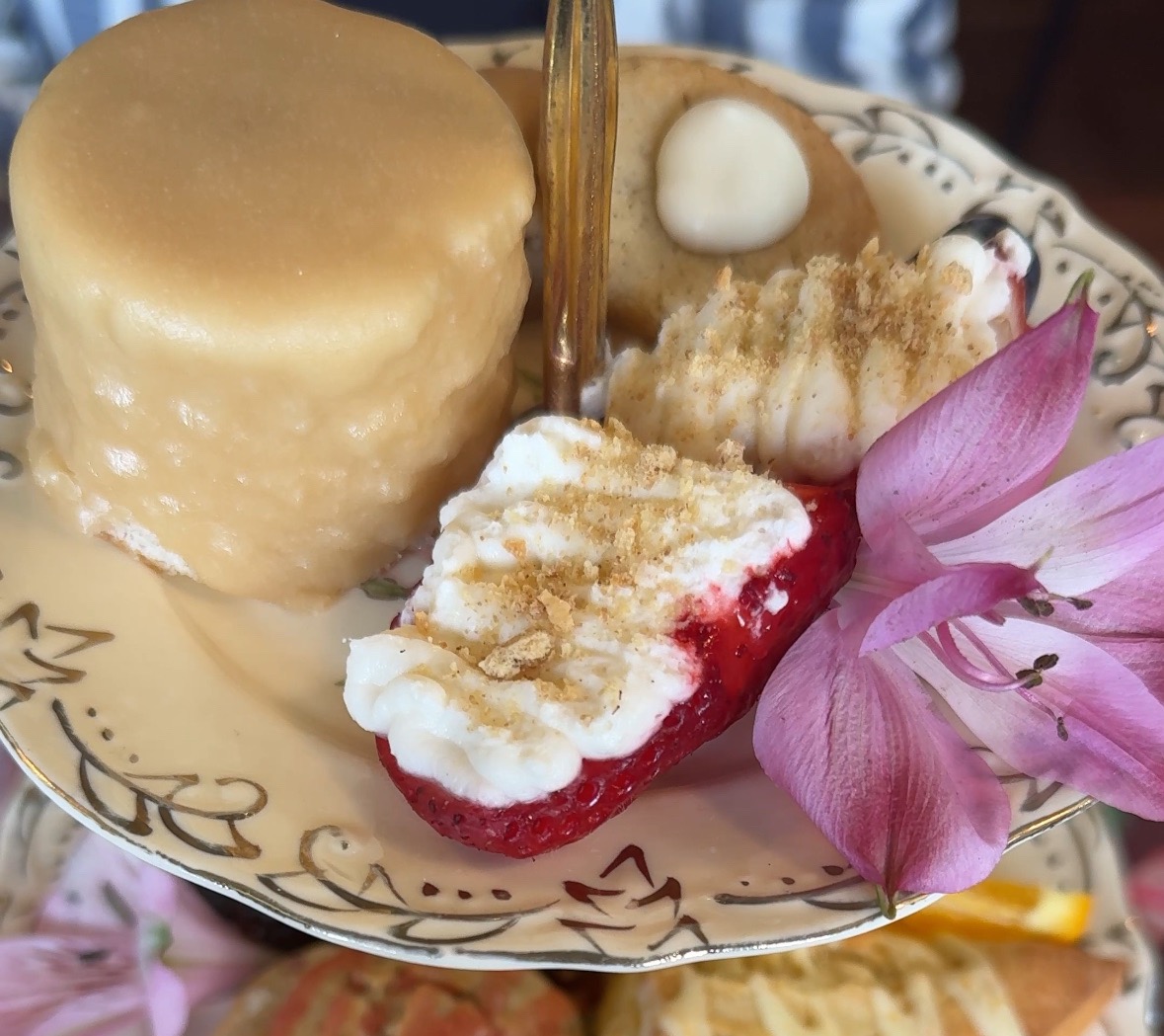
    Among the tearoom’s most beloved menu items are the Deviled Strawberries—a sweet and unexpected twist on a Southern classic.

    “The Deviled Strawberries came from a playful twist on a Southern classic—deviled eggs,” she explains. “I wanted to create a bite-sized treat that was fun, unexpected, and still felt nostalgic. They’re fresh strawberries filled with a sweet, creamy filling that gives off those Southern-potluck-meets-garden-party vibes. Guests light up when they see them—and once they try one, they usually go back for more! It’s become one of our most popular delicacies, especially for tea parties and special events.”

    Though Caroline is keeping her full recipe under wraps, she offers just enough guidance for curious home cooks to attempt their own version:

    “Start with fresh, ripe strawberries. Hollow them out just slightly. Then blend cream cheese with a touch of powdered sugar, a dash of vanilla, and a whisper of citrus zest for brightness. Pipe the filling in like you would a deviled egg. Finish with a sprinkle of graham cracker crumbs or a drizzle of honey if you’re feeling fancy,” she says. “They’re simple but so charming—and you can definitely put your own spin on them!”

    Deviled Strawberries

    Course Dessert
    Cuisine American

    Ingredients
      

    • 1 pound Strawberries rinsed and hulled
    • 8 oz Cream cheese softened
    • 1/4 cup Powdered sugar or to taste
    • 1 tsp Vanilla extract
    • 1/2 tsp Lemon or orange zest
    • Graham cracker crumbs or drizzled honey to top (optional)

    Instructions
     

    • Slice the tops off the strawberries and carefully scoop out a small portion to create a cavity.
    • In a mixing bowl, blend the cream cheese, powdered sugar, vanilla, and zest until smooth.
    • Pipe the mixture into the hollowed-out strawberries.
    • Garnish with graham cracker crumbs or a drizzle of honey.
    • Chill until serving and enjoy at your next gathering—or keep them all to yourself. We won’t tell.
  • Why You Should Care Where Your Bourbon Comes From (Hint: It’s the Dirt)

    Why You Should Care Where Your Bourbon Comes From (Hint: It’s the Dirt)

    We all know the South can grow just about anything—peaches, peanuts, pecans, and more—but bourbon? Turns out, it’s not just a Kentucky claim to fame. In Statesville, North Carolina, Southern Distilling Company is changing the spirits game: they aren’t just making great bourbon, they’re doing it with purpose. And that purpose starts in the dirt.

    Pete Barger, co-founder of Southern Distilling Company alongside his wife Vienna, has agriculture in his DNA. 

    “The impetus for this whole project was to start a family business, and we have this beautiful farm in Statesville,” says Pete Barger, co-founder of Southern Distilling. “We wanted a business that was directly tied to agriculture.”

    Originally, Pete and Vienna thought they might grow grapes and make wine. But with a little more research, they new wine wouldn’t be the most…fruitful. They pivoted, and their bourbon-based empire took root.

    Pete and Vienna | Image: Southern Distilling Company

    A Spirit Grown from the Ground Up

    From the beginning, the connection to agriculture wasn’t a marketing gimmick—it was the foundation of the Barger’s business. By definition, bourbon must be comprised of 51% corn, so the quality of the crop is of utmost importance. But in the early days of bourbon making, Pete noticed inconsistencies in the quality of corn he was receiving from farmers.

    “Product quality starts with the corn,” Pete says. “And if you want to control it, you’ve gotta grow it.”

    So that’s exactly what they did. Southern Distilling now works hand-in-hand with multiple growers across 5,000 central North Carolina acres to produce not just corn, but rye and wheat—all to their specifications, and all using regenerative practices. 

    “What’s interesting about regenerative agriculture is that these are not new ideas—it’s a new term, but it’s a new term for an old way of doing agriculture,” he says. “It’s a little like going back to the future.” 

    Techniques like crop rotation, overwintering with nitrogen-fixing plants, and no-till seeding are all practices his father taught him growing up on the farm. 

    “Sometimes we have amazing technology and sometimes we let the technology get the best of our common sense,” he adds. “This is getting back to good common sense.”

    Image: Southern Distilling Company

    Sustainability Beyond Soil

    Distilling is notoriously resource-intensive. But Pete, a mechanical engineer by training, saw an opportunity to overhaul the distilling process 

    “We use a lot less energy than most of the counterparts our size,” he says. “Our processes are much more efficient, we use a lot of automation and controls that increase efficiency but we’re also scavenging waste heat in the process.”

    That means zero gas burned during the cook cycles and smart energy choices like evaporative cooling, which replaces high-powered chillers. Water, too, plays a crucial role. And here, not a drop is wasted. 

    “Every single gallon of process water we use goes right back into the ag cycle,” Pete explains. “We fill up three big tanker trucks every day. Those tanker trucks are taking the spent grains, and all of that spent grain gets fed to beef and dairy cattle. Anything that does not get directly fed back to cattle goes into a lagoon and is used as a secondary fertilizer.”

    Now, instead of having to pump up to 20,000 gallons of water each day, the water has already been provided in the form of a recycled, organic product. 

    Image: Southern Distilling Company

    Why It Matters

    Southern Distilling’s own Southern Star bourbon line has turned heads—like being the only non-Kentucky bourbon to ever win the New York World Spirits Competition in its category. But what’s in your glass isn’t just about awards, it’s about values.

    “The quality of a product starts on the farm,” Pete says. “From there, it’s not enough to have great grain, you have to have fantastic processes.”

    The Southern Star brand speaks for itself, but the distillery also operates as a contract distiller for some 160 labels—including celebrity-backed Brothers Bond. When working with clients, Pete helps carefully concoct unique blends from their massive aging inventory. So how does bourbon blending work?

    “You can’t paint a masterpiece with just a single color on the palette,” Pete says. “We’ve worked really hard on our 65,000-barrel inventory to create a really broad palette of colors to blend things.”

    Image: Southern Distilling Company

    So what should you look for next time you pour a drink? Quality isn’t always defined by catchy labels or high pricetags, it goes all the way back to the seed, so pay attention to where your favorite comes from.

    In a glass of Southern Star, Brothers Bond, or any contract spirit hailing from Southern Distilling, you’re tasting more than bourbon: it’s the yield of rotational crops, the energy of recaptured heat, the wisdom of generations of old-fashioned farmers, and the vision of a hometown company that believes quality starts with roots. And that’ll always go down smooth.

    Find more stories from around the South here.

  • Art and Appetite: A Bentonville Dining Experience Inside a Restored Church

    Art and Appetite: A Bentonville Dining Experience Inside a Restored Church

    Featured image: Tim Hursley

    In Bentonville, Arkansas, an artsy small town nestled into the foothills of the Ozark Mountains, The Preacher’s Son has a certain energy during Friday night dinner. Popular enough to need reservations, every table at this restaurant is filled, including the curved benches surrounding a table in the middle, where a group of women dressed to impress are enjoying cocktail hour.

    We’re seated under a stunning art glass window depicting butterflies flitting around what I’m almost certain is a beech tree.

    The Preacher’s Son makes the most of its unconventional location in a former church dating to 1904. This Gothic Revival building retains its church-like charm, with a bell tower complete with 288 five-inch gold bells and a stone cross rising above its multi-gabled roof. Inside, dark wooden beams soar to a domed finish, a sharp contrast to the stark painted white brick. Tall ceilings and numerous cathedral windows give it a light-drenched feel in daylight, while earth-toned furniture keeps it grounded.

    Image: Tim Hursley

    When the church relocated, it took its stained-glass windows, leaving behind empty frames. To transform these spaces, the Ropeswing Hospitality Group—founded by Tom and Steuart Walton—tapped renowned Arkansas watercolor artist George Dombek. He traveled to Germany to oversee the meticulous process of translating his watercolors into glass—painting with enamel before firing each piece in a kiln. 

    The result: striking art glass panels featuring Dombek’s signature black-and-white trees and bicycles, brought to life with vibrant bursts of color from delicate butterflies and birds. These intricate details infuse the space with a unique, artistic character.

    “My inspiration is nature,” Dombek said. “There’s something I see I’m visually attracted to, but I certainly don’t necessarily stay true to the image that I’m seeing.”

    Now, his artwork is woven into the dining experience at The Preacher’s Son, adding a touch of Gothic elegance to the space.

    “(When artwork is displayed in a museum), people walk by and see it and then maybe stop. Maybe they don’t. But at The Preacher’s Son, it’s an opportunity for people to sit there for 45 minutes and experience the work,” Dombek said.

    Image: Danyelle Perry / Travel South

    Bentonville itself is a community transformed by art. In 2011, Walmart heiress Alice Walton opened a free world-class art museum, Crystal Bridges Museum of American Art. The museum began drawing visitors from all over the world, creating opportunities and drawing new culinary talent to the area. 

    A wave of new restaurants opened, embracing the area’s agricultural roots and leaning into farm-to-table dining. Among them, The Preacher’s Son opened in 2016 under the Ropeswing Hospitality Group. The restaurant quickly earned acclaim, contributing to Bentonville’s growing list of James Beard nominations—including, most recently, a recognition for Outstanding Hospitality in 2022.

    At The Preacher’s Son, works of art are everywhere, from the windows to the drinks and the food. At the helm is Executive Chef Neal Gray, who crafts culinary artistry from locally sourced ingredients. He takes a “less is more” approach, dressing dishes with an understated elegance and allowing ingredients to speak for themselves.

    Image: Provided

    The attention to detail shows. From my seat, I watch as the bartender crafts my pistachio old-fashioned. Pistachio-infused bourbon is blended with rare falernum and bitters, creating a rich, golden-brown swirl. The finishing touch—a single, oversized ice cube—drops into the glass, swirling amber liquid that catches the light. The pistachio infusion provides the perfect touch to make the drink feel like a special treat. I sip it as we enjoy the buzz of conversations around us.

    Our meal starts with croquettes, where Gray gets to show off his French-style culinary roots from his days at the French Laundry in California. This Southern version is stuffed with pimento cheese and resembles a hush puppy. It’s so delicious, we left not a crumb behind.

    Our entrées arrive, tempting and beautifully plated. I dive into the monkfish, sweetly tender and draped in a rich brown butter and walnut sauce. Across the table, my husband’s duck breast is served with a vibrant pop of color from red cabbage and carrot, making for a stunning presentation.

    After dinner, we duck downstairs to check out The Undercroft, a basement bar with a traditional speakeasy feel with dark furnishings. It serves a similar bar menu to The Preacher’s Son, with limited food offerings. The rooftop bar offers seasonal ambiance and views of the town, weather permitting.

    Wherever you choose to sit during a visit to The Preacher’s Son, make sure to drink in the ambiance of a place that is a work of art in and of itself.

    Note: George Dombek is hosting an open studio from 2 p.m. to 6 p.m. on April 26 & 27, May 3 & 4 and May 10 & 11.

    Looking for more restaurant news and reviews? Click here.

  • How a Nashville Farm is Cooling Down the City and Feeding the Community

    How a Nashville Farm is Cooling Down the City and Feeding the Community

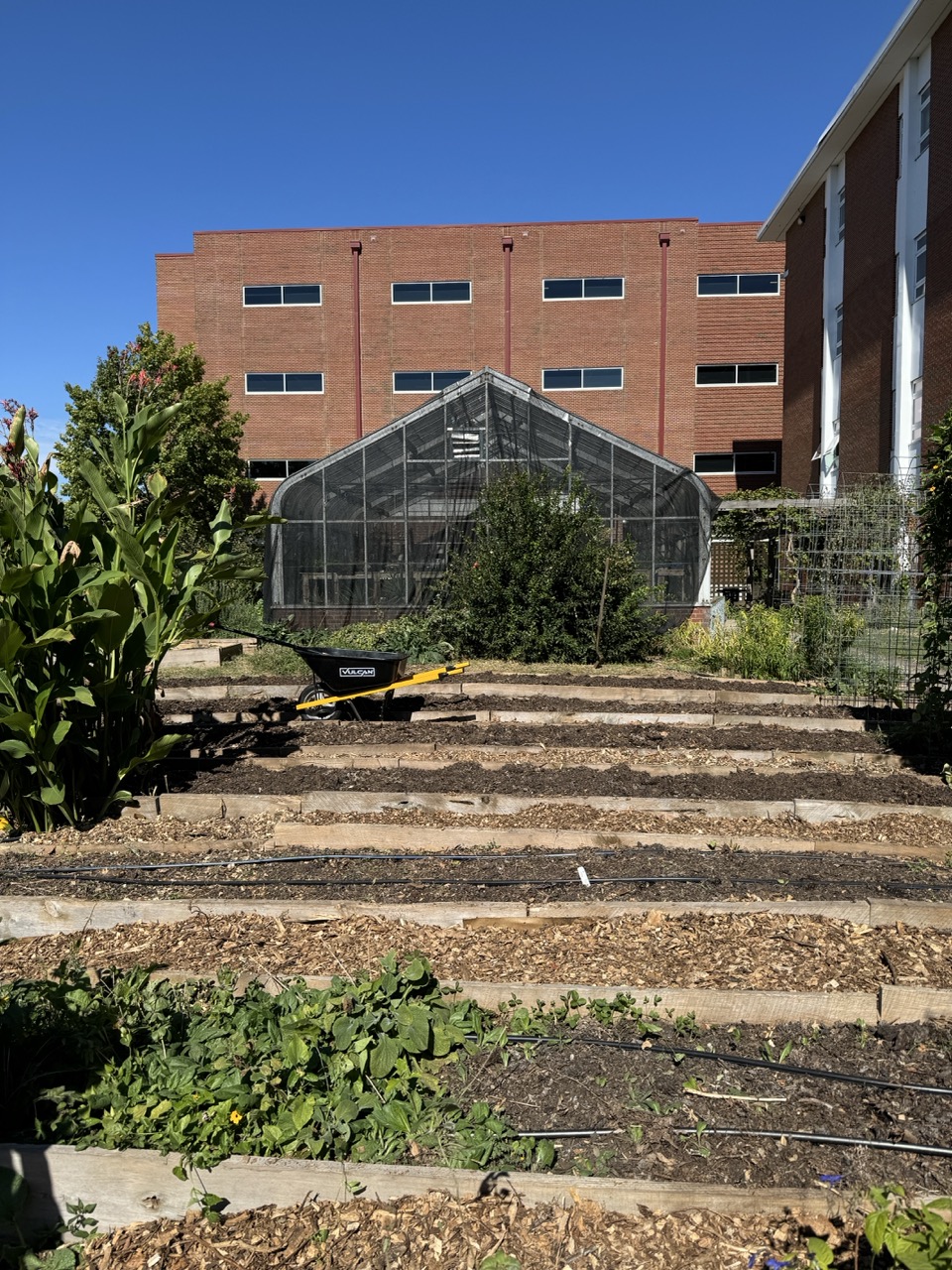
    Just a stone’s throw from downtown Nashville, Trevecca Nazarene University stands as a flower-dotted campus in a concrete jungle—an oasis of growth, learning, and prosperity that fills all teachers, faculty, and visitors with an overwhelming takeaway: in everything you do, leave the world better than you found it. 

    While I’m sure this mission is put into practice in classrooms, it was the grounds (and what they signify) that caught my attention. 

    According to Jason Adkins, environmental projects coordinator and farm manager at Trevecca, the zip code where the university is located has a high unemployment and poverty rate. Only 17% of the area is covered by canopy, making it up to 13 degrees hotter than surrounding neighborhoods. And in an already blazing Tennessee summer, that discrepancy is even more palpable… and dangerous. 

    Greenhouse on Trevecca campus | Image: Kellie Walton

    In addition to hotter temperatures, the zip code is in a food desert—meaning access to healthy, high-quality food and groceries is very limited. So, how do you remedy a problem like that?

    “We plant gardens, educate kids to learn to garden, and implement practical ways to address food access,” Adkins shares. 

    On campus, you’ll find everything from greenhouses to livestock and rows of gardens and trees, all with a mutually beneficial goal of teaching agriculture and nurturing the community. On its perimeter, you’ll find fruit trees providing food to the local community. 

    Fig from Trevecca’s Urban Farm | Image: Kellie Walton

    It starts with the seed: seedlings are sewn, often during classes or camps aimed at teaching kids how to garden, either in the greenhouses or around campus. Then, the Trevecca Urban Farm program donates much of its harvest—including produce and eggs—to two on-campus food banks: one for elderly residents and one for Rebecca’s House, which supports students facing food insecurity.

    Speaking of food insecurity, some 50% of imported food is wasted in the United States (which, Adkins notes, is enough to feed all Americans experiencing food insecurity). At Trevecca, the farm collects 500 to 1,000 pounds of food scraps from around campus each week, using it for compost, animal bedding, and eventually, rich soil. Coffee grounds? Those go straight to the worm farm—because, according to Adkins, is “the best fertilizer you can get.” 

    Trevecca’s TreeCycle Program | Image: Kellie Walton

    Every year, hundreds of students—from elementary school kids to college interns—step onto the farm to get their hands in the dirt and learn about sustainable agriculture. One of the farm’s most exciting programs is TreeCycle, funded by a $50,000 grant to help cool down Nashville’s hottest neighborhoods.

    Through TreeCycle, local kids hop on donated bikes (fixed up at the farm—another hands-on educational initiative) and ride through the neighborhood, planting trees to bring shade and cleaner air to underserved areas. 

    And then there are the goats—easily the farm’s biggest crowd-pleasers. 

    Goat at Trevecca Nazarene University | Image: Kellie Walton

    “They clear land, they’ve got charisma, and they bring people in,” Adkins laughs. They also provide milk for soaps made right on campus, and yes—there’s goat yoga.

    If you visit the farm on a tour or for an event, you’ll spot a quilt on the barn’s exterior…but it’s not just decoration. The design is a nod to Denise Boone, Trevecca’s first lady, whose mother’s family quilt inspired the pattern. Now, it’s nabbed a spot on the Tennessee Department of Agriculture’s Quilting Trail. 

    Trevecca Urban Farm isn’t about making a profit, it’s about making an impact. 

    Ducks at Trevecca Nazarene University | Image: Kellie Walton

    “This is nonpartisan work—everyone eats,” says Adkins. 

    Through farm camps, food education, composting, conservation, and good old-fashioned hard work, Trevecca is showing that urban farming is not only possible, it’s imperative. And with a little help from goats, trees, and a whole lot of community spirit, they’re proving that sustainability can be fun, too.
    To learn more, visit trevecca.edu/community-life/urban-farm-and-garden.

  • Vidalia Onions Are Back—Here’s Why They’re Worth the Hype

    Vidalia Onions Are Back—Here’s Why They’re Worth the Hype

    Featured image: Donna Sanders

    “Vidalia onions aren’t just the most famous onions in the world; I think they may be the only famous onions in the world.”
    — Chef Bobby Flay

    Sweet Vidalia onions have pushed up through the earth and are ready for harvest in early April. | Image: Donna Sanders

    This time of year, the 50-mile radius surrounding Vidalia, Georgia, is basically a nonstop sea of green. It’s all the onions, those wonderful sweet but somehow still savory Vidalia onions we only get from spring through summer.

    In fact, Vidalias have become a sign of spring, like the start of baseball season and pools reopening. They’re obviously a Southern favorite. But they’re even more eagerly anticipated in the Northeast as a sign that it’s safe to go back outside.

    As Chef Flay sagely noted, Vidalia’s are indeed world-famous—if you don’t know about ‘em, you’re the one who’s out of the loop. They’ve been onboard for Hollywood movies and driven campaigns promoting Nashville’s also world-famous music. They’re in-demand by chefs and consumers alike. And they always sell out by early September. Every time.

    So today, the region is still that shimmering sea of emerald green. But with a flick of the switch, the tractors start to roll. In mere days, the green is gone and the Vidalia onion crop is sitting aboveground, ready to dry for a bit and then start making its way to you starting in mid-April. It’s a dramatic quick shift in scenery.

    Plowed Vidalia onions dry on the ground awaiting collection after harvest. | Image: Donna Sanders

    John Shuman’s been watching that happen for over 50 years—not coincidentally, that’s how long the President and CEO of Shuman Farms has been on the planet. Astonishingly, in agricultural terms, where we think of everything being as old as apples, he was among the first generation to be born into today’s Vidalia onion business.

    That’s because the Vidalia onion was nothing more than a happy accident, a blessed coincidence. It should have never happened. But about 100 years ago, it did.

    In the 1930s, an onion farmer in Vidalia named Mose Coleman had a contract with a local grocer market to deliver a spring crop of conventional fiery-hot onions. Onions aren’t planted from seed in the fields – they’re handset as small green shoots (hand-harvested, too, by the millions and millions). A late freeze wiped out the Coleman’s crop and he couldn’t find more seedlings anywhere. He was frantic and facing ruin. He finally found a farmer out West who was willing to ship a train carload of an onion they were growing out there (you would recognize it today as a grandparent of the big, semi-sweet-but-still-quite-hot onion bomb you see deep-fried as an appetizer to pick on in steakhouses).

    But when that onion was planted in the South Georgia soil, it came up so sweet you could eat it like an apple (and people do). Coleman thought he was ruined. But the store manager was desperate and decided to give ‘em a try. As you know by now, those were Vidalia onions and they were an instant hit.

    But only with the locals. Amazingly, folks pretty much just kept the news to themselves. Over years, the reputation began to grow and travelers would come through looking for “those sweet onions from Vidalia.” A legend was blooming.

    But it wasn’t until the 1980s that some farmers with marketing savvy realized the Vidalia onion just might be of interest to people outside the 50-mile region where they’re officially grown. An industry was born—and fast.

    By the 1990s, Vidalia growers had organized into the Vidalia Onion Committee and gotten a federal marketing order to protect the crop. By law, only granex variety onions grown in the 13 full counties and parts of seven others surrounding the namesake town can be called Vidalias. The trademark—now owned by the State of Georgia—is vigorously protected.

    And no, the same onion planted elsewhere will not taste like a Vidalia. That’s a function of the unique soil in the region, the rich, sandy, low-sulphur result of years of tectonic shifts as the continent was forming. There’s no other area like it anywhere in the world.

    That’s the world John Shuman was born into. His father was an onion farmer, but before the big boom. Mr. Buck Shuman was also a plant breeder, and his work created varieties that accelerated Vidalia’s success. Mr. Buck passed away last year, but several of the varieties he bred are still on your plate today.

    Luke, John and Jake Shuman | Image: Donna Sanders

    It’s a legacy John Shuman cherishes. The farm crisis of the 1980s meant John didn’t have much to come home to after college. So he started a company to sell Vidalias that other farmers grew. It was tough sledding. But John’s a tough customer. Before long, his company had its own label on the market and it’s likely the most predominant one you’ll see today: RealSweet (you’ll also see Shuman onions in some supermarkets under the newer Mr. Buck’s label).

    John had partnered up with some of the area’s finest growers to produce an exclusive, premium crop that he would market. But he was born into farming and he knew to fully realize his dream and mission he needed to be in that side of the game personally. That ambition paved the way for Shuman Farms. Today John’s own farms, along with his longtime partners, provide the best of the best of the Vidalia crop (and also one of the largest portions of it).

    Luke and Jake Shuman with the author. | Image: Donna Sanders

    They’ll be doing that for some time to come. John’s oldest son, Luke, graduated from the University of Georgia last December and came home to join the business. His younger son Jake also announced he’ll be coming along shortly as well after graduation this December.

    It’s a blessing come to life for John and wife Lana, recently retired after teaching a couple of generations of kindergarteners in their hometown of Reidsville.

    “I’ve always had a deep appreciation for this land, this community and this onion,” John says. “The road hasn’t always been easy, and I’ve been fortunate to have a lot of good people around me along the way. To see how far we’ve come—and now have the boys take an interest in continuing what we’ve built—it means the world to me. That’s more than I could’ve hoped for.”

    You can see more about the Shuman Family and the Vidalia onion industry in the YouTube and TV series Where The Food Comes From, with multiple episodes and shorts on YouTube.com/@WhereTheFoodComesFrom.

  • From Farm to Tin: The Southern Caviar That’s Redefining Luxury

    From Farm to Tin: The Southern Caviar That’s Redefining Luxury

    In a quiet pocket of North Carolina’s coast, something unexpected is happening—caviar, a globally-recognized delicacy reserved for the most special of occasions, is being made…and it’s some of the freshest and most sustainably farmed in the country. 

    But this isn’t a glitzy, high-end operation tucked away in a major city. It’s a family-run farm, built on patience and passion.

    Osetra Surgeon | Image: Provided

    A Scientist, a Question, and a Farm Unlike Any Other

    The farm’s story begins with a question: How can America produce its own seafood without contributing to overfishing? It was posed by founder I.J. Won—a former geophysics professor and business owner with a passion for the ocean. 

    “He retired in the late 90s, but he couldn’t settle down—he’s always been passionate about seafood and fishing,” shares Lianne Reburn, Won’s daughter who’s taken the reins at Marshallberg Farm. 

    Instead of taking up a relaxing retirement hobby, he dove headfirst into aquaculture, determined to find a sustainable way for the U.S. to produce its own seafood—some 65% of the seafood in America is imported, and all of the world’s caviar is farm-raised. In fact, it’s illegal to farm caviar in the wild.

    The answer? A cutting-edge, fully recirculating aquaculture system—the only one of its kind in the U.S. (and one of only two in the world). 

    “The difference between this type of aquaculture and others is that this is the only one that keeps the water recirculating and filtering like an aquarium,” Lianne explains. That means no pulling water from nearby rivers, no pollutants from upstream farms, and complete control over water quality. A system not only better for the consumer, but much better for the environment, too.

    Image: Provided

    A Decade in the Making

    This is not your average fish farm, and sturgeon are not your average fish. 

    “These fish are prehistoric animals,” she adds. “They haven’t changed since dinosaur times, and they grow really slowly. With tilapia, you can have it within a couple of months, but with these, you have to wait about 10 years.”

    That’s right—10 years before the first caviar harvest. And when it comes time to harvest, Marshallberg Farm doubles down on their sustainable practices making sure nothing goes to waste. 

    “We harvest all the meat,” Lianne says. “We try to use every part of the fish. The skins go to a sustainable leather tannery in California—they were at Fashion Week last year. The swim bladders are used for art restoration, ancient weapon making, and bow and arrows—you get to know the things you never would’ve thought about.”

    Lianne and her husband, Brian | Image: Alizé Proisy

    A Fresh Take on Caviar

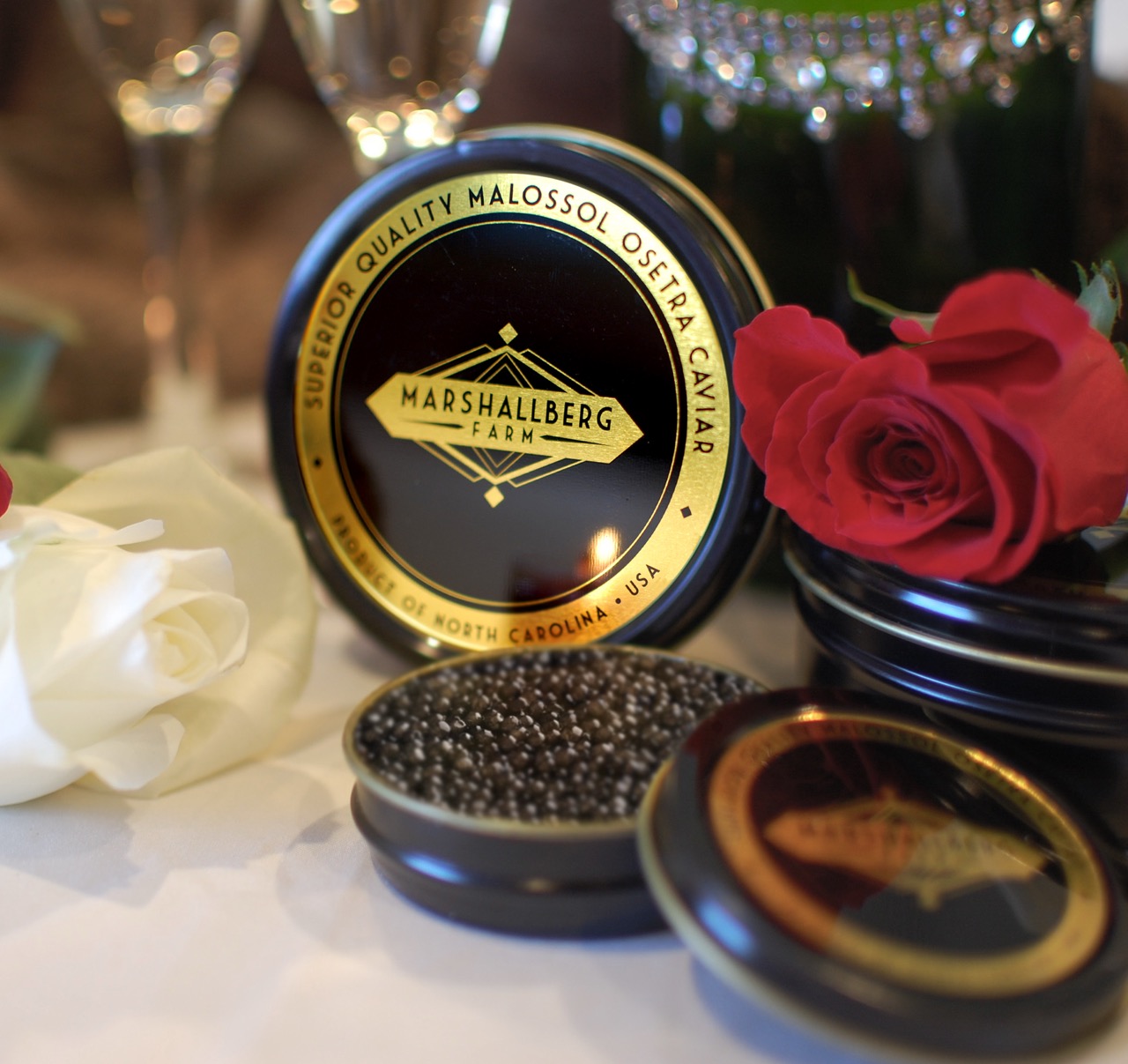
    If your only experience with caviar is the tiny tins tucked away in a gourmet shop, think again. Unlike mass-market caviar that sits preserved and sometimes changes tins, Marshallberg Farm takes a small-batch approach.

    “We are able to pack all freshly harvested caviar into its final vacuum tin (never again exposing it to air or oxidation), and have a harvest sold within about a month and a half.” That’s a big contrast to most distributors, who store bulk-imported caviar for up to three years before repackaging. “As you can imagine, the product difference is night and day. Caviar is at its prime at around one month of aging. Then it slowly evolves, then degrades.” 

    When it comes to enjoying caviar, Lianne has one rule: keep it simple. “My favorite way is when somebody else does it,” she laughs, noting she’s often tasked with the tough job of quality control at the farm. “There are different vehicles for eating it. If it’s good caviar, you should be able to eat it plain on your hand and enjoy with champagne, vodka, or an IPA.” 

    For this approach, try the trendy ritual of a “caviar bump.” This involves placing a small spoonful of caviar on the back of your hand, allowing the warmth to enhance the flavors. Then lean in, slurp it down, and enjoy.

    Image: Provided

    Want to Taste It for Yourself?

    Want to see the farm (and taste the caviar) for yourself? Marshallberg Farm offers ticketed tours that include plenty of behind-the-scenes moments and, of course, caviar tastings. “We serve Social House vodka, a sustainable product of Kinston, NC. We serve this pair at every caviar farm tour and tasting that we host, and it’s always a big hit!”

    With only five full-time employees, Marshallberg Farm is proof that small but mighty operations can make a big impact. And with a commitment to sustainability, quality, and good old-fashioned patience, they’re showing the world that some things—like fine caviar—are worth the wait.

    Looking for more change makers around the South? Click here.
  • The MICHELIN Guide is Coming to the South—Here’s What You Need to Know

    The MICHELIN Guide is Coming to the South—Here’s What You Need to Know

    Big news for Southern food lovers—MICHELIN is heading our way! For the first time ever, the prestigious MICHELIN Guide is rolling out a regional edition in North America, and it’s all about the American South.

    That means foodies across Alabama, Louisiana, Mississippi, North Carolina, South Carolina, and Tennessee (plus the existing Atlanta selection) will soon have an official culinary roadmap to the best bites below the Mason-Dixon Line.

    “The guide will be amazing for the city, the level of artisans and craftsmen and women in this city is something the country and world needs to know about,” Charlotte-based chef Andres Kaifer (Customshop and Marina’s Tapas) shares with Modern South. “I just feel fortunate to be a part of the community in such an exciting time.”

    Why is This Awesome?

    If you’re unfamiliar with the MICHELIN Guide, think of it as the ultimate foodie stamp of approval (and yes, it comes from the tire company). Their anonymous inspectors travel the world, dining their way through cities to identify the crème de la crème of the restaurant world. The coveted stars (one, two, or three) are awarded to restaurants that stand out in terms of quality, technique, and overall experience. But it’s not just about the stars—MICHELIN also highlights hidden gems and incredible local spots through its Bib Gourmand and recommended restaurant lists.

    For years, Southern chefs and restaurants have been making waves on the national dining scene, blending tradition with innovation (or as we like to say, honoring the past while embracing the future). Now, the world’s most famous dining guide is finally giving the South the spotlight it deserves.

    What Happens Next?

    The MICHELIN inspectors are already on the move, secretly dining across our great region to find the best of the best. Every meal, every bite, and every detail—from the quality of ingredients to the careful convergence of flavors—is being carefully evaluated.

    The full list of restaurants making the cut will be revealed later this year during a special MICHELIN Guide ceremony (we don’t have details yet).

    Why Does This Matter?

    For travelers and locals alike, having a MICHELIN Guide dedicated to the South means discovering incredible restaurants in both major cities and small towns. It means celebrating the chefs who have been perfecting their craft, whether they’re serving up a perfectly smoked brisket, a soul-warming bowl of gumbo, or a creative twist on traditional Appalachian cuisine.

    While we wait, Modern South has the scoop on the great chefs and restaurants around our region. Learn more here.

    It also means even more national and international attention on the South’s dynamic food scene—although we’ve always known the South has some of the best food in the world…now, it’s official.

    While we wait for the full restaurant list to drop, now’s the perfect time to explore your local food scene. Visit that new spot you’ve been eyeing, return to an old favorite, and celebrate the flavors that make Southern cuisine so special. Who knows? You might just be dining at a future MICHELIN-starred restaurant.

    For more food news, click here.

  • Classic Red Beans and Rice

    Classic Red Beans and Rice

    Featured image: Camellia’s

    When you think of iconic culinary traditions in the South, it’s hard not to start drooling thinking about a hearty pot of Red Beans and Rice. In Louisiana, Mondays are dedicated to this dish, with a pot of red kidney beans simmering away as households tackle their chores. The secret to its creamy, flavorful richness lies in the ingredients, and at the center of this dish are Camellia Beans.

    Image: Camellia’s

    Founded in 1923, Camellia Brand has proudly been New Orleans’ original dried bean company and has built a reputation for quality that’s second to none. The fourth-generation, family-run business hand-selects the finest beans, peas, and lentils, often sourcing less than 10% of the crop’s yield for the season to ensure superior quality. Their beans have exceeded the top USDA grade, earning the honor of meeting the “Hayward Standard.” So, when you’re ready to whip up a pot of Red Beans and Rice, you know you’re using the best of the best.

    Fourth-generation owner and current CEO of the brand Vince Hayward shares his go-to recipe with us.

    Red Beans & Rice

    Prep Time 15 minutes
    Cook Time 2 hours 30 minutes
    Course Main Course
    Cuisine Cajun

    Equipment

    • 1 Large heavy pot or Dutch oven

    Ingredients
      

    • 1 pound Camellia Brand Red Kidney Beans
    • 1 pound smoked sausage sliced
    • 2 cups chopped seasoning blend onions, celery, green bell peppers, parsley flakes
    • 1 clove garlic chopped
    • 1/4 stick butter
    • 8-10 cups water
    • 1 bay leaf
    • 2 smoked ham hocks
    • Salt to taste
    • Pepper to taste
    • Cajun seasoning to taste
    • 3 dashes hot sauce
    • White rice hot and cooked, for serving

    Instructions
     

    • Rinse the beans and sort through them to remove any debris.
    • In a large heavy pot or Dutch oven, cook the sliced sausage over medium heat for about 5 minutes, or until browned.
    • Stir in the chopped seasoning blend and garlic, along with the butter, and continue to cook until the onions are soft and translucent.
    • Add the rinsed beans, water, bay leaf, and smoked ham hocks to the pot. Bring to a rolling boil for 30 minutes, stirring every 10 minutes.
    • Reduce the heat and let it simmer for 1-2 hours, stirring occasionally, until the beans reach your desired tenderness.
    • As the beans soften, use a large spoon to mash a portion against the side of the pot to create a creamy gravy.
    • Add salt, pepper, hot sauce, and Cajun seasoning to taste, stirring well to combine.
    • Ladle the red beans over a generous scoop of hot cooked rice. Enjoy!