When you think of iconic culinary traditions in the South, it’s hard not to start drooling thinking about a hearty pot of Red Beans and Rice. In Louisiana, Mondays are dedicated to this dish, with a pot of red kidney beans simmering away as households tackle their chores. The secret to its creamy, flavorful richness lies in the ingredients, and at the center of this dish are Camellia Beans.
Image: Camellia’s
Founded in 1923, Camellia Brand has proudly been New Orleans’ original dried bean company and has built a reputation for quality that’s second to none. The fourth-generation, family-run business hand-selects the finest beans, peas, and lentils, often sourcing less than 10% of the crop’s yield for the season to ensure superior quality. Their beans have exceeded the top USDA grade, earning the honor of meeting the “Hayward Standard.” So, when you’re ready to whip up a pot of Red Beans and Rice, you know you’re using the best of the best.
Fourth-generation owner and current CEO of the brand Vince Hayward shares his go-to recipe with us.
I swore off onions as a kid. Wouldn’t touch them, wouldn’t eat around them—until my grandmother, Maw Maw, pulled a bubbling dish of Vidalia Onion Dip from the oven one spring afternoon. I hesitantly took a bite, and then my life changed forever (queue the montage music).
Vidalia onion season has always felt like the true start of warmer days, and this dip is a cherished part of that memory. The recipe, written in Maw Maw’s handwriting, is a family heirloom carefully passed around. And as any great Southern cook knows, the ingredients are adaptable based on preference… like her note to add less cheese (which, is never acceptable in my kitchen).
So, grab a bag of chips or some buttery crackers and get ready to fall in love with Vidalia onions.
Family-style meals at Lynchburg, Tennessee’s historic boarding house come with a free side of etiquette lessons
Some say having lunch at Miss Mary Bobo’s is like stepping back in time, like a visit to their Southern grandmother’s house.
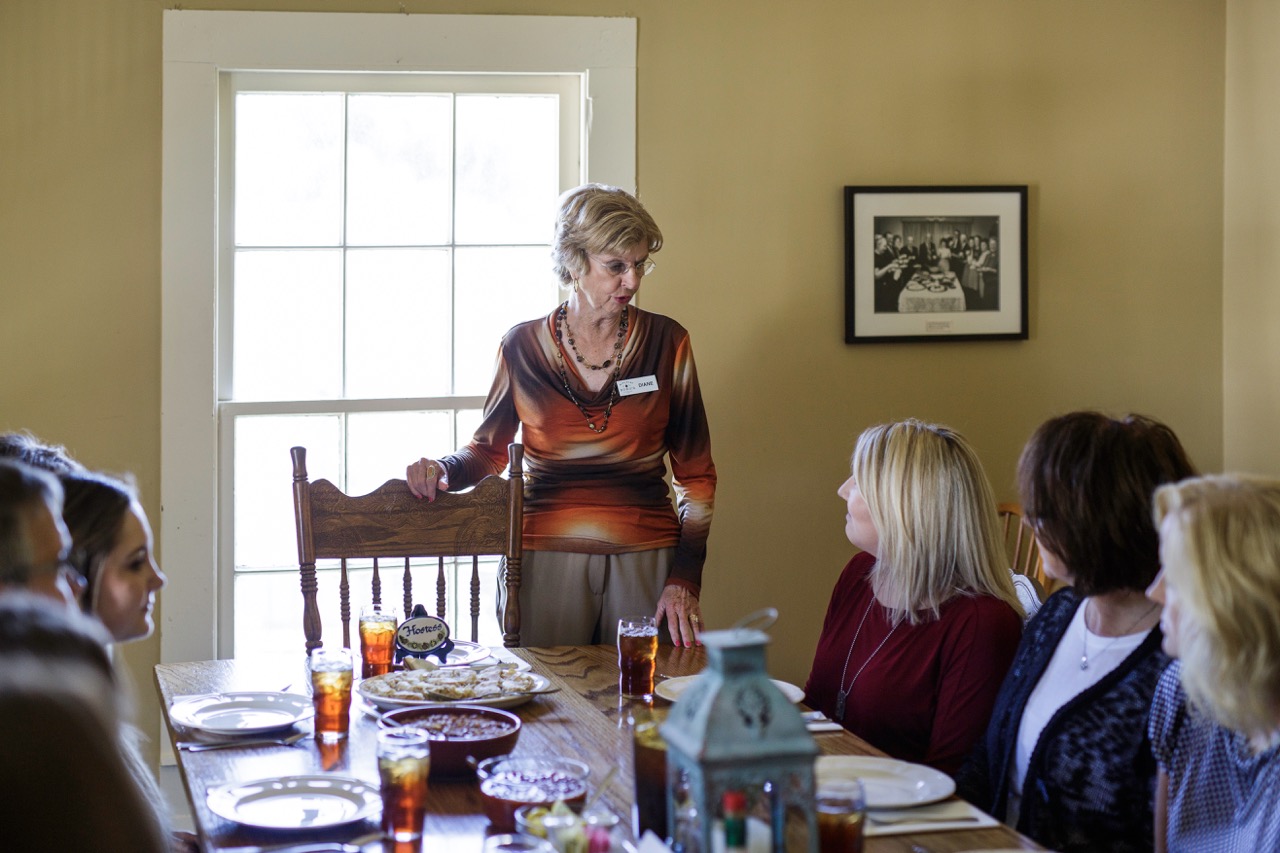
Every day of the week except Sunday, the quaint, white-columned home in Lynchburg, Tennessee, opens its doors to serve family-style lunches to neighbors and out-of-towners seated together. A procession of heaping dishes of fried chicken and okra, cornbread casseroles, candied apples and pies arrive at the table, with one well-heeled host proceeding over each table.
With grace, ease, and humor, the hosts oversee every thoughtful detail of the guest experience, from never letting a glass go empty to initiating conversation among strangers—a task that isn’t easy to do in today’s tech-addicted, politically divisive climate.
As hungry diners fill their mouths, the host helps to fill the room with laughter and offers wisdom on everything from local lore to the best way to enjoy Tennessee whiskey.
Image: Miss Mary Bobo’s
The History of Miss Mary Bobo’s
The Lynchburg staple started as a boarding house in the 1820s—decades before Jack Daniel began distilling whiskey down the road.
Then in 1908, a few years before Daniel died, Mary Bobo and her husband bought the property and renamed it the Bobo Hotel. Miss Mary, as she was known, ran the hotel until 1983 and left behind her legendary brand of Southern hospitality that continues today.
Christine Poston, senior manager of the Jack Daniel’s Homeplace, knows firsthand the value of this hospitality. A former manager of Bobo’s (which is now owned by the distillery), she is also a graduate of the prestigious Jack Daniel’s Co-op Program scholarship for area college students.
Here, Poston shares her expert tips for leading a flawless luncheon on par with the pros.
Image: Miss Mary Bobo’s
The Role of a Great Host
“They have a really big job. It starts when people first walk through the door,” Poston says. “They are standing there, greeting them and seating them at the table. The host has control of the whole experience; it’s in their hands.”
Many of the hosts are retired from former careers, Poston adds, noting that most are local to Lynchburg and already well familiar with the town’s history. “Usually, we don’t even have to recruit,” she says. “They come to us and say, ‘I want to eat. I want to talk. I want to meet people from all over the world.”
Image: Miss Mary Bobo’s
Making Everyone Feel Welcome
On average, visitors come from 48 states and 20 countries every month, making for a diverse audience. Before breaking bread, a host prompts everyone to make introductions and share something about themselves, whether it’s a New Year’s resolution or where they call home.
“When guests sit at the table and are very unfamiliar with each other, it’s the hosts’ job to tell the story of Miss Mary and Lynchburg, but also get to know everybody,” Poston says. While some groups are very interactive, ask a lot of questions and are eager to have fun, others may be quiet and require more work to find connections.
“You have to do well at reading your groups,” she says. ”We love to say that people enter as strangers and leave as friends, and for the most part, that is really what happens.”
Image: Miss Mary Bobo’s
The Failproof Foods to Feed a Crowd
While the menu varies based on the seasonality and the creativity of chef Chris Dickey, the family-style meal generally follows the same format that Mary herself would have served.
“We place the food on the table strategically. Most people won’t realize that,” Poston says. The hosts help explain the dishes and remind diners to pass dishes to the left.
Casseroles are almost always a crowd-pleaser. “Our mac and cheese or hashbrown casseroles are my favorite,” Poston says. Many of the original recipes can be found in Miss Mary Bobo’s Boarding House Cookbook, sold in the onsite gift shop.
Nothing tops the holiday meal, however. “Chicken and dressing, sweet potatoes—there is just something very seasonal and cozy about sitting around the table at Christmastime eating that,” she says. “You just feel like you’re part of a family. A lot of people relate it to being at your grandmother’s house. It’s very sentimental.”
Image: Miss Mary Bobo’s
On Bobo’s Secret Ingredient
While Lynchburg is located in a dry county, chef Dickey sneaks the region’s most famous product—Jack Daniel’s Tennessee whiskey—into the sweets. “We can’t serve it to you at the table, but we can put the in the food,” Poston says.
Candied apples are topped with a shot of Jack after they are baked. Pies are served with homemade whipped cream flavored with whiskey instead of vanilla. After all, when it comes to turning strangers into friends, a dose of whiskey certainly doesn’t hurt.
Image: Miss Mary Bobo’s
The Tell-Tale Signs of a Successful Luncheon
At the end of every meal, Poston says diners walk away with more than a full stomach—they also walk away with a feeling. “If you hear laughter coming from the dining rooms, you know you did your job because guests are having a great time,” she says.
She recalls one meal was particularly fulfilling when a gentleman gave her a rave review. “He said, ‘This is the first time in many, many years when I looked around the table and I didn’t see anyone on their cell phone. Everyone was involved in the lunch. That is something that doesn’t happen often, so job well done.’”
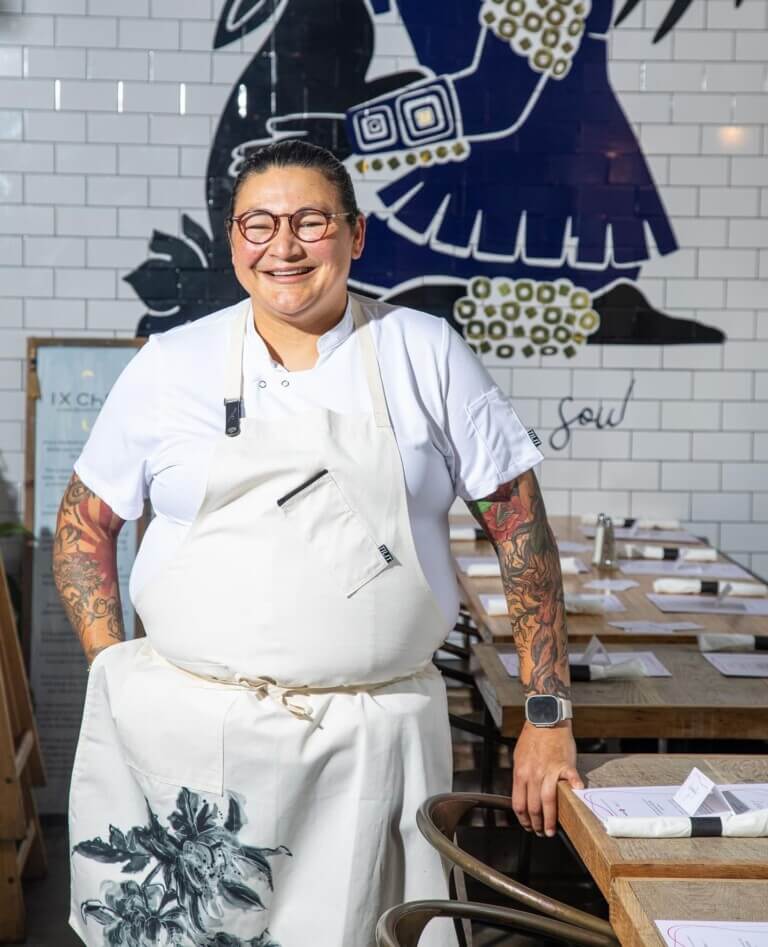
Some of Chef Melissa Araujo’s fondest childhood memories are of time spent in her grandmother’s kitchen in La Ceiba, Honduras.
“She had a brick oven and cooked with firewood. Those were the best meals I ever had,” she said. The aromas and flavors of the traditional Honduran dishes permeated her soul.
Image: Alma Cafe
From a young age, Araujo knew she wanted to share her passion for arroz con pollo, plátano maduro and cafe con leche with the world.
“Growing up, I learned that food is more than a meal—it’s a way to show love,” Araujo said. “My mission has always been to share the soul of Honduran cooking.”
After working in local restaurants right out of high school, Araujo then increased her talent by cooking in Milan for six years. She eventually returned to New Orleans to work alongside some of the best chefs in the city, including Mondo’s Chef Susan Spicer.
In 2013 she opened a catering business, giving her a platform for a pop-up restaurant focusing on her first love: Honduran cuisine.
Image: Alma Cafe
In 2020, during the pandemic, Araujo took a leap of faith and opened her first restaurant, Alma Cafe in the Bywater district of New Orleans.
“This is the food I grew up eating, the food I make when I’m sick. This is my soul,” explained Araujo. She named her flagship restaurant Alma from the Spanish word for soul.
Her passion for elevating vibrant Honduran flavors with a modern New Orleans flair earned Araujo two James Beard semifinalist awards for Best Chef of the South for 2024 and 2025.
On the heels of the flagship location’s success, Araujo opened her second location, Alma Mid-City, in February 2025.
Image: Alma Cafe
“The Mid-City opening is an opportunity to connect with even more people and introduce them to the flavors and traditions that I love,” she said.
While the focus of Araujo’s career is sharing her Honduran roots, her culinary style is a tapestry of flavors and cultures.
“My mom was Secilian Italian. We grew up with bolognese pasta and tiramisu,” she said. Home cured lox with bagels made their way to the table too, possibly inspired by her father’s Jewish lineage. A move to Rhode Island in her youth gave this multi-cultural chef an appreciation for fresh seafood.
Search Alma’s menu and you’ll find little hints of Araujo’s culinary journey. Lox on Jewish Rye shares space with ceviche. A “Not so Greek Salad” subs queso fresco for the traditional feta, and Huevos Rancheros and lemon ricotta pancakes compete for breakfast favorites.
The Deep South | Image: Alma Cafe
Alma originally earned a following for all-day brunch dishes like Baleada Sencilla, eggs, refried beans, house-made cream, queso fresco, and avocado served atop a house-made flour tortilla and The Deep South – chile habanero marinated fried chicken thigh, coleslaw, and Honduran crack sauce, served with rosemary fries. A dozen or so lunch items—including Honduran meat pies and a Brussels sprouts bowl—round out the menu.
Alma Mid-City also serves dinner Monday through Saturday. The Bywater location, which serves dinner on Fridays, serves as a test location for dinner recipes.
“It’s been fun introducing new dishes every Friday night. I’ve been experimenting with lots of different flavors and techniques and getting great feedback from my customers,” said Araujo.
Dinner features starters like Aguachile Negro – local Gulf shrimp and scallops with chile Morita, avocado, and black garlic and entrees including Pescado Ceibeno, whole Gulf fish served with Moros and Cristianos (beans and rice), and tostones (fried plantains).
The larger Mid-City location also features a Tortillera producing fresh tortillas, and an oyster bar to anchor happy hour. The craft cocktail menu is a fusion of New Orleans and Honduran favorites; Agua Frescas made with herbs from Araujo’s home garden exemplify the chef’s commitment to local, quality ingredients.
The influence of Araujo’s family extends beyond the menu. Photos of her grandparents hang in both locations, along with snapshots from the chef’s childhood. Custom wood tables, rattan lighting, lush foliage and Honduran artifacts create a welcoming atmosphere of the traditional Honduran kitchen Araujo loved so much growing up.
It’s not just the matriarchs Araujo honors. The celebrated chef opened a small kitchen inside Pirogue’s Whiskey Bayou, named after her father Oscar. His picture hangs in this casual neighborhood spot, and the menu, including the Oscar Burger, is a tribute to the bar food he loved.
Araujo is hands-on, from building a hostess stand for her new restaurant using 200-year-old Spanish doors to growing her own produce.
Image: Alma Cafe
In her scarce free time, you might find Araujo in her garden. In the vacant lot next to her home, she tends to basil, chives, thyme, mint, and garlic. The harvest goes into Alma’s dishes, supplementing the supply from local farmers.
“My mom and grandmother loved plants, and I was the forced labor back then,” she laughed. “Now I find peace doing it. I go to my garden to destress.”
Farm-fresh produce, Gulf oysters, local shrimp, and Louisiana Jasmine rice are just a few of the local ingredients that give Alma’s dishes a New Orleans flair.
“Our food tells the story of who we are, and it’s important to respect not only our traditions but the land we’re cooking from,” Araujo explained.
Just weeks after opening her third restaurant, you might think Araujo would stop and savor the moment. But she’s already hinting at a few future concepts: a bakery maybe, or something bigger.
When asked what her grandmother would think about all of her success, Araujo responded, “She would be proud to see me being strong, living authentically and showing people who I truly am.”
Tucked into the rolling hills of Franklin, Tennessee, Southall Farm & Inn is more than just a place to rest your head—it’s a place to feed your soul. And trust me, I’ve done plenty of that at their two incredible restaurants: January and Sojourner. This is especially good news for area locals hoping to spend some time onsite, taking in the nourishing power of the property without committing to an overnight.
Whether you’re craving an indulgent brunch, a refined dinner, or a casual bite with a bucolic view, Southall delivers in spades with two dynamic options.
Image: Southall
January: A Showstopper of a Dining Experience
If I had to pick one restaurant that makes me feel like I’m starring in a dream sequence about the perfect meal, January is it—I even spent my 30th birthday dinner in their care. This place is stunning…the dining room alone might be the most beautiful in all of Middle Tennessee, with a fireplace crackling in the background and a long communal table made from a tree that once stood on the property. And with an open kitchen, you get dinner and a show as the chefs work their magic.
Image: Southall
January’s menu changes constantly, shifting with whatever is freshest from the farm. When available, my failproof go-tos are the melt-in-your-mouth short rib, the Greener Roots Salad packed with farm-fresh produce (even the seeds are harvested onsite!), and don’t get me started on the dinner roll-meets-biscuit phenomenon—fluffy, buttery perfection, especially when slathered with their house-made jams from Southall’s own jammery.
If you love high tea, January’s periodic tea service is an absolute must—set that alert and jump on it next time it’s offered. My fella, Peter, called it “life-affirming,” and I couldn’t agree more. As someone who spent time living in London and has sampled some of the world’s best teas (including the famed Connaught), I can confidently say that January’s tea holds its own. The finger sandwiches, the pastries, the expertly brewed teas—every detail was flawless. I could’ve sat there sipping and snacking for hours (whoops, I did).
While tea service is paused, January recently launched a Saturday and Sunday brunch ($85 per person), and it’s an all-out feast. It kicks off with a wellness shot before diving into an incredible spread: house-made biscuits with whipped honey, butter, and jam; yogurt, Greener Roots Salad, and delicate quiche; ham, candied bacon, potato latkes, and chicken sausage with apple butter and crème fraîche; and desserts that will ruin all other desserts for you: s’mores cinnamon rolls swimming in hot fudge, banana crème beignets with “foster sauce,” and mini mixed berry pop tarts
If you leave brunch anything less than blissfully full and already planning your next visit, you did it wrong.
Image: Southall
Sojourner: Cozy, Casual, and Just as Delicious
While January is a refined, high-touch experience, Sojourner is the heart of Southall—a welcoming, all-day café that’s equal parts elegant and cozy. It’s got ornate wallpaper, floor-to-ceiling windows with gorgeous views, and a dining room that flows into a charming bar and lounge. It may be a touch more relaxed than January, but trust me, the food is every bit as special.
Image: Southall
Sojourner does breakfast, lunch, and dinner, and I’ve yet to have a meal here that didn’t leave me grinning. For breakfast, think fluffy omelets made with just-laid eggs, golden pancake stacks, and handcrafted juices, coffees, and even morning cocktails if you’re feeling fancy. For lunch & dinner, expect the same farm-to-table focus as January, but with a more laid-back vibe. When I stopped in for dinner, I had an impeccable Icelandic char, a fresh salad, and a reposado cocktail that hit all the right notes.
Image: Southall
Overseeing both January and Sojourner is Executive Chef Andrew Klamar. Reservations are needed for access to the property. Book here.
Are you visiting Franklin, Tennessee? Check out our full, locally-curated guide here.
You’re kicking off your New Year’s resolution to make more mindful food choices. That’s awesome! But, let’s face it: navigating the grocery store is daunting, to say the least. Grain-free, gluten-free, non-GMO, organic, sugar-free, fat-free…these are just a few of the buzzwords you’ve likely seen plenty of times that make selecting better-for-you choices at the grocery overwhelming and downright confusing.
Understanding how to read food labels and what you should actually pay attention to is an essential part of making informed decisions while shopping. We’ve put together a guide to help you master reading food labels like a pro and make simple, everyday swaps in classic Southern cooking without sacrificing the comforting flavors you love.
Image: Steyn Viljoen
Picking Your Protein: From the Farm
Most meals start with protein, and for good reason. Ensuring your diet is protein rich will keep your body strong and healthy– that includes your hair and nails. Eat your skincare, ladies!
“The easiest first step to making better meat choices is staying away from processed foods like cured meats,” says Rick Escobar, a grass-fed beef rancher in Central Texas. “Grocery stores purchase from large-scale food corporations. The bigger the corporation, the worse off the quality of the product is. Sourcing from local farmers is the best thing you can do for your body. You know exactly what is going into the meat you are buying.”
If local sourcing isn’t an option for you, look for products in the grocery store labeled grass-fed, organic, and/or pasture raised.
“Just know that if the animal you are buying spent its life in the grass roaming the fields eating grass, bugs, whatever– that is the very best choice you can make.”
Image: Kampus Production
Understanding Labels
You have your proteins figured out. What about all the other typical diet staples like bread, pasta, canned goods and more? The most basic rule can also be the hardest: avoid it all and make it yourself! However, we know that’s not a sustainable method for most people, so here are a few tips when you’re looking for pantry staples.
Inflammatory Oils:
Inflammatory oils can be hard on your body and increase inflammation of the gut lining for many people. Opt for products that use real butter, olive, coconut, or avocado oil.
Added Sugars:
It can be hard to avoid sugar altogether, especially if you have a sweet tooth. Look for products with a low number of grams of sugar per serving and use real cane sugar, coconut sugar, maple syrup or other unrefined options as opposed to products with high fructose corn syrup.
Artificial Coloring:
More and more research is coming out about side effects associated with artificial food dyes. Avoid dyes such as Red 40, Yellow 6, and Blue 1 (or literally any color-number pairing) and look for foods that use real, whole food ingredients for color such as beets, strawberries, and purple carrot extract.
Another good rule of thumb: if you can’t read it, maybe you shouldn’t be eating it. Some of the ingredients out there sound… scary. Additionally, always remember the fewer ingredients on the label, the better!
Image: Valeria Boltneva
Buy This, Not That
Here in the South, our food is good for the soul but not necessarily good for the body. Don’t worry, you don’t need to cut out your favorite Southern staples to lead a healthier life. Many of the region’s traditional ingredients can be swapped for some better options.
Lard or Bacon Grease:
Instead of frying or baking with lard or bacon grease, opt for choices like real butter, avocado oil, coconut oil, or beef tallow.
Canned Goods:
Canned goods can have a high number of additives like sodium and other preservatives. Instead, opt for fresh produce or look at the back of your can and make sure the ingredients are limited to the product, salt, and water.
Sweet Tea:
Instead of buying a jug sweet tea with an exuberant amount of sugar, try making your own brew and sweetening it with honey, maple syrup, or stevia for a lower sugar option.
White Sugar:
White sugar can be swapped out for pure cane sugar, coconut sugar, maple syrup, honey, and other unrefined alternatives in most baked goods and other treats.
White Rice:
Swapping out white rice for brown rice or even quinoa can not only add a healthy dose of whole grains to your diet but also enrich your meal with a higher protein and fiber content.
Working healthier choices into your diet doesn’t have to be overwhelming. Just a little education in reading food labels, finding local food sourcing, and making mindful swaps can be a total game changer.
Louisville’s food scene is full of gems, and when it comes to Irish comfort food, Flanagan’s Ale House is a standout. Nestled in the lively Highlands neighborhood, this local favorite has been serving up cozy pub fare, craft brews, and good times for years. Whether you’re a regular or just popping in for a pint, Flanagan’s brings a taste of Ireland straight to the Bluegrass State, making it a must-visit, especially around St. Patrick’s Day.
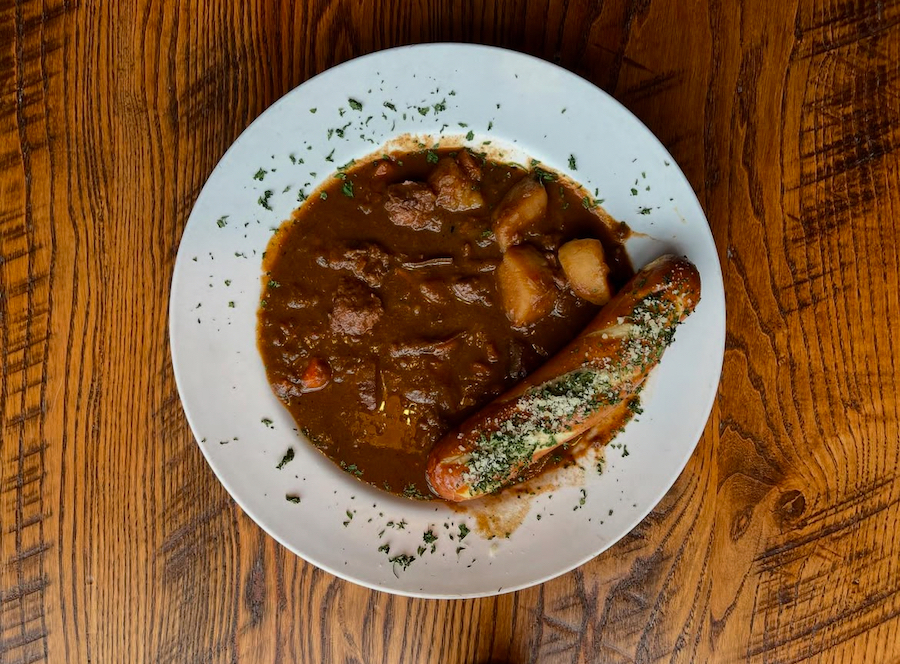
Now, let’s talk about Irish stew—because what’s a proper pub experience without a steaming bowl of rich, hearty, subtly boozy goodness? This dish is the definition of comfort, with tender beef, hearty potatoes, and a broth so flavorful you’ll want to mop up every last drop with a crusty slice of bread.
While there’s no one-size-fits-all recipe (every Irish grandma has her own secret!), this version is inspired by the slow-simmered, soul-warming stews that make Irish cuisine so beloved. Pair it with a Guinness or a dyed-green lager, and raise a toast to St. Patrick’s Day.
Heat olive oil in a large Dutch oven or heavy-bottomed pot over medium-high heat. Add the beef in batches, browning on all sides. Remove and set aside.
In the same pot, add the onion, carrots, and celery. Cook for about 5 minutes until softened. Stir in the garlic and tomato paste, cooking for another minute until fragrant.
Pour in the Guinness stout, scraping up any browned bits from the bottom. Let it simmer for 2-3 minutes to reduce slightly.
Return the beef to the pot and add the beef broth, Worcestershire sauce, thyme, and bay leaf. Bring to a simmer, then cover and cook on low heat for 1.5 to 2 hours, stirring occasionally.
Stir in the potatoes and continue to simmer for another 30-40 minutes, until the beef is fork-tender and the potatoes are cooked through.
If a thicker consistency is desired, mix 2 tbsp flour with a little water to form a slurry. Stir into the stew and cook for an additional 10 minutes.
Remove the bay leaf, adjust seasoning to taste, and garnish with fresh parsley. Serve hot with a breadstick or crusty bread on the side.
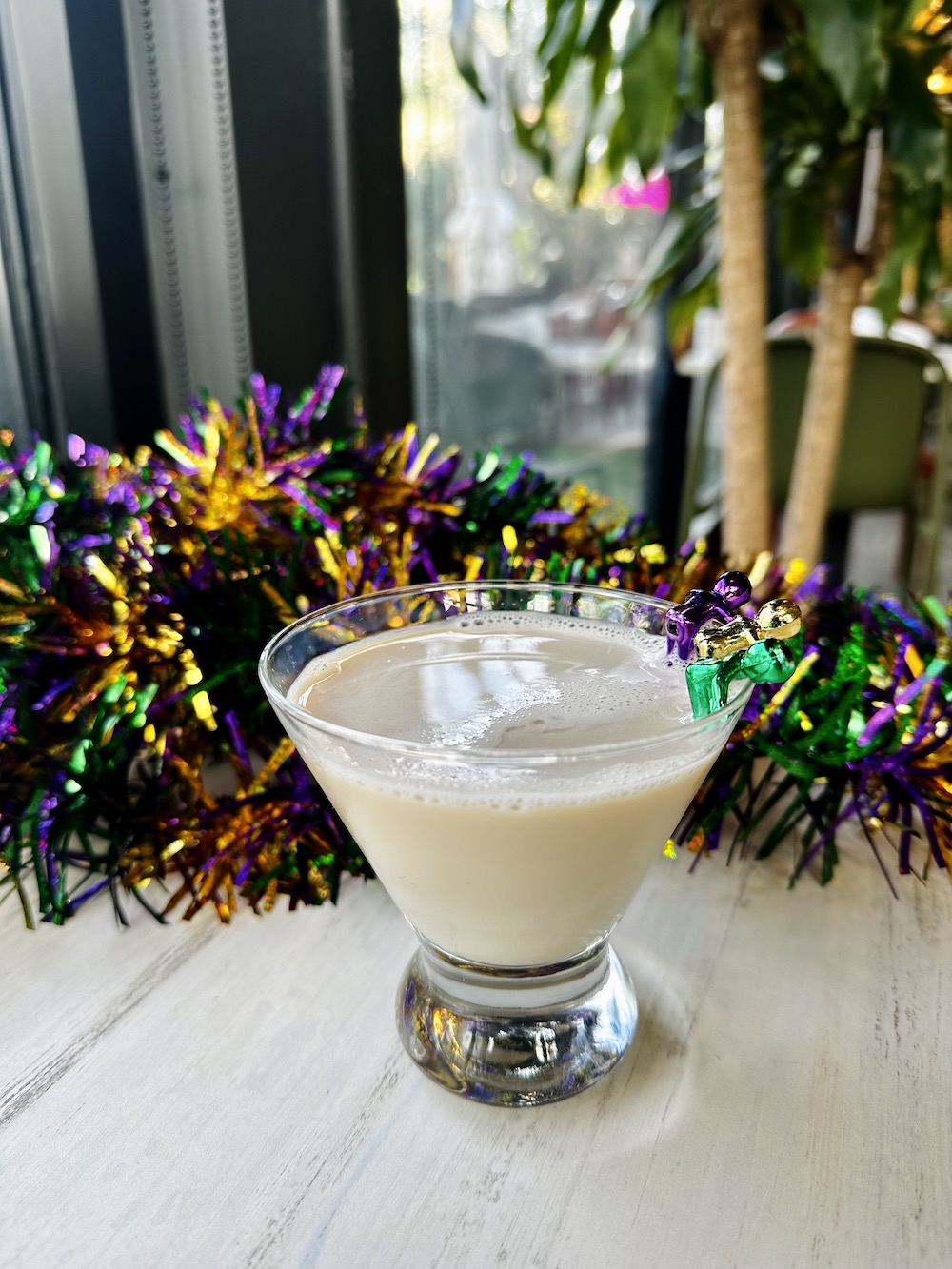
Sure, Mardi Gras in New Orleans may be synonymous with parades, beads, music, and revelry—but it’s all wrapped up as a season of indulgence, where even your cocktail can get in on the celebration. At Birdy’s Behind the Bower, a charming brunch spot tucked away in the Framework building, that indulgence comes in the seasonal form of a King Cake Espresso Martini.
Known for its Southern-inspired, locally sourced dishes, Birdy’s has become a favorite among locals and visitors alike. Open for brunch only, it serves up Southern-inspired fresh, locally-sourced dishes: think house-made biscuits, stacked avocado toast, and pastries that practically demand a second round of coffee.
Oh, and speaking of coffee, their espresso martini game is next level (because you can’t drink all day if you don’t start in the morning).
Their King Cake Espresso Martini blends rich espresso with sweet, spiced King Cake Rum Cream, finished with a glittering sugar rim in the traditional purple, green, and gold. It’s the perfect way to toast to Fat Tuesday.
Robert Higgins Jr. is an award-winning entrepreneur who, over the years, has racked up a number of industry accolades for his dedication to creating hospitality havens across the Volunteer State. This year, he debuted his groundbreaking collaboration with Patrón Tequila, making history as the first Black entrepreneur in Tennessee to do so.
Born and raised in St. Louis, Higgins ventured off to Nashville to attend Tennessee State University as a pre-med major with plans to pursue dentistry. But throughout his college years, he discovered a love for events, leading him to shift his focus from medicine to creating vibrant social spaces focused on community.
Image: Provided
In 2010, Higgins opened his first Nashville hotspot—a music and comedy club called Jazz and Jokes. With the vision to create a space that married community and Nashville entertainment, this venture marked the beginning of a thriving hospitality career. He’s since opened nine more establishments.
In 2023, he opened the doors to Supper Club on Belcourt, an elevated fine-dining experience in a bustling Nashville neighborhood. Soon after, he opened casual dining restaurant Bungalow10 right next door.
While he uses his expertise to curate spaces all around Music City, he has added a new level of entertainment and attraction to Belcourt Avenue, opening two additional spaces: Jar10, a cocktail bar, and Sunset, a cigar lounge. Higgins thrives on creating establishments with an electrifying atmosphere, each with a goal to be a destination for all to enjoy.
Image: Provided
“I think the ambiance and the design are a key component because people fall in love with a place based off of how it looks first,” Higgins explains. “I think we tried to nail that factor in, then move on to other things.”
Creating a legacy in Nashville, Higgins has had a front-row seat in watching the city evolve over the past 15 years. He shares what it means to him to watch his businesses grow and thrive in a city that means so much to him: “It means a lot… you get to grow as the city grows. Nashville is growing tremendously and to be able to be a part of that is great… giving people options on places to go, things to do, places to eat, and being an option for people to patronize is one thing we don’t take for granted.”
But Higgins didn’t stop there—he recently launched a once-in-a-lifetime collaboration with Patrón Tequila. As of this month, his very own limited-edition barrel select saint añejo, 5240, is available for purchase online and at all Higgins’s establishments.
Image: Provided
Flying out to Guadalajara, Mexico, he spent a few days at the Patrón headquarters, experiencing all that goes into creating a tequila from the ground up; from learning about the different barrels and agave plantations to curating the bottle and packaging, he was involved in every decision necessary to arrive at a product he loves. With the goal of creating a tequila that could be sipped without being chased, Higgins wanted 5240 to tell a story of its own.
“The name 5240 is the address of the street I grew up on in St. Louis – 5240 Minerva Avenue,” he explains. “That place meant a lot to me, and I wanted the tequila to be something that told a story – not just about the tequila, but about me, where I come from, and my background. Everyone remembers their childhood address, so I wanted it to reflect something I could never forget.”
With an eight-month distribution process, Higgins has patiently waited for folks to get their hands on his latest project. Now that the exclusive tequila is out on the shelves and available to the public.
Image: Provided
“People are buying it and liking it,” Higgins says. “It’s a great feeling… I wasn’t expecting the amount of support and love that we’ve received this past weekend – we almost sold out the first weekend! It means a lot that people are believing in what I’m doing… one thing I try to do more in life is enjoy the process, so I’m slowing down and enjoying the journey.”
While most of his ventures are rooted in Nashville, Higgins has expanded into Memphis and has his sights set on additional expansion throughout the South. With each new concept, he continues to leave his legacy on Southern dining, entertainment, and now, spirits.
To learn more about the experts behind Southern kitchens, click here.
Stamps Super Burgers–a Jackson, MS mainstay–is well known for its made-to-order, larger-than-life classic burger. But for 55 years, it has also been known as a place of refuge and welcome for the Black community in Jackson–and all who walk through its doors.
It’s a Monday morning, and Phil Stamps Jr. stands over the sink, apron tied around his waist, washing potatoes. He’s preparing for a busy day in the kitchen–every day at Stamps Super Burgers is busy.
Phil is chief operator and the third generation in the Stamps family to run the restaurant, but the simple tasks like washing potatoes aren’t beneath him. That’s because Stamps Super Burgers prides itself on serving up impeccable quality, from fries that were hand-cut that very morning to 11 oz. burgers, lovingly shaped and grilled to perfection. Every detail matters.
As his hands work, Phil flashes back to when he stood over that very sink as a child, his feet on a step stool, and his grandfather by his side. They washed potatoes together every Saturday morning, and Phil earned fifty cents for his hard work. But he took away much more than pocket change.
“It helped instill in me a work ethic and a love for the kitchen, a love for cooking,” said Phil, who vividly recalls those Saturday mornings. He also remembers how much his grandfather, Algernon Stamps, meant to the community of Jackson, Mississippi.
Image: Stamps Super Burgers
A Place for Healing
It was the Spring of 1970, and racial tensions were high in Jackson. White motorists had been targeting Black students at the historic Jackson State College, accelerating toward them as they walked through campus, hurling objects and racial slurs from their vehicles. After peaceful protests by students, an unknown person set fire to a dump truck on the evening of May 14, triggering a riot, and city police and State Troopers responded.
Law enforcement opened fire, spraying over 400 rounds of bullets and shattering the windows in the women’s dormitory. Twelve people were shot, dozens injured, and two young Black men were killed: Phillip Gibbs, a student at Jackson State who was married with two children, and James Earl Green, a senior at nearby Jim Hill High School who was walking home from work.
Following the Gibbs-Green shooting, the Black community in Jackson was in need of a space for community and healing. As an educator, minister, Air Force veteran, and father of six, Algernon Stamps was the right man to create that space.
He and Barbara moved to the Washington Addington community, just a few blocks down from Jackson State College. The couple purchased a corner store near their new house, and Stamps Grocery and Market opened its doors.
“My grandparents were committed to faith, to love and nurturing, and encouraging. They built their business on those founding principles,” says Phil. “It was very healing after everything that happened with the Gibbs-Green shooting. They made it their mission to not only show that love with their service and their resources, but their food and their business.”
Image: Drew Dempsey-Tell Agency
A Legend in the Making
In 1986, Stamps Grocery Store and Market became Stamps Super Burgers, but how that transition came about is the stuff of family legend. Phil says that the first Stamps burger was made after church one Sunday when Algernon couldn’t find a place with a decent burger. So, he fired up the griddle and made one for himself.
Pleased with the results, he started selling his trademark burgers at the corner store, and before long, word had spread. More and more people came into the store saying, “Make me one of those Stamps burgers!”
Algernon’s instinct for cooking and love of community was the starting point for Stamps Super Burgers, and his culinary creativity is still showcased on the menu today. He and Barbara developed the one-of-a-kind lemon pepper seasoning that serves as the base for most of the recipes–including Stamps’ iconic fries.
“It’s a little salty, a little tangy, with a kick from the pepper, and it’s just a perfect pairing to a fresh cut potato that’s cooked to order and served piping hot,” said Phil.
The third-generation restaurateur is proud of those crispy lemon pepper fries, as he should be. But he’s more proud of his family legacy—a legacy he is building on through the unique skills and experience he brings to Stamps Super Burgers.
After attending college in Atlanta, Phil worked in insurance sales and operations at an entertainment facility, which taught him about building relationships with customers and gave him a behind-the-scenes look at the world of business.
Today, Phil is in charge of the restaurant’s day-to-day operations, which means his father, Phil Stamps, Sr., and uncles, Al and Timothy Stamps, can enjoy a much-deserved rest from daily involvement. But Phil is careful to give credit where credit is due.
“I did not reinvent the wheel by any means. My grandfather, my father, and my uncles–they established the burger brand,” he said. “I’m adding my two cents, taking what they developed and creating a structure so we can multiply the business and continue to make a quality product that we’re proud of, that our customers have come to expect.”
Image: Stamps Super Burgers
Burger Science
That quality is on full display in the classic Super Burger. Its construction is a science: mustard, pickle, and red onion below the 11-ounce patty, and mayo, ketchup, melty cheese, fresh tomato, and crispy lettuce above. Choose from the list of extras, including grilled mushrooms and onions, bacon, and jalapenos.
Quantity is just as vital. It was important to Algernon that his customers didn’t leave hungry, and got plenty of good food for the price. That was part of how he loved his community well.
“All of the products are produced in house,” says Phil. “So we’re talking about our ground beef: we’re hand mixing, seasoning, and patting that every day. The potatoes? We’re washing and cutting those every single day. We’re providing a product where our customers never have to compromise quality, quantity, or taste.”
Phil can’t decide on a menu favorite, which is no surprise with so many tempting items. Depending on the day, he’ll serve himself up a classic Super Burger, a smoked sausage sandwich, or a Super Bello Burger–one of several lighter choices available.
Whatever you order, you’ll feel welcomed and you’ll leave full. Because Stamps Super Burgers continues in the tradition upon which it was founded: love for community and dedication to quality.
Image: Drew Demspsey-Tell Agency
A Community Legacy
That community care extends beyond the doors of Stamps Super Burgers. Phil and his family bring it out into the community of Jackson through involvement with students at Blackburn Middle School and Jim Hill High School.
The Algernon & Barbara Lloyd Stamps Scholarship at Jackson State University provides financial assistance to future business education students to prepare them to serve professionally, civically, and socially. The scholarship honors Algernon Stamps’ (1934-2002) legacy in Jackson and his dedication as an educator.
“I think that being a servant leader is vital to our success,” says Phil. As he continues that servant leader role, he honors the men and women who came before him and all they stood for. “We want to make sure that we don’t forget those core values, and just continue to follow the path that’s been paved.”
Read more about Southern chefs and the impact they have on their communities here.