Category: Food

  • Here’s the Buzz on the Word “Honeymoon”

    Here’s the Buzz on the Word “Honeymoon”

    While the word “honeymoon” might evoke images of tropical beaches and romantic luxury resorts, the real origin has a different meaning. Folklore has it that in medieval times, a bride and groom were often gifted a month’s (or a full moon’s) worth of mead to sweeten the marriage with happiness. 

    Drinking a bit of this fermented honey wine every night at bedtime was thought to increase the chances of the happy couple producing offspring. If the mead worked its magic, a baby would arrive nine months later. 

    Image: Queen’s Reward Meadery

    Mead: Nectar of the Gods  

    “Mead is the oldest alcoholic beverage – it’s where alcohol began,” said Jeri Carter, owner of Queen’s Reward meadery in Tupelo, Mississippi. “They have found traces of mead on every inhabited continent on earth.” 

    This simple fermented beverage made from honey, yeast, and water has been around as long as honey bees. Since 1,000 AD, the Vikings have used this mythical beverage for celebrations, but pottery remains reveal that mead could have been fermented in China thousands of years ago, before beer or wine. 

    Mead was thought to have magical powers because the fermentation occurred naturally without human intervention, so this blessed potion was often used to toast the newlywed couple for good luck.

    While experimenting with winemaking at home, Carter and her husband decided they wanted to use local ingredients, like honey, so they gave mead a try. After making a few batches, they went to the liquor store to buy a bottle for comparison. 

    “We couldn’t find any on the shelves,” Carter said. “We knew there was a business opportunity here.”

    After winning some top awards in a mead competition, the couple decided to go public with their hobby. In 2018, they opened the Queen’s Reward tasting room in Tupelo.

    Image: Queen’s Reward Meadery

    Pioneering Mississippi Mead 

    As the first mead maker in Mississippi, Queen’s Reward is making fans of this honey-based wine. But demand is growing far beyond the Magnolia State. 

    “It’s making a comeback. Mead is the fastest growing adult beverage industry in the country,” Carter said. Even producing 20,000 to 30,000 bottles a year, she’s pressed to keep up with the demand. 

    Image: Queen’s Reward Meadery

    “It’s such a great craft beverage. It’s a very mild product. It lends itself to creativity because honey and fruit play well together. You can go crazy adding different fruits and even spices,” she said. It’s mild, fun, and playful, making it appealing to people who don’t drink wine or beer. 

    A common misconception is that all mead is sweet, but just like wine, the flavors are complex. The results are influenced by the bees’ floral source, the soil, the weather, and, of course, the fermenter’s skill. 

    “Capturing the flavors of the land allows us to showcase what’s beautiful about our state,” Carter said. “Some meads are dry and sophisticated, like wine. Some are very playful, like our Pucker Up. It’s like a bougie Southern lemonade.”

    With 12 different kinds of mead, Queen’s Reward has one for every palate. Traditional sweet mead has the aroma of honey, with a hint of floral; the company’s dry mead has notes of spice, along with citrus and banana. 

    Chocolate Covered Cherry, Blackberry, and Honey Habanero are just a few of the meadery’s creative flavors. Other varieties incorporate Pinot Noir and Riesling grape juice in the fermentation process. 

    Image: Queen’s Reward Meadery

    Slushies & Cocktails

    Like love and marriage, mead and slushies go hand in hand. These sweet frozen mead drinks are wildly popular, said Carter, who has over a dozen recipes, including watermelon, sweet-tart, and strawberry lemonade.

    Customers stop by on their way to the lake to pick up a gallon, or chill in the tasting room with a slushie flight. And slushies aren’t just for summer; their yearlong popularity has spawned a “slushie club” with T-shirts and other benefits.

    “It’s a whole thing we didn’t even see coming,” Carter said. 

    The simple ingredients in mead make it the perfect base for cocktails. Carter makes a Mint Julep with Pucker Up lemon-flavored mead, mint, and bourbon. The Honey Habanero gives a kick to margaritas, and Winter Spice can be served as a hot toddy. The possibilities are endless, and cocktails are an easy way to introduce this historic beverage to modern consumers.  

    “It’s been fun to come up with creative ways to use the product and share with our customers,” Carter said. Mixologists from around the state have created mead cocktails for their restaurants, and occasionally hold pop-ups at Queen’s Reward. 

    The Queen’s Reward tasting room is a hive of activity. Guests can sip a glass or flight under the warm orange honeycomb lights, or grab a bottle to take home. Special events like trivia night and local food trucks build a community around mead, not unlike the meaningful social role mead played in Viking society ages ago. 

    Image: Queen’s Reward Meadery

    Sweetening the Ceremony

    Mead is gaining popularity with couples who are looking to add a touch of tradition to their wedding.

    “We have a lot of brides who love the idea of having mead at the wedding, so they will come in and do a tasting. We also have couples who buy mead slushies by the gallon to serve at the reception,” said Carter. “When a bride comes to us and wants to use our product to celebrate their special day, I feel honored. I can’t think of a nicer compliment.”

    Taylor Riley-Vergara and her husband, Sergio, got married at Queen’s Reward in 2022. Each guest received a mead glass as a wedding favor. 

    “I was blown away by the rich history and culture mead has behind it, and I was even more impressed that the staff at Queen’s Reward had such an in-depth knowledge of it all and was willing to share it with us,” Riley-Vergara said. 

    Guests celebrated with traditional mead, peach margarita mead slushies, and his-and-hers cocktails. The groom’s cocktail, “The Bee’s Knees,” featured Wonderbird Magnolia gin, Pucker Up mead, and local Yazoo honey. The bride’s “mead-mosa” also featured the golden, lemony honey wine.

    Partnering with Queen’s Reward, Hotel Tupelo gifts newlyweds a bottle of Pucker Up mead along with a note explaining the origin of the “honeymoon” when they reserve a suite for their wedding night. In a nod to Southern hospitality, all guests receive a complimentary mead tasting at check-in. 

    Some of the best things in life are simple and enduring, like mead and marriage. Even if you aren’t tying the knot this season, grab a friend and share a glass of this ancient elixir. It might not be magic, but it will definitely make life sweeter.

  • Celebrating Love: Couples Pioneering Southern Hospitality

    Celebrating Love: Couples Pioneering Southern Hospitality

    In celebration of the month of love, we’re highlighting a few of our favorite couples in hospitality from around the region. True teammates, each of these duos have worked together to build something greater than themselves. 

    From developing something they’re passionate about to paying homage to their heritage, these eight southern couples have created admirable legacies in their communities.

    Jim and Cheryl Hagy | Chef’s Market

    Jim and Cheryl Hagy are the dynamic duo behind Chef’s Market. Twenty-seven years ago, the couple opened their restaurant in Goodlettsville, Tennessee, to bring simple yet chef-inspired dining to Middle Tennessee. 

    What began exclusively as a restaurant concept quickly blossomed into a catering company because folks inquired how they could input this local staple into their events. From their customizable menu to their beloved staff and team, Chef’s Market intertwines the traditional ideals of Southern comfort and Southern charm.

    Image: Bolt Farm

    Seth and Tori Bolt | Bolt Farm

    Bolt Farm is a serene, peaceful gem nestled in the scenic mountains of Whitwell, Tennessee. Just a forty-five-minute drive outside of Chattanooga, Bolt Farm was created by founders Tori and Seth Bolt and has since become the ideal retreat destination. The couple first met when Tori, a broadcast journalist, interviewed Seth and his NEEDTOBREATHE bandmates. At this time, Seth was in the process of building the treehouse with his dad as a spot to unwind when he wasn’t on tour—not to mention, it had always been a childhood dream of his to have one. 

    Tori’s special touch and inspiration completed the treehouse with an idyllic, romantic flair. The couple wed in 2016 and even had their first look and honeymoon at their new site—ultimately deciding it would be the perfect place for others to escape reality and create their own memories. Read our review here

    Image: Provided

    Jason and deMarco, GratiDude Ranch/BubbleJoy

    Introducing the “dudes” behind GratiDude Ranch! After residing in Hollywood for over a decade, Jason and deMarco ventured to Leipers Fork. Spending years as touring musicians, the duo decided to buy a farm in 2014 to let their entrepreneurial dreams take flight. First and foremost a nonprofit supporting children experiencing homelessness, the community can support the mission while enjoying a tranquil getaway at the same time.

    Becoming a haven for everyone who stays, GratiDude Ranch consists of the main Ranch House, a Carriage House & Loft, and a Storybook Cottage for guests to lodge in. In addition to GratiDude, the pair opened Bubble Joy, an old-fashioned speakeasy-inspired candy shop, at Leiper’s Corner shoppes in early 2024. 

    Image: Andrew Cebulka

    Félix and Leslie Landrum | La Cave

    A french escape in the middle of Charleston, South Carolina, La Cave is a Parisian-inspired luxe sipping lounge and salon privé. Owners Félix and Leslie Landrum thoughtfully curated every detail from the menu to the design. Félix also owns famed Charleston hotspot Félix Cocktails et Cuisine, located right next door. 

    Designed by Leslie, her vision truly exceeds expectations at La Cave, leaving guests to feel they are transported to the City of Lights. The pair built a refreshing menu centered around light ingredients like olive oil, herbs, fish, and seafood. In addition to their inspired dishes, the eatery offers exclusively organic French wines among an array of specialty cocktails. Whether you stop in for a family-style meal or a light bite, La Cave will give you an exquisite taste of France without crossing the pond.

    Andy and Jan Marshall | A. Marshall Hospitality

    A. Marshall Hospitality is the driving force behind some of Middle Tennessee’s most prized eateries. From Puckett’s Grocery to Deacon’s New South and Scout’s Pub, founders Andy and Jan Marshall are the brains and hearts behind these restaurant concepts, along with several others across Tennessee and Alabama. 

    Whether dining at one of their restaurants, utilizing their catering services, or using their event space, A. Marshall Hospitality has it all… while also valuing a family atmosphere and thriving on creating true southern dining experiences.

    Image: Harsha Sipani

    Mike Kathrani and Tina Vora | Tamasha

    Celebrating the restaurant’s one-year anniversary this February, Tamasha is an upscale Indian restaurant that is aimed at excellence. Located in the North Hills of Raleigh, North Carolina, owners Mike Kathrani and Tina Vora strived to create a luxurious experience with their modern, top-notch Indian offerings. 

    With Tina’s experience in the interior and fashion design industry and Mike’s background in entrepreneurship, the pair have used their expertise to elevate the eatery to new levels. Staying true to India’s beautiful heritage, Tamasha, meaning “a grand performance” in Hindi, has already won several awards and has earned praise from guests near and far.

    Image: Waldo’s Chicken & Beer

    Mark and Alex Waldo | Waldo’s Chicken & Beer

    Mark Waldo is the founder of the famed southern staple Waldo’s Chicken & Beer. He and his wife, Alex—who handles the brand’s marketing, public relations, and community engagement initiatives—have joined forces to create a comfort food experience like no other. 

    Believing that fried chicken and beer are as good a pair as they are, the couple has now opened restaurants in several states across the South. In addition to being entrepreneurs and raising their two young children, the pair are passionate about charitable efforts and raising awareness for the Leukemia and Lymphoma Society and blood cancer support.

    David and Tara Tieman | Five Points Pizza

    David and Tara Tieman are two of the three owners behind one of Nashville’s favorite pizza joints, Five Points Pizza. With locations on both the east and west sides of town, the highly praised shop was named after its original neighborhood and perfectly embodies the trendy, local atmosphere found there. 

    Before opening Five Points, the pair were attorneys living in New York City. Striving to bring a touch of the Big Apple to Music City, the shop has become a fan-favorite since its inception in September 2011.

    Image: Provided

    Mikey Corona and Brian Riggenbach | The Mockingbird

    Mikey Corona and Brian Riggenbach met in Chicago while studying fine arts and found themselves drawn to the restaurant industry. They eventually began hosting underground supper clubs for friends, and that passion fueled their first brick-and-mortar restaurant, The Mockingbird, in Nashville with the support of chef Maneet Chauhan. Their bold move to the South paid off, as they built a reputation for their bright and upbeat approach to hospitality, seamlessly combining their artistic backgrounds with a deep love of food.

    Their latest venture, Tío Fun, reflects their Mexican heritage and honors their roles as fun-loving tíos, serving nostalgic dishes with a playful twist (like chicken sandwich-topped chilaquiles). Read more about their culinary journey rooted in friendship and love here.

    Looking for more food news from around the region? Click here.

  • From Underground Supper Clubs to Nashville Restaurants: The Tío Fun Story

    From Underground Supper Clubs to Nashville Restaurants: The Tío Fun Story

    Featured image: Daniel C. Rivera

    Last Updated: February 4, 2026

    Mikey Corona and Brian Riggenbach’s journey into the culinary world began with a love for food, art, and community. The couple first met at a house party in Chicago in 2004 while both were studying fine arts—Brian at the Art Institute of Chicago and Mikey at Columbia College. As they pursued their degrees, they also worked as servers in Chicago’s booming restaurant scene in an era that embraced fusion cuisine.

    Brian (L) and Mikey (R) | Image: Provided

    “We were influenced by that, so we’d get creative with dinner parties on Sundays with our friends,” Mikey recalls. “I was in charge of the playlist and setting the vibe, and Brian would execute the menu.” 

    What started as intimate gatherings of six close friends soon grew, and before they knew it, even friends of friends were piling in to experience their community-focused culinary creativity. These Sunday dinner parties became a beloved staple, bringing together artists, friends, family, and community members to share a meal. 

    Brian preparing dishes for a Yo Soy Supper | Image: Provided

    “Blogs were very ‘in’ at the time, so we started to document these dinner parties and then started to charge for them,” Mikey explains, recalling their blog, Yo Soy. “They were 5-course meals and always included some type of performance, whether that was a singer-songwriter, drag queen, or spoken word.” 

    The underground supper club concept took off, but as the audience continued to grow, they moved the suppers to unconventional venues—transforming alleyways, art museums, coffee shops, and unique homes into pop-up restaurants. 

    The duo remained rooted in Mexican cuisine but pulled in the fusion concept anytime inspiration struck—like after their 2014 honeymoon in India. Using items they brought back, from tapestries to spices and herbs, the duo hosted a Mexican-Indian fusion event that allowed guests to become even more personally involved with their story. 

    “We shared our story so willingly because, in true artist fashion, we put ourselves out there,” Mikey said. “That was one of the most heartfelt dinners we did.” 

    The success of their pop-ups fueled their ambition to open a brick-and-mortar restaurant. In 2014, Brian competed on Food Network’s Chopped, hoping the exposure would help secure investors. 

    Brian competing on Chopped | Image: Provided

    “The stars aligned,” Mikey shared. “He got selected, he won, and one of the judges was Maneet Chauhan.” 

    Following his win, Maneet asked what his goal was when coming on the show, and he shared their mutual dream of opening a restaurant. She was impressed with their vision and offered to invest—but with one condition: they had to open in Nashville.

    Though initially hesitant, a week-long trip through Nashville’s food scene convinced them to make the move, and in 2016, they relocated and started developing the concept for The Mockingbird—a modern, globally-influenced diner. 

    But, the transition to the South came with its fair share of uncertainties. 

    “We had preconceived notions about the South and if we were going to be accepted as a newly married gay couple,” Mikey admits. “Thankfully, we haven’t faced any opposition or negativity. We’ve always made sure to continue to be kind and hope that kindness is returned.” 

    Brian (L) and Mikey (R) celebrating their nuptials | Image: Provided

    Maneet reassured them early on: “If it is an issue and someone has a problem with it and they’re in our establishment, kindly tell them to get the f*** out.”

    The Mockingbird has been a rousing success since opening in 2017, and as a response to dining styles skewing more casual during the pandemic, the pair set their sights on a new concept. 

    Mikey (L) and Brian (R) opening Mockingbird | Image: Provided

    “We wanted to tap into something that was the background of my heritage,” Mikey shares—his grandparents hail from Mexico, and he grew up in Corpus Christi, Texas. “In the 20 years Brian and I have been together, we didn’t have any children along the way. The title that we got—which is the next best thing to dad—was fun uncle.”

    Tío Fun first opened in North Nashville with a goal to be “exactly the type of place your fun uncle would take you to.” It’s whimsical, bright, and a bit different. You’ll find traditional tacos beside fried chicken-topped chilaquiles and Mexican hot dogs made popular in Texas’ border towns. 

    Mikey recalls a tradition he shared with his nieces and nephews, airing grievances and talking about life over tiger’s blood-flavored raspas (Mexican-style shaved ice). Thanks to the sugar, it acted as a form of truth serum. 

    “Suddenly, we’d be having these deep, unfiltered conversations that just bonded us even more,” Mikey laughs. Tío Fun does have raspas on the menu but takes the concoction a step further by swirling traditional flavors into their boozy margaritas. “Our niece is almost 30, so now it’s truth serum times two because there’s alcohol and tiger’s blood. It really makes them get out all of life’s problems.”

    Brian (L) and Mikey (R) at Tio Fun! Image: Provided

    For Mikey and Brian, being tíos isn’t just a title—it’s a way of life. Their story is full circle, from moving their artistry from canvas to porcelain plate to fostering community in every town they’ve called home. A second Tío Fun location opened in Franklin in 2023.

    “We felt like Franklin needed a fun uncle to come in and add a little bit of lightness,” Mikey said. 

    To celebrate their presence in the community, Tío Fun is hosting a special event in February timed with Valentine’s Day. Or, El Día del Amor y la Amistad as it’s called in Spanish. This translates to, “The Day of Love and Friendship,” emphasizing the importance of celebrating everyone you love.

    “The Mexican tradition for Valentine’s Day is a little bit more all-encompassing,” Mikey said. “Rather than a day that’s just for your lovers, it is a day to show your admiration for all those around you that you love: your family, friends, and, of course, your partners. It’s such a lovely thing and a great reminder that this should be a day to let all those around you know how much they mean to you in life.”

    Modern South Magazine is a proud sponsor of El Día del Amor y la Amistad at Tío Fun in Franklin. Join us February 15, 2025, from 7 to 10 p.m.

    To learn more about culinarians shaping Southern communities, click here

  • The True Story Behind Jack Daniel’s: Meet Nearest Green

    The True Story Behind Jack Daniel’s: Meet Nearest Green

    Featured image: Jack Daniel with George Green, Nearest Green’s son. Image: Nearest Green Distillery

    Last Updated: March 3, 2026

    Nestled in the bucolic small town of Shelbyville, Tennessee, the Nearest Green Distillery stands as a beautiful beacon of perseverance and pride. The grounds, the record-breaking restaurant, the inspiring team, and the stellar whiskey all work together to reclaim a history buried for far too long. 

    Let’s take a deep dive into the intertwined histories of two iconic names in Tennessee whiskey.

    The Call Farm | Image Kellie Walton

    The Forgotten Master Distiller

    The remarkable story of Nearest Green begins on the farm where Jack Daniel, an orphan, was raised. The farm was owned by preacher Dan Call, where he kept enslaved individuals including one Nathan “Nearest” Green. Born in Maryland around 1820, Nearest worked on the Call farm (located in Lincoln County, Tennessee), where he perfected his whiskey-making craft. 

    It’s said Nearest specialized in sugar maps charcoal filtering — a process thought to have West African roots that purifies food and water using charcoal.

    Jack Daniel’s initials carved in the wall at the Call farm | Image: Kellie Walton

    Enter: Jack

    Meanwhile, a young orphaned boy named Jasper Newton Daniel—later called Jack—arrived on the farm and soon became transfixed on the billowing smokestacks rising from the hollow where Nearest worked. With persistence, he was eventually allowed to follow the smoke and meet Nearest. Dan Call told Nearest to teach Jack everything he knew about making whiskey through his sugar maple charcoal filtering process. 

    If you’re new to Tennessee whiskey, the Lincoln County Process (which uses charcoal as a filter during distillation) is the primary differentiator between bourbon and Tennessee whiskey. In fact, using the Lincoln County Process is a requirement for a product to be labeled as such. 

    Drinking from a limestone-filtered spring on the Call farm, near Jack Daniel’s Distillery | Image: Kellie Walton

    The Rise of Jack Daniel’s

    Jack learned all he could over the years, and eventually started selling whiskey himself in Lynchburg’s neighboring towns. He had a natural knack for sales, and at only 15 years old, the plans for what would become a world-renowned empire began to take shape. Nearest became a free man after the Civil War, and struck up a business partnership with a young Jack.

    Nearest was Jack Daniel’s first master distiller, a coveted title given to the person in charge of the entire production process and quality control. For the Jack Daniel’s brand, the master distiller also serves as the face of the brand during their tenure. The story of Jack and Nearest’s friendship-turned-partnership could end here with a nod to the brand’s success (it’s one of the most widely-recognized spirits brands in existence), but prepare for the twist. 

    Fawn Weaver | Image: Andrea Hutchinson

    A Lost Legacy, Found

    For more than a century, the true story behind Jack Daniel’s was lost, and Nearest’s contribution to the world of whiskey was forgotten. It wasn’t until 2016 that Nearest’s name began being shared. The brand committed to recognizing Nearest during tours and through marketing, but businesswoman Fawn Weaver took things a step further. 

    Nearest Green Distillery | Image: Stacy Preston Photography

    Nearest Green Distillery

    Just up the road from Jack Daniel’s now sits Nearest Green Distillery, a sprawling 400-plus-acre property housing massive barrel houses, stunning tasting rooms, and two onsite restaurants—one of which holds a Guinness Book of World Records accolade for the world’s longest bar (with a whopping 202 bar stools). 

    The distillery produces fine premium Tennessee whiskey under the label Uncle Nearest. From the small batch 1884 to the premium aged 1856, exclusive single barrel, straight rye whiskey, and a collection of specialty blends, the brand has amassed a cult following and a slew of accolades along the way: 

    It’s the most-awarded bourbon and American whiskey since 2019. 

    It’s earned more than 1,100 awards, including 715 gold medals (or higher). 

    It’s the fastest-growing American whiskey brand in U.S. history. 

    It’s the best-selling Black-owned spirit brand of all time. 

    Beyond the distillery, Weaver recently debuted her book Love & Whiskey: The Remarkable True Story of Jack Daniel, His Master Distiller Nearest Green, and the Improbably Rise of Uncle Nearest, available for purchase on Amazon. 

    To learn more about Nearest Green or the Uncle Nearest brand, visit unclenearest.com

    Find more Southern travel inspiration here.

  • 8 Chef-Approved Recipes for the Big Game

    8 Chef-Approved Recipes for the Big Game

    Featured image: Nelson’s Green Brier Distillery

    It’s almost time for kick-off, and whether you’re gathering with friends and family to cheer on your favorite team or to instead indulge in funny commercials, enjoy a Kenrick Lamar concert, or catch glimpses of Taylor Swift, you’ll need a winning spread to fuel the festivities. 

    We gathered crowd-pleasing recipes from chefs around the South (including a few from the host city, New Orleans) to earn you VIP status at your watch party. From gooey dips to hearty sliders and spicy poppers, this list is all you need to score big points with your guests this year.

    Image: Chef’s Market

    Hot Caramelized Onion Dip with Bacon and Gruyere | Chef Jim Hagy, Chef’s Market

    Indulge in this hot caramelized onion dip, a rich, savory, and delightfully gooey appetizer built for the Big Game by chef Jim Hagy at Goodlettsville, Tennessee’s, Chef’s Market.

    You’ll need: eight bacon strips, four sweet onions (halved and thinly sliced), two cups shredded Gruyère cheese, one cup each of sour cream and mayonnaise, half a teaspoon each of sugar, sea salt, Tabasco, and pepper, two tablespoons of dry sherry, and one teaspoon of chopped fresh thyme. 

    To prep, preheat the oven to 400°F and cook the bacon ‘til crumbly. We don’t waste bacon grease in the South, so keep it hot and add the sliced onions, sugar, and sea salt. Cook over medium-high heat for about 5 minutes, then reduce to medium, stirring often until the onions turn a deep golden brown—this may take up to 20 minutes. If the onions begin to burn, lower the heat to medium-low.

    Once caramelized, add the dry sherry and cook for a minute, then stir in the thyme and Tabasco before removing from heat. In a medium bowl, mix together the sour cream and mayonnaise, then fold in the crumbled bacon, shredded Gruyère, onion mixture, and freshly ground black pepper. Transfer it all to your favorite baking dish. 

    Twenty minutes later (or until bubbly and golden), this bad boy is ready to serve alongside your favorite dippers. 

    Image: The McLemore Boys

    Sweet-and-Spicy Wings | The McLemore Boys, Gather & Grill Cookbook

    Wings and football are a match made in heaven, and we consulted father/son Southern duo The McLemore Boys to shed light on the perfect sweet and spicy recipe. This one is from their cookbook, Gather & Grill.

    Grab your spices: you’ll need equal parts salt, pepper (maybe a little extra), garlic powder, onion powder, and chili powder, then coat six chicken wings in the mixture and let sit for a half hour. Then, smoke the wings on indirect heat for an hour or until they reach an internal temperature of 165°F. 

    Meanwhile in a saucepan, combine a cup each of honey and BBQ sauce (your favorite will do) with a quarter cup of apple juice over low heat. When the wings are ready, drizzle the sauce on top and return them to your grill or smoker to finish off. Cook them at 350°F until the internal temperature reaches 180–200°F. 

    Image: Birdy’s behind The Bower

    Crawfish Deviled Eggs | Birdy’s behind The Bower 

    With the Big Game being hosted in New Orleans, it’s only fitting to serve up Louisiana-inspired fare for the occasion. These crawfish tail-topped deviled eggs are a no brainer, the recipe coming to us from Birdy’s in the Big Easy. 

    Start with 12 boiled eggs with separated yolks. Combine them with mayonnaise to taste (this is subjective, as Southerners well know), plus a tablespoon of Dijon mustard, and return the mixture to the egg whites however you prefer (piping from a snip-tipped plastic baggie works well). 

    Kick things up a notch with the topping—marinate a half pound of crawfish tails in a cup of buttermilk and a half cup of hot sauce. After a half hour or so, toss the tails in a cup of flour and a half cup each of corn flour and corn starch, plus a couple tablespoons of Creole seasoning. Fry them until crispy (just a few minutes), and pop them on top of your deviled eggs. 

    To finish it off, reduce a half cup of hot sauce in a saucepan until thick, drizzle it on top, and make it extra fancy with a sprinkle of chopped green onions. 

    Image: Kat Kimball

    Fried Green Tomato Sliders | Chef Chris Borges, Commons Club at Virgin Hotels New Orleans 

    Fried green tomatoes are a delicacy here in the South, and these are a swanky version dressed up just for the Big Game. Make your tomatoes how you like (we recommend slicing them thin, dredging in seasoned flour, buttermilk, and cornmeal, then frying in canola oil). 

    Here’s where things get snazzy at the Commons Club, inside the Virgin Hotel in New Orleans—char a slicer tomato under the broiler, then slow roast it at 200°F until wilted. Add it to a blender with a roasted and peeled red bell pepper, a clove of garlic, a quarter cup of tomato puree, two tablespoons of sherry vinegar, a half cup of EVOO and toasted pecans, plus herbs like parsley, paprika, cayenne pepper. Blend until smooth to make a pecan romesco.

    The fennel chow chow is a labor of love, but well worth it: in a big pot, combine a cup of finely chopped Napa cabbage, a cup of fresh corn kernels, a cup of diced yellow onion, four cups of finely chopped fennel (bulb and stalks), a cup of diced shishito peppers, one-and-a-quarter cups of cider vinegar, three-quarters of a cup each of water and sugar, and seasonings: ground ginger, ground fennel seeds, yellow mustard seeds, turmeric, red pepper, and salt. Bring to a boil, reduce by half, and let cool.

    To assemble the sliders, spread some mayonnaise on the bottom of 12 split and toasted mini buns, add the fennel chow chow, top with a warm fried green tomato, and spread the pecan romesco on the top bun.

    Image: Tyler Sales

    Texas Twinkies | Chef Christopher Prieto, Prime BBQ

    When it comes to the South, few snacks spark as much debate—and delight—as Twinkies. Sweet, nostalgic, and undeniably indulgent, they’re a treat that’s earned its rightful place as a staple. But who says this iconic dessert can’t have a savory twist? Not pitmaster Christopher Prieto behind Knightdale, North Carolina’s Prime BBQ.

    Meet Prieto’s stuffed jalapeños, lovingly nicknamed “Texas Twinkies” for their stuffed-and-wrapped resemblance to the classic snack. Loaded with smoky barbecue pork, creamy cheeses, and just the right kick of spice, these bad boys are the ultimate blend of bold Southern flavors, all wrapped in a crisp, smoky bacon hug. Serve these and you’ll be the winner no matter the outcome of the Big Game. Get the full recipe here

    Image: Nelson’s Green Brier Distillery

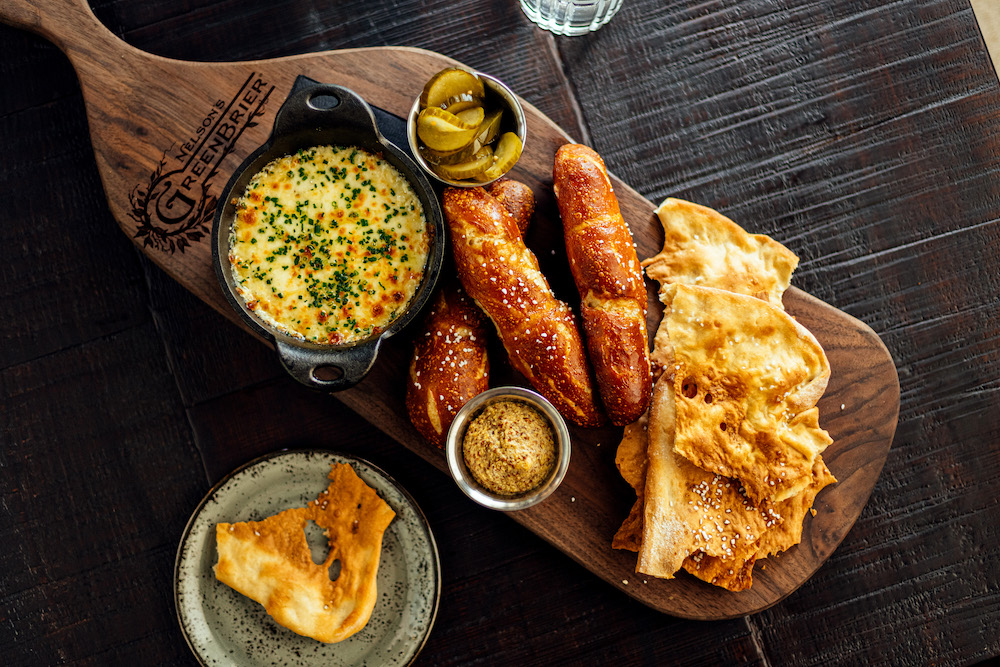
    Hot Pimento Cheese Dip | Nelson’s Green Brier Distillery

    Tennessee’s original whiskey brand, Nelsons’ Green Brier, doesn’t excel in bottled spirits alone. Their whiskey-forward menu at the distillery restaurant is a draw all its own, and they’re sharing a decadent Southern appetizer to whip up for the Big Game. 

    Mix 12 ounces of softened cream cheese with a cup of sour cream, a pound of shredded white cheddar cheese, and eight ounces of diced white American cheese. Slowly add an eight-ounce can of diced green chilies, a cup of diced and roasted jalapeños, 10 roasted garlic cloves (minced), some cayenne, granulated onion, rosemary, and chopped green onions. 

    Once fully incorporated and seasoned with S&P to taste, pop the mixture in a cast-iron skillet and bake at 325°F for 25 minutes. Serve with pretzels, veggies, or pita, and of course, a bold glass of Tennessee whiskey.

    Boiled Peanuts | Chef Kevin Gillespie, recipe from Fire In My Belly

    Skip a stop at your roadside favorite and try your hand at your own boiled peanuts, perfect for snacking during the Big Game. Chef Kevin Gillespie shares a peek inside his cookbook, Fire In My Belly, with this simple recipe. 

    Boiled peanuts come with some caveats: green peanuts (which refers to them being freshly harvested, not green in color) are not always available, so chef Gillespie says the occasion befitts calling out of work.

    Soak three pounds of cleaned green peanuts overnight (if you’re reading this and said, ‘Whoops, I’m making these today,’ you can just boil them a little longer in the next step). Rinse and place in a Dutch oven with four ounces of diced bacon, a good bit of salt, some dried tyme, garlic powder, cayenne pepper, and celery seeds. Cover with water (there should be about a third more water than peanuts) and simmer for three to five hours. Don’t overcook or they’ll absorb too much salt. The best way to ensure this? Taste them every 15 minutes after the three-hour mark.

    Once soft, let them cool and dish ‘em up just in time for kickoff. 

    P.s. If you’re new to boiled peanuts, don’t eat the shells.

    Image: Little Coyote

    Classic Queso | Chef Erik Niel, Little Coyote

    Queso is a must at any app-centered gathering, and Chattanooga chef Erik Niel has you covered with his classic recipe served at Little Coyote. Melt two tablespoons of butter in a sauce pan, then add half a small onion (diced), a diced and seeded jalapeño, and a diced and seeded red bell pepper, then sauté for a few minutes until all are softened. Then, stir in a diced Roma tomato and cook for two more minutes. 

    Bring on the cheese – start by pouring in two cups of half-and-half and bring the mixture to a gentle simmer. Gradually add in eight ounces of American cheese and stir until melted, then double down with eight ounces of Chihuahua cheese (or any melty Mexican cheese). Whisk it all until it’s smooth and creamy, then serve nice and hot with your favorite dipper. 

    Looking for more recipes? Check out our cookbook.

  • North Carolina’s Must-Try Black-Owned Food Spots

    North Carolina’s Must-Try Black-Owned Food Spots

    Featured image: Charlotte Regional Visitors Authority

    To celebrate Black History Month, we’re shedding light on some of North Carolina’s most popular Black-owned food purveyors. From fine dining and food trucks to sweet shops and fish frys, flavors run deep in this Southern state, and the personalities in the kitchen are as diverse as the culinary creations.

    Here’s just a taste from around the state.

    Image: Jammin’ All Day Long

    Jammin’ All Day Long | Wake Forest

    This saucy business was born out of Kelsey Rigby’s love of the spicy flavors he craved from his native Bahamas. You’ll find Rigby and his wife Teresa at the Wake Forest farmer’s market, selling jerk chicken and beef patties, as well as  jams and sauces through Jammin’ All Day Long. To get just the right island flair, Rigby grows his own peppers. Tropical Ghost Pepper Jam and Chipotle Cranberry BBQ sauce are just a few of their best-sellers.

    Image: Mia’s Kitchen

    Mia’s Kitchen | Raleigh

    Also from the Bahamas, Raleigh-area resident Hermia Sands is no stranger to the kitchen. Growing up as one of 10 children, she was cooking for her whole family by age 10. Her passion for feeding others fueled her dream of having her own place, and in 2022, Sands opened her Bahamian food truck, Mia’s Kitchen. Devoted fans line up for conch fritters, curry chicken and other island favorites. 

    Image: Samantha Everett

    East Durham Sweet Shoppe | Durham

    At this gourmet candy shop, owner Stacy Michelle has just the treat you’re craving, from premium ice cream and candied fruit to gourmet popcorn and cake pops. In addition to their own hand-crafted treats, East Durham Sweet Shoppe showcases Black-owned bakers like Royal Cheesecakes & Varieties to spread the love.

    Image: Matt Ray Photography

    Catch | Wilmington

    James Beard finalist, Top Chef participant, and Catch restaurant chef and owner Keith Rhodes hopes you will “catch his passion” for North Carolina seafood. Showcasing seasonal ingredients from organic growers and local sustainable fisheries is part of his recipe for success; Rhodes has been named the city’s best chef three consecutive times. As an advocate for preserving the region’s food history, he helped develop the Gullah/Geechee Cultural Heritage Corridor and serves as a “designated culinarian” along the route. 

    Image: Distinctly Fayetteville

    Dirtbag Ales | Hope Mills

    Dirtbag Ales’ story starts with Tito Simmons-Valenzuela, a U.S.Army combat medic with a passion for craft beer. Simmons-Valenzuela experimented with a home brew kit, and a single batch of Blood Orange Kolsch was his springboard to success. Now, jalapenos, coffee, blueberries, and pineapples all make their way into his creative brews. An onsite restaurant, playground, and dog park make this brewery a hopping neighborhood gathering spot.

    Image: Discover Durham

    Zweli’s | Durham

    At the first full-service Zimbabwean restaurant in the United States, Chef Zweli Williams and her husband Leo introduced diners to the cuisine of her homeland with original recipes and imported spices. Garlic-infused Peri Peri Chicken, peanut-y Dovi collards, and unlimited sides make Zweli’s one of Durham’s favorite restaurants. Leveraging their success, the couple opened Zweli’s Ekhaya in 2023, focusing on elevated African tapas.

    Image: Peter Taylor

    The BayHaven Food and Wine Festival | Charlotte

    James Beard finalist Gregory Collier and wife/business partner Subrina are on a mission to elevate the city’s Black dining scene and empower the community. In addition to their own restaurants  Uptown Yolk, 3rd & Fernwood and  Leah & Louise (closed for relocation), this power couple founded the BayHaven Food & Wine Festival, celebrating the culinary heritage of the African Diaspora. They are also hands-on supporters of Serving the Culture (see below).  

    Image: Charlotte Regional Visitors Authority

    Serving the Culture | Charlotte

    Pop-up dinner series Serving the Culture gathers talented Black chefs and mixologists to celebrate the area’s finest African American cuisine. Events center around a musical theme, integrating Black culture into a high-end  multi-course dinner party.

    Co-founders Shelton Starks, Winston Robinson, and Jamie Barnes (of now-closed What the Fries fame) strive to share their love of hip hop and food through these creative high-end events. Cocktails named after artist Cardi B and a dish celebrating rapper Megan Thee Stallion’s love of pickles are just a few past offerings.

    Image: ExploreAsheville.com

    Good Hot Fish | Asheville

    Ashleigh Shanti’s awards include The New York Times’ list of “16 Black Chefs Changing Food in America,” and  James Beard Rising Star of the Year semifinalist. Despite the fame, she’s stayed true to her roots, cooking up food influenced by her Southern Appalachian matriarchs.

    In 2024 Shanti opened a counter service restaurant inspired by the nostalgia of Southern fish camps: Good Hot Fish. She shares her journey in her recent cookbook “Our South: Black Food Through My Lens.”

    Image: Visit WinstonSalem.com

    Sweet Potatoes | Winston-Salem

    Capitalizing on North Carolina’s passion for sweet potatoes (they are the nation’s top producer), chef-owner Stephanie Tyson and partner Vivián Joiner opened Sweet Potatoes restaurant. The tempting tuber finds its way into cornbread, salads, waffle fries, and biscuits at this Southern down-home cooking spot.

    Tyson’s cookbook “Well, Shut My Mouth!: The Sweet Potatoes Restaurant Cookbook” shares the duo’s story of building the restaurant, along with delectable recipes to try at home.

  • How Charleston Brought Grits Back to High-End Menus

    How Charleston Brought Grits Back to High-End Menus

    “I don’t get no respect” — Grits

    They’re as warm as the rising sun, as hearty as opera, as healthy as a hug. Dab a bit of butter on top and you’re in morning paradise.

    But grits get no respect.

    Most Americans make faces when you mention this ancient breakfast food that’s long beloved in a region of the South known as the “grits belt”—southern Virginia to northern Florida and inland several hundred miles. South Carolina is the center of grits country, Charleston the capital, and it’s here that artisan entrepreneurs are grinding a new path for 21st century grits made from centuries-old corn varieties.

    “If you don’t like grits, that’s because you’ve never had good grits cooked right,” avers Greg Johnsman, founder of Marsh Hen Mill on Edisto Island, an hour south of Charleston.

    Johnsman offers white, yellow, blue and red grits from heirloom corn varieties produced on site, or grown for him by local farmers, and ground on three antique stone grits mills he has accumulated over the years. It’s been a labor of love, but success has followed: The mill store on Highway 174 draws dozens of visitors a day; online sales are strong; and Marsh Hen Mill grits appear on many menus in the region, such as the Charleston Chef Service private dining collaborative.

    Antique machinery at the Marsh Hen Mill | Image: Eric Lucas

    Anthropologists figure corn has been a staple food in Meso-America for 6,000 years, just as wheat has been in the Old World. Bred from an endemic grass, teosinte, in Central America, corn spread north among Native peoples as far as Montana, from Pacific to Atlantic. Shown this reliable provender by Carolina’s indigenous Muskogee people, it was quickly adopted by hardscrabble Low Country settlers from Europe who struggled to find prosperity in the swamplands of the coast, and has remained a low-glamour staple ever since.

    “This is just down-home blue collar food,” Johnsman explains. “Easy to grow. Stores well for years. Easy to cook. Grits were not served in the plantation estate’s dining room on bone china. They were in the workers’ cottages. You can church it up with embellishments like cream and honey, but if you have good grits cooked well, a pat of butter will do. Go back a few generations around here and people truly could live off the land.”

    Nor are grits just breakfast food. Visitors to South Carolina can hardly pick up a restaurant menu without encountering shrimp and grits, a savory, rich lunch or dinner dish that reflects the fact this is one of the few places left where locally-caught wild shrimp are still pretty common—and that once upon a time, hard as it may be to believe today, shrimp were also a blue-collar repast frowned on by upper-class chefs. Now that shrimp have been culturally upgraded, shrimp and grits bears a touch of upscale cachet.

    Lunch platter at Hyman’s Seafood, Charleston | Image: Eric Lucas

    Johnsman’s approach to his artisan business is almost evangelistic, with the sort of vivid flair and fervent belief one might find behind a pulpit. His varieties sport distinctive, colorful names such as Jimmy Red, Sea Island Blue, Guinea Flint and Unicorn—the latter such a rare variety that cultivar restoration began with just one last lone cob of seeds.

    “A cadre of crazy characters filling the world with flavor one bag of stone-ground goodness at a time,” is the way he describes his business.

    “We’re in the grits renaissance,” he tells me. “They’re cool. They’re in Michelin-star restaurants. Everybody’s catching on. I worked a while back with a chef from Sweden. Sweden!

    “When I started out everyone thought I was crazy. Now I’m not quite as crazy as I used to be,” Johnsman says.

    While an artisan food business may be so globally engaging in the 21st century that it reaches Scandinavia, evangelizing for grits is nothing new in the Low Country.

    “An inexpensive, simple, and thoroughly digestible food, [grits] should be made popular throughout the world,” The Charleston News and Courier proclaimed in 1952. “Given enough of it, the inhabitants of planet Earth would have nothing to fight about. A man full of [grits] is a man of peace.”

    A half dozen other mills across the Low Country also produce custom grits, but Johnsman is the leader with six types in several grinds, plus sidelines in red peas, Carolina rice, and a couple ancient forms of wheat.

    Grits remain his first love, though. Given his “guaranteed satisfaction” recipe, it’s little wonder: “Pot licker” grits include pork sausage, butter and heirloom yellow corn. Simple but profound.

    “You won’t be able to resist licking the pot as clean as a whistle,” he vows.

    When you savor a dish like that, it’s worth simultaneously savoring the fact that this simple food has been helping people thrive on our continent for thousands of years. Now it’s high cuisine in the Low Country.

    Lifelong journalist and editor Eric Lucas lives on a small farm on an island north of Seattle, where he grows organic hay, garlic, apples, beans and corn—an heirloom red flour corn that he grinds into grits for his household.

    Looking for more Southern cooking basics? Here you go.

  • Lunar New Year Dishes: Feast of Good Fortune

    Lunar New Year Dishes: Feast of Good Fortune

    Lunar New Year is more than just the start of a new calendar—it’s a time to reset, reflect, and reconnect with loved ones. Celebrated in many Asian cultures, this holiday is all about sweeping away the bad, holding space for the good (🤏), and welcoming abundance, health, and happiness for the year ahead. From cleaning your house (goodbye, bad vibes) to lighting up the night with fireworks, every tradition is rooted in hope and intention. And, of course, there’s the food—because no celebration is complete without it.

    At Sunda New Asian, the holiday comes to life through dishes that honor tradition while embracing modern techniques.

    “At Sunda, we are excited to celebrate Lunar New Year, a time to honor the traditions and culture of Southeast Asia,” shares Michael Morales, culinary director. “The holiday marks a time to come together with loved ones and reflect on the past year while looking ahead with hope and joy. It’s also a chance for us to share the vibrant flavors that make this celebration so meaningful.”

    From rich, umami-packed sauces to crispy, golden bites, every dish is a nod to prosperity and good fortune. Here’s a taste of what’s on the menu this Lunar New Year at Sunda—and how to bring the celebrations into your own home.

    Image: Sunda New Asian

    Hong Kong Steak Lo Mein

    Long noodles symbolize longevity, making lo mein a staple at any Lunar New Year table. Sunda’s take on this dish features tender slices of steak coated in a luscious Hong Kong Sauce—a savory-sweet blend of oyster sauce, garlic, ginger, and a touch of achiote paste for depth. Tossed with perfectly chewy noodles and crisp vegetables, this dish is a delicious way to ring in the new year with wishes for a long, prosperous life.

    Image: Sunda New Asian

    Lion’s Head Meatballs

    These oversized, flavor-packed meatballs are a showstopper, both in name and taste. Symbolizing strength, family unity, and protection, Lion’s Head Meatballs are made with a mix of lumpia mix (ground pork), glass noodles, and Shaoxing rice wine, then fried to golden perfection. They’re served in a rich, glossy sauce that’s equal parts sweet, salty, and umami, making them an irresistible addition to any festive table.

    Image: Sunda New Asian

    Off the Hook Snapper

    Whole fish is a must for Lunar New Year, representing abundance and a good year ahead. Sunda’s ‘Off the Hook’ Snapper is an eye-catching centerpiece, featuring crispy fried red snapper served with a dynamic duo of sauces: a bright, citrusy ginger vinaigrette and a deeply savory Shaoxing sauce.

    Looking for more recipes? Here’s our cookbook.

  • Lunar New Year: Off the Hook Snapper

    Lunar New Year: Off the Hook Snapper

    Whole fish is a must for Lunar New Year, representing abundance and a good year ahead. Sunda’s ‘Off the Hook’ Snapper is an eye-catching centerpiece, featuring crispy fried red snapper served with a dynamic duo of sauces: a bright, citrusy ginger vinaigrette and a deeply savory Shaoxing sauce.

    “Our Whole Crispy Snapper is a nod to good fortune, as fish is traditionally served whole to bring abundance and success for the year to come,” shares culinary director Michael Morales. “At Sunda, we take these time-honored dishes and elevate them with premium ingredients, refined flavors, and innovative techniques that add a modern twist while honoring their traditional roots.”

    Try Sunda’s Off the Hook Snapper at your at-home celebrations.

    ‘Off the Hook’ Snapper

    Prep Time 15 minutes
    Cook Time 20 minutes
    Course Main Course
    Cuisine Chinese
    Servings 1

    Equipment

    • Bowl
    • Wok
    • Tongs
    • Wok Ladle

    Ingredients
      

    • 1 ea Snapper Portion
    • 2 cup Karaage Flour
    • 2 oz Canola Oil
    • 2 oz Spanish Onion Sliced
    • 1 oz Dried Chili Mix
    • 4 oz Pineapple Diced
    • 4 oz Red Pepper Diced
    • 8 oz Shaoxing Sauce
    • 1 oz Scallion Baton
    • 1 tbsp Szechuan Spice
    • 1 tsp Kosher Salt
    • 1 oz Scallions Sliced
    • Cilantro Leaves Pinch
    • 2 oz Crispy Rice Noodles

    Instructions
     

    • Place the Snapper Portion in a bowl.
    • Dredge with Karaage Flour.
    • Fry until the internal temperature reaches 145°F and the fish is golden brown in color.
    • Remove and place in a bowl; season with Szechuan Spice and Kosher Salt.
    • Heat the wok and add Canola Oil.
    • Add the Sliced Spanish Onion, Scallion Baton, Pineapple, and Red Pepper; cook for at least 3 minutes.
    • Add the Dried Chili Mix and cook until fragrant.
    • Add the fried Snapper and toss gently—be careful not to break apart the fish.
    • Finish with Shaoxing Sauce.
    • Place the Snapper body on the plate.
    • Top the center of the body with Crispy Rice Noodles.
    • Place the fish on top of the noodles.
    • Pour sauce over the dish.
    • Sprinkle Sliced Scallions and Cilantro Leaves on top.
  • Lunar New Year: Lion’s Head Meatballs

    Lunar New Year: Lion’s Head Meatballs

    Meatballs, often enjoyed as a family dish, evoke a sense of warmth and connection—perfect for celebrating the new year. This recipe from Nashville’s Sunda New Asian pairs them with fresh napa cabbage, bok choy, and a savory sauce… a is a must-try for welcoming the new year with good fortune and delicious flavors.

    “Lion’s Head Meatballs symbolize family unity and prosperity, as the round shape represents completeness and togetherness,” shares culinary director Michael Morales. “At Sunda, we take these time-honored dishes and elevate them with premium ingredients, refined flavors, and innovative techniques that add a modern twist while honoring their traditional roots.”

    Try Sunda’s Lion’s Head Meatballs at your at-home celebrations.

    Lion’s Head Meatballs

    Prep Time 15 minutes
    Cook Time 20 minutes
    Course Main Course
    Cuisine Chinese
    Servings 5

    Equipment

    • Steamer basket
    • Small pot
    • Tongs

    Ingredients
      

    • 5 Meatballs
    • 3 pieces Napa Cabbage
    • 3 oz Bok Choy Leaves
    • 2 oz Bok Choy Tops Chiffonade
    • 4 oz Meatball Sauce
    • 1 oz Scallions Sliced
    • 5 pieces Pickled Red Chili

    Instructions
     

    • Line a large steamer basket with Napa Cabbage and Bok Choy.
    • Top with Meatballs.
    • Place in the steamer and cook for 10 minutes (set a timer).
    • In a small pan, add the Meatball Sauce and bring to a simmer.
    • Once the timer is done, take the Meatballs and add them to the sauce.
    • Make sure all the Meatballs are coated in the sauce.
    • Place the Meatballs back in the steamer basket.
    • Top each Meatball with Pickled Red Chili.
    • Add Bok Choy Chiffonade in the middle of the basket.
    • Sprinkle Scallions over the dish.