Bubble lovers across the country have taken to a new phenomenon known as the “dirty soda” trend. But, dirty doesn’t mean what you think in this case (wink wink). Thanks to social media and, let’s be real, The Secret Lives of Mormon Wives, soda shops specializing in unique flavor combinations and add-ins have been popping up all over the country (Swig, Sodalicious, and FiiZ to name a few).
Though this trend is certainly newer to the beverage scene, it’s no secret that Sonic did it first. They started in Oklahoma over 70 years ago and have been going strong ever since. Nerds in your drink? Come on. While these shops are certainly spreading like wildfire, they’re not in all major cities or surrounding towns just yet (Who can you find in most small towns, population 1,000? Sonic. Tried and True.).
While dirty sodas are typically made with the usual suspects—ginger ale, Coca-Cola, Sprite—we want to give the trend a Southern spin, teaching you how to spruce up our regional favorites.
Cheerwine is a Southern-made soda that was originally founded in Salisbury, North Carolina. Its flavor is akin to a traditional cola but features the tangy, sweet flavors of cherry, vanilla, and a little bit of spice. It is known for its syrupy consistency and higher carbonation, making it the perfect treat for any occasion. Jazz up your next Cheerwine with this recipe:
Combine over ice, gently stir, and serve:
1 can Cheerwine
1 oz vanilla coffee creamer
1 oz coconut cream
Fresh lime juice, to taste
RC Cola
Very fittingly, pharmacist Claud Hatcher has as much knack for flavor as he did for drug compounding. He developed RC Cola in 1905 in Columbus, Georgia. Drinkers describe it as the perfect balance between two other major cola brands, which shall remain nameless. RC Cola was not only the first brand to be sold in cans but also the first to offer a diet option. Pay homage with this recipe:
Combine over ice, gently stir, and serve:
1 can RC Cola
1 oz peach syrup
½ oz half and half
Fresh lemon juice, to taste
Optional: A dash of cayenne pepper for a little spice
Ale-8-One
Ale-8-One, contrary to most ginger ale-type beverages, is a caffeinated soft drink originally founded in Kentucky in 1926. Featuring hints of citrus and ginger, it is light, crispy, and perfectly refreshing, proudly wearing the title of “Kentucky’s soft drink.” Amp up the flavors with this recipe inspired by a classic mule:
Combine over ice, gently stir, and serve:
1 can Ale-8-One
1 oz coconut cream
Fresh lime juice, to taste
Dr. Enuf
This citrus beverage is the perfect pick-me-up. Why? Unlike traditional soft drinks, Dr. Enuf is fortified with vitamins and minerals and is on the slightly less sweet side—that means health, right? Good “Enuf” for me! Give this Johnson City, Tennessee-based beverage a tropical spin with this recipe:
Combine over ice, gently stir, and serve:
1 bottle of Dr. Enuf
1 oz fresh orange juice
1 oz coconut cream
Fresh lime juice, to taste
Note: You could also swap out the coconut cream for heavy cream, drop the lime juice, and make this into a fizzy orange julius!
Barq’s Root Beer
This Mississippi-founded drink is a top contender in the age-old “what’s the best root beer” contest (though, we might be a little biased). Unlike most traditional root beers, Barq’s is known for its more intense flavor profile, giving it the catchphrase “Barq’s has bite.” Who doesn’t love a little bite? Another facet that sets this root beer apart is that it does contain caffeine, unlike most brands. For a float-like vibe without the ice cream, try this recipe:
Combine over ice, gently stir, and serve:
1 can Barq’s root beer
1 oz vanilla syrup
1 oz heavy cream
Optional: a few maraschino cherries and 1 oz maraschino cherry juice
At the end of the day: freak what you feel! Let your culinary creativity fly and get mixin’ with something that sounds delicious to you. With dirty sodas, the opportunities are truly endless.
Panama City locals and visitors alike are serious about their oysters. The Gulf waters nearby help them taste just like a vacation themselves: they’re notoriously briny, clean, and seriously salty.
There’s so much love for them around town that Destination Panama City has created an official adventure, The Panama City Oyster Trail, which connects more than a dozen restaurants and oyster houses across Millville, Historic Downtown, and St. Andrews. The trail spans everything from raw oysters shucked to order to creative preparations involving butter, bacon, cheese, heat, you name it.
There’s even a documentary about Panama City’s oyster culture called “The Oyster Shucker” that follows Honor Allen, a local chasing the title of “youngest world champion oyster shucker.”
If you’re planning a trip to Panama City or you’re looking for a food-forward destination worth the drive, we’re highlighting a few stops on the Panama City Oyster Trail here. But note: there are plenty more worth your time.
Image: Destination Panama City
Hunt’s Oyster Bar
Hunt’s Oyster Bar has served fresh seafood for more than 55 years from a charming yellow bungalow by the bay, which today has expanded to multiple floors offering spectacular sunset views. Before you walk in, you’ll hear crushed oyster shells crunch under your feet in the parking lot. Collins Abrams now owns Hunt’s, carrying the torch of generations before him. It’s been named one of the best places to eat oysters in Florida multiple times, and during August, Hunt’s celebrates National Oyster Day by giving first-timers a “Golden Oyster” trophy.
Image: Destination Panama City
Gene’s Oyster Bar
Gene’s Oyster Bar is one of the oldest original oyster bars in Bay County. The building–which looks like an old corner store–dates back to 1910. It was originally Hiram Conrad’s Oyster Bar before becoming Gene’s in 1969. The layout started as just one small room with a 10-stool wooden bar and has expanded to include a full dining room. Oysters are shucked fresh in front of you, served with saltines, lemon, horseradish, and hot sauce. Note: Gene’s is cash only.
Image: Destination Panama City
Captain’s Table Fish House
Rena Dell Windham bought this place for $75–a wedding gift–in 1930. It changed generational hands over the years until it burned in 1993. But Capt. Mitch Holman, a descendant of Windham’s, eventually revived it, and today, Captain’s Table Fish House has a seafood-packed menu with po’ boys, crab legs, and, of course, oysters.
Image: Destination Panama City
Alice’s on Bayview
Alice’s on Bayview sits on the corner of the St. Andrews Marina with waterfront views and a menu of coastal favorites: Panama City oysters, smoked tuna dip, Crab Cake Eggs Benedict. The place overlooks St. Andrews Bay and the marina, with cozy indoor seating and a few patio tables for sitting in the sunshine.
Image: Destination Panama City
Bayou Joe’s
Bayou Joe’s sits on a dock above Massalina Bayou with views of the Tarpon Dock Bridge, the only working drawbridge in Northwest Florida. The restaurant is perched mere feet above the bayou. Owners Kevin and Jennifer Shea have carried on a longstanding tradition with the space: once historic Etheridge Marina, boats would pull up to the dock for fuel. Today, those boats can still dock and fuel in a different way… with Bayou Joe’s oysters and other beloved menu items like the Trash Burger. I’d list the ingredients, but no two are the same; it’s fully chef’s choice.
Uncle Ernie’s Bayfront Grill and Brew House
Uncle Ernie’s sits in Historic St. Andrews in a house built in the late 1800s; it was the home of Ernest (Uncle Ernie) and Jessie Morris. Uncle Ernie was born May 19, 1898, married Aunt Jessie on May 7, 1925, and had four children. Today, the restaurant is lined with photographs of the family. The two-story setup means there’s ample outdoor seating for anyone wanting a waterfront view while they slurp down their Gulf oysters.
Featured Image: Donna Sanders/Where the Food Comes From
Picture this: 6 a.m., July 16, 1969. Three men are making final preparations for what will be the journey of our lifetime. And one highly esteemed journalist—the legendary Walter Cronkite—has just begun his coverage for CBS News in the Media Building at Cape Canaveral’s Kennedy Space Center.
Image: Donna Sanders/Where the Food Comes From
Per Mr. Cronkite, “Three hours and 32 minutes until man begins the greatest adventure in its history… This morning, Man is about to launch himself on a trip to the moon with the expectation of landing there. The dawn of this day heralded the dawning of a new age.”
Image: Donna Sanders/Where the Food Comes From
Fast forward to July 31, 2026–56 years later–and I am standing in that very same media building, remembering my 10-year-old self watching Mr. Cronkite on television, preparing the nation for Apollo 11’s flight to the moon. Yes, you know the one: Neil Armstrong, Michael Collins, and Edwin “Buzz” Aldrin.
Image: Donna Sanders/Where the Food Comes From
And as I looked around that historic building, I could feel Mr. Cronkite’s presence and hear his voice. Talk about goosebumps. Holy rocket fuel, Batman! But why am I, Producer and Host Chip Carter, and crew of Where The Food Comes From at Cape Kennedy?
Image: Donna Sanders/Where the Food Comes From
I will tell you, but you might not believe me: To film the launch of NASA Crew 11 aboard a Falcon 9 rocket to the International Space Station (ISS). Makes no sense, right? After all, WTFCF is a show about food and farming. Hang on…
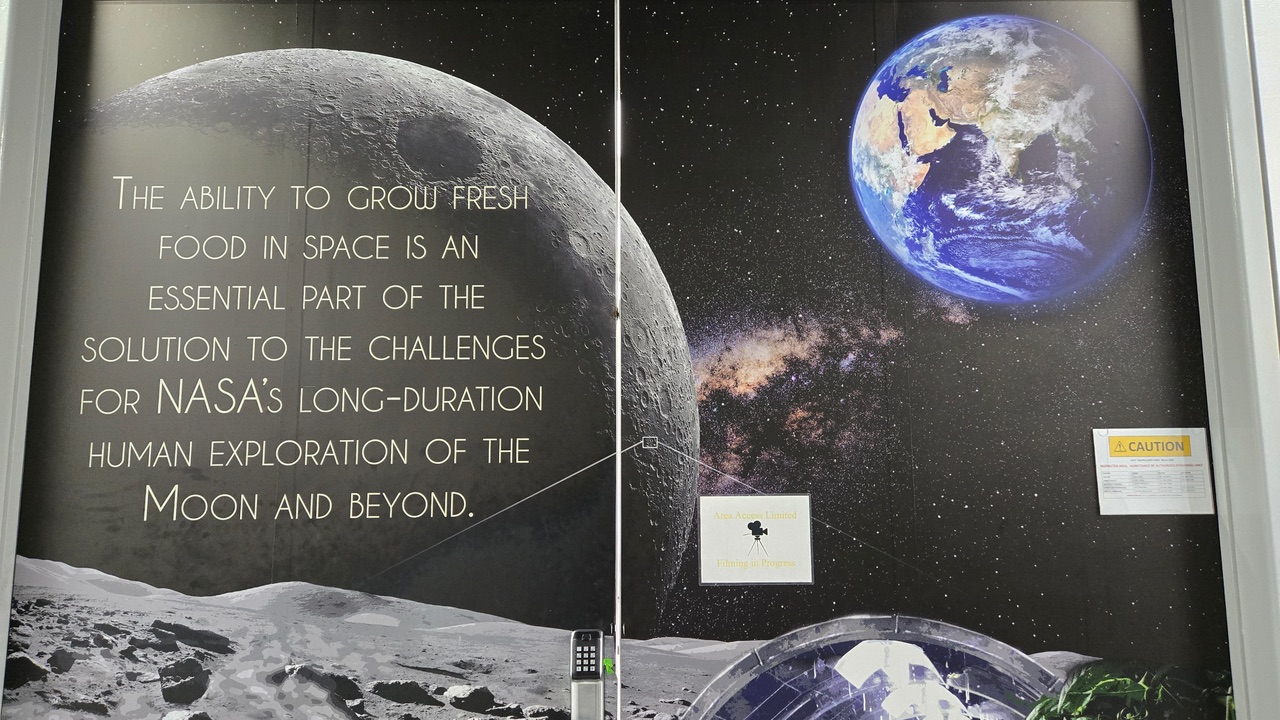
A couple of years back, Chip caught wind that the University of Florida was growing Earth crops in 50-year-old moon soil. He wondered, “Why now?” We came to Cape Kennedy in April to check it out—what we saw convinced us this story had to come to air and in a big way.
Image: Donna Sanders/Where the Food Comes From
Following a rigorous security clearance process that lasted weeks, we drove through the gates at Cape Kennedy. Being NASA, it wasn’t like we could just wander around. We had to leave our cars and move all the equipment—checked by a K9 team—into public affairs specialist Leah Martin’s van. Leah was one of our guides and chaperones for the day.
Image: Donna Sanders/Where the Food Comes From
Inside, we were greeted by NASA Public Affairs Specialists Danielle Sempsrott and Stephanie Plucinsky. With a quick right through a pass-protected door, we arrived at the Space Crop Production Lab to see—wait for it—how food will be grown in space!
Fun Fact: I don’t think many of us realize that people have been living in space every second of every day since November 2, 2000. For the future of space exploration, ensuring missions are food-sufficient has become a top priority.
Image: Dona Sanders/Where the Food Comes From
I was a bit surprised when we entered the lab. There were very few plants in sight. I was expecting a greenhouse environment, lights, and a lot of tubing. Instead, I saw huge containers with vacuum-lock doors.
Image: Donna Sanders/Where the Food Comes From
Our first peek into what was going on came from the plant biologist team lead scientist, LaShelle Spencer. LaShelle spoke about the need for crop diversity to keep the astronauts’ diet exciting.
Fun Fact: LaShelle told us the astronauts love spicy food because their senses of taste and smell are dulled in Zero G. Their current favorite? Shrimp cocktail.
Image: Donna Sanders/Where the Food Comes From
So, what’s behind Door #1? Dandelions! And spinach, basil, and other greenery, all
growing under extremely controlled conditions. It’s a new wrinkle on the old idiom, “Variety is the spice of life.” I am sure the astronauts will appreciate it.
Image: Donna Sanders/Where the Food Comes From
NASA scientist 1, Rachel Tucker, was so very patient with me and answered every question. She explained the experiments in each unit mimic traditional farming issues: floods, drought, soil problems… all just in case.
The main challenge is the all-important water delivery system. I chuckle when I think about astronauts trying to catch floating droplets. So how do you water plants?
Image: Donna Sanders/Where the Food Comes From
Easy: A simple and quite effective tubing system that delivers drops directly into the soil from the bottom of an otherwise sealed container that still lets the plant itself poke through.
Image: Donna Sanders/Where the Food Comes From
Each plant has to be precisely measured and weighed. Plant consistency is key because of the tight working conditions on the ISS and future space colonies. Every inch of space, every ounce of weight matters.
Image: Donna Sanders/Where the Food Comes From
NASA project scientist Natasha Haveman took our mission one step further. She explained that nothing goes to waste. Like any good farmer, they’re stewards and make the most of what they have. They even recycle dirty cotton t-shirts into growth medium for mushrooms.
Image: Donna Sanders/Where the Food Comes From
We then made our way to the NASA Vehicle Assembly Building (VAB). Commissioned in 1964 and built in 1966 to assemble the vehicles sent to the moon, it now houses Artemis, which will soon take us back. According to Leah, “Every vehicle that has ever carried a human into outer space was assembled in that building.”
I can only picture what it must look like inside. We couldn’t go in. Even our top-level security clearance didn’t go that far. We filmed a few transitions and other setups for the show with that amazing backdrop, then it was back to the Space Lab for a few more reveals.
Image: Donna Sanders/Where the Food Comes From
Back at the lab, we meet Dr. Tyler Descenza from Florida Institute of Technology. One of Tyler’s assignments was to recreate the lunar soil Apollo astronauts brought back to test what might grow in it. The real stuff is quite rare, so Tyler had to make the substitute. I did ask about the recipe but—no surprise—it’s top secret. There was a lot of that going around.
Image: Donna Sanders/Where the Food Comes From
So you know how they’re going to water and grow plants — what about harvest? Look closely at this white gadget. It works like a pepper grinder; twist and it chops sprouts. The little net captures the greens before they float away. Bonus – the net makes a handy rinsing container. Efficiency at its finest.
After we poked our heads in all the bays and saw all the crops growing in a variety of mediums, some for Zero G, some for a lunar colony, Day One was done.
And now it’s on to Launch Day. T-Minus 26 hours and counting.
Image: Donna Sanders/Where the Food Comes From
We start bright and early, 5:30 a.m. to be specific, and by 8 a.m., during the astronaut walkout, Chip manages to get a couple of pictures of Commander Zena Cardman saying goodbye to her mom. Disclaimer: They are real tear-jerks. Remember, they’ve been in quarantine, so there’s no touching.
Image: Donna Sanders/Where the Food Comes From
Commander Zena Cardman gave her mom an air hug. Nope – no touching. And then blowing Mom a goodbye kiss. So much emotion in this picture, Pulitzer Prize-worthy.
It is still very early, and liftoff isn’t until 12:09. Time to grab another cup of coffee
and interview University of Florida Institute of Food and Agricultural Sciences Dr. Wagner Vendrame, whose work is on board the Falcon 9.
Image: Donna Sanders/Where the Food Comes From
Dr. Vendrame is a seed specialist. Watching him stare at Falcon 9, I ask how he feels seeing his babies heading to space. “Excited. I feel like crying,” he replies. Which is understandable—and relatable.
His seeds will return to Earth when the mission ends. After a period of quarantine, he will analyze for nutrient uptake and the effects of Zero G. And we’ll be one step closer to feeding humans in space.
Image: Donna Sanders/Where the Food Comes From
The camera crew and Chip are in positions staked out early that morning. My job is to watch the countdown clock; the crew is far ahead on the other side. My job was to cue Chip, who was facing away from the rocket, to start our carefully timed opening, which we hoped to synchronize with launch.
We knew the launch would be loud, and the end of Chip’s spoken opening would most likely be drowned out. Our solution? Cue cards showing the opening words of every episode.
Image: Donna Sanders/Where the Food Comes From
Now picture this. I am standing there watching the countdown clock, giving hand signals as it drops, waiting for the critical 30-second mark to cue. What happened next still makes my stomach nauseous, and my head hurt: The clock stopped!
My thoughts are racing – OMG! Did it break? Am I missing something? Now what? Let’s face it, it’s not like we can call the rocket back and do a retake or fix it in post!
Chip is looking at me, waiting for a simple signal. But what he sees is me hopping around, waving my arms up and down. He’s as clueless as I am.
The launch is scrubbed. With 33 seconds remaining, an ugly black cloud crept into range, close enough to call it off. Silver lining—we’re on again for the next day at 11:43 a.m. Fun Fact: Launch timing for every mission is critical. If you don’t hit the right window, it’s a no-go.
My first thought is for the poor astronauts. They have to sit on the rocket for a few more hours before going back to quarantine and getting ready to relive the whole day. As a mom, I don’t think I could have handled saying goodbye to my daughter again. As for us, it’s time to check back into the hotel.
Image: Donna Sanders/Where the Food Comes From
The next day arrives with the infamous Florida sunshine and heat that August brings — but the same amount of excitement. As the launch approached, the clouds began to gather. I silently wonder if it will be scrubbed again.
Chip is in the process of getting miked up and asks aloud if we should run the opening with the cue cards a few more times while we wait. It’s getting close. I think he’s a little nervous.
Image: Donna Sanders/Where the Food Comes From
Then we hear it. A very loud siren. I have no idea what it means; it could be the “go” signal or the end of the world. We didn’t hear it yesterday. The veteran crew next to me seems unhappy. The clouds are rolling in, and the wind is whipping up, and… was that a bolt of lightning?
Chip is still nervously running through the opening. I take my position by the countdown clock, ready to give the crucial 30-second signal.
Now I am watching the clock, watching Chip, and I can feel my anxiety level going up. With a minute left to launch, Chip is still rehearsing. I’m already panicking—and now comes a gust of wind that blows the cue cards out of his hands and 20 yards away.
The countdown continues—just seconds left, and our host is reshuffling cue cards while running to his mark. And I am dying. By this point, I have my hands atop my head and am literally trying to scream the countdown over the rising engine noise.
The mission is not scrubbed. As Chip slides back into place, still facing away from the rocket and with no idea what’s happening behind him, he begins the show opening. Falcon 9 launches behind him. He completes the opening. We are done. We are thrilled. We got it. And Chip begins his happy dance.
Until our lead cameraman, very quietly, very unassumingly says, “Yeah, but you missed your mark.”
No! In his scramble to recover the cards, put them back in order, and get back to his mark, Chip slid a full three feet to his right of where he was supposed to stop.
Our idea had been to have him in frame next to the Falcon 9 on the pad. In the chaos, he slid so far over his body that he completely blocked the rocket from view.
We were crushed. Devastated. So much planning. Such high hopes.
Image: Donna Sanders/Where the Food Comes From
But wait a minute… let’s look at that film. And what we see is amazing! Chip’s body does indeed block the Falcon 9. As he goes to the cue cards, at the most perfect moment, the rocket rises over his right shoulder.
What are the chances?!? The host blows it, and somehow it still works. My thought: There had to be a bit of divine intervention. Wouldn’t you agree?
Image: Donna Sanders/Where the Food Comes From
I missed it all. Chip talks about how the ground rumbled and shook, and as he turned to face the rocket and witness the launch, he’s pretty sure he saw the face of God.
I had a job to do. I didn’t see the smoke—in all its flaming glory—coming out of the bottom of the rocket, and the hold-down arm moving away, setting it free to soar into the sky. My heart was racing so badly watching and trying to cue Chip that I forgot to look. When I did finally gather my wits enough to look up, I saw a small streak of light that was Falcon 9 in the sky.
Yeah, I may have missed it all. But I didn’t “miss” any of it – I was, instead, part of it.
Standing with Dr. Vendrame, we are all still looking up at the sky in total and silent awe. The clouds have moved in, and we’re unable to see the boosters separating. A sonic boom and another round of trembling earth tell us what’s happening. As the rocket boosters return and land on a waiting ship, I realize what’s been the opportunity of a lifetime for us is, in reality, just another two historic days on Cape Kennedy.
Our day is done. Our NASA mission is over—at least this one. At least for now.
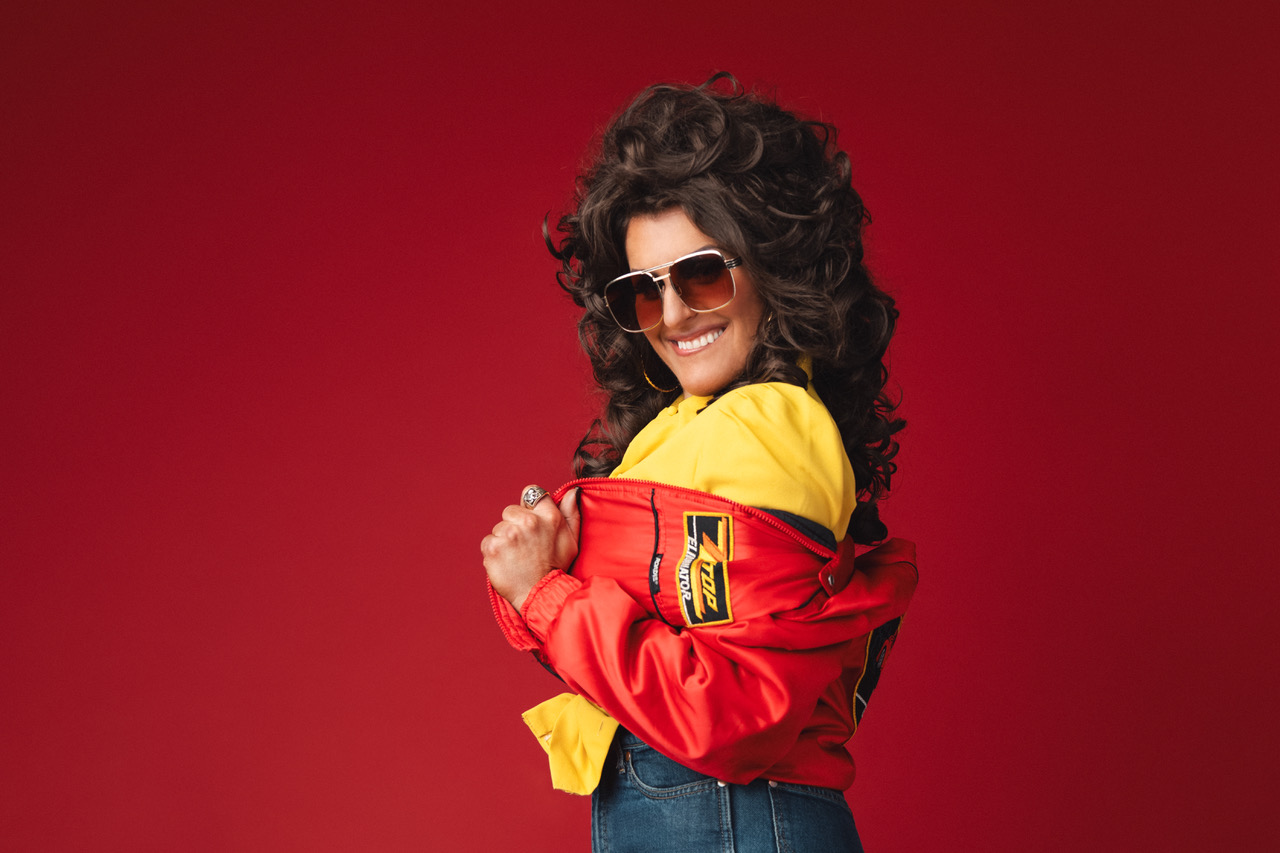
“Stand by your pan,” country artist Hannah Dasher croons to the tune of the famous Tammy Wynette ballad “Stand by Your Man,” as she stands in her retro kitchen that looks like it smells of Sunday lunch at your grandmother’s house. Dasher begins most of her TikTok cooking videos with this clever wordplay. When her dedicated followers — all 1.6 million of them — hear the familiar melody in Dasher’s signature alto, equal parts sultry and soulful, they know the Nashville starlet is about to impart some bona fide, old-school cooking wisdom.
“I’m splitting my time right now between Fender and frying pan,” Dasher quips, referring to the constant balance between her two passions: music and cooking. She goes on to tell me that she’s even cooking as we talk, while her videographer waits downstairs to shoot a music video in her home’s honky-tonk bar.
With more than a million streams on Spotify and recognition as a CMT Next Women of Country honoree, fans can’t get enough of the Savannah, Georgia-born artist’s vintage country sound and larger-than-life personality. Now, with the release of her cookbook this month — aptly named “Stand by Your Pan” — Dasher’s cast iron is getting a turn in the spotlight.
Image: Courtesy Hannah Dasher
Named after her viral TikTok series, in which she demonstrates tried-and-true Southern classics from cathead biscuits to “Getchyo’ Man Beef Roast,” “Stand by Your Pan” showcases all the recipes her fans salivate over. True to her unique charm, Dasher puts a modern twist on classic dishes and features flavors that are so good, as the book proudly states, “they’ll hurt people’s feelins.” Taught by her mother how to hold her own in the kitchen when she was 10 years old, and shaped by her Lowcountry roots in Savannah, it wasn’t until Dasher left home to tour the world as a musician that she learned the sanctity of a home-cooked meal.
“All soul food isn’t created equal,” she says. “[I realized] it’s just really hard to beat what I can make in my kitchen in my own home.”
Dasher’s finesse in the kitchen, much like her music, is influenced by the nostalgia of years past. She cites female country music forces like Tammy Wynette, Patsy Cline, and Loretta Lynn as major influences — wives and mothers who were expected to cook dinner for their families as well as they could perform on the Opry stage. Dasher aims to inspire women and men alike to take a page from these country legends’ playbook and be rock stars in and outside the kitchen. Throughout the cookbook, Dasher encourages readers to find empowerment in their inner domestic goddess, whether it’s through cooking dinner for a loved one or hosting the perfect Southern soiree. Because, as Dasher declares, the kitchen is sexy.
“Your food is love, and anyone who knows how to hold their own in the kitchen is very attractive,” she says. And the number one tip to making the kitchen more seductive for this chef? Keep it clean.
“Because you never know where you may wind up,” she says cheekily.
Image: Courtesy Hannah Dasher
But perhaps even more alluring than a clean kitchen or achieving the perfect meringue is staying true to oneself, something Dasher also happens to be a pro at. Preferring a homey kitchen with retro oak cabinetry to any modern luxury kitchen, never leaving the house without her signature retro-chic style — often featuring bell-bottom jumpsuits and perfectly hot-rolled hair — and exuding a warmth that makes you feel like she is your favorite glamorous auntie, Dasher is always authentically herself, a quality she credits to her faith and her love for people.
“I’m me 24/7, and God anoints us with different gifts — and I think my love for people is evident on screen, and I hope it continues to show through my work.”
For Phillip Ashley Rix, becoming a master chocolatier literally was a dream come true. While pondering his career path in his late 20’s, he had a vivid dream that he was in a chocolate shop with his mom and Willy Wonka. Rix had been a fan of the eccentric fictional chocolatier since reading Charlie and the Chocolate Factory and watching the movie in his childhood.
“I woke up at 3 a.m. and thought ‘I’m going to make chocolates for a living,’” he said. It was a sharp pivot from his earlier plans of studying chemistry and maybe going to medical school.
The Memphis native began reading, researching, and teaching himself how to make chocolates, eventually launching Phillip Ashley Chocolates online in 2012.
Rix views chocolate as a format for storytelling. His Soul Food Collection pays homage to Sunday suppers with his family, with confection flavors like fried chicken, collard greens, and mac ‘n cheese.
He remembers fondly spending time in the kitchen with his grandmother, Earlean “Jean” Word, as she made sweet potato pie and crafted her own hot sauce. She put Rix to work shucking peas and cleaning greens, instilling the importance of hard work.
But she also taught him cooking techniques and allowed him to experiment with unconventional combinations. This time in the kitchen together sparked his culinary creativity. He even named a chocolate after her: The Mama Jean, a sweet potato-flavored chocolate ganache bonbon that emulates her famous pie.
Image: Phillip Ashley Rix
Rix was also surrounded by art growing up, going to museums and galleries with his family. Music and books also played a role, as Rix sought to infuse his chocolates with sophisticated layers of flavor and texture, like an artist creating a painting. He describes the process as “chocistry,” the art of making chocolates.
“I didn’t want to just make dark chocolates. I wanted to build chocolates with things you wouldn’t expect, like barbecue sauce and miso and French bleu cheese. I wanted to translate my experiences into chocolate,” he explained.
Rix credits Memphis with providing a platform for success. The city is small enough to be supportive and friendly, yet large enough to be famous for its rich history, music scene, and eclectic vibe that welcomes visionary thinking. Much of what he loves about the city has been cultivated by Black men and women like his grandparents and their parents, he said.
“I learned the rules so I could break them,” said Rix, who had to understand the science of chocolate making, like tempering and liquid ratios, so he could push the boundaries with ingredients like hot sauce, bourbon, chilies, and cheese.
His innovative creations earned him the nickname of Willy Wonka, who was also famous for transforming ordinary candies into fantastical confections. As a contestant on the Food Network’s Chopped Sweets, Rix’s unorthodox style served him well when he was faced with incorporating fish sauce and tamarind paste into chocolates for the judges’ approval.
From serving chocolates at the 2017 Emmy’s Governor’s Gala to wooing celebs at the Oscars after parties with his sweets, Rix was making a name for himself in Hollywood. That momentum landed him on Oprah’s Favorite Things list in 2020 with his nut and caramel Perfect Turtle Set.
“Going viral (with Oprah) was amazing,” he said. “It’s not something you can really be prepared for.” The accolades continued with James Beard nominations in 2023 and 2024.
“The recipes are all based off of chocolates I’ve made,” Rix said. From Chocolate Sweet Potato Pie with Brown Sugar Meringue to “Bollywood” Cashew Coconut Curry Truffles, there’s a story behind each tempting recipe accompanied by mouthwatering photos.
Rix is spreading his chocolate love language even farther in 2026. When he’s not promoting his new book or tending his online chocolate shop, he’ll be hosting chocolate tastings across the US. Look for pop-up shops and tasting events in Atlanta, Houston, Washington D.C., and beyond.
“Chocolate is my love language – I’ve been saying that for a long time,” said Rix, who named his online shop www.chocolateismylovelanguage.com. “Giving them as a gift is more than just giving chocolate; it’s communication.”
When asked about his personal favorite, he replied, “I haven’t made it yet. That’s why I continue to make chocolates and think and dream up new things.”
Meet more inspiring Southern chefs here.This post contains an affiliate link.
The transition from winter to spring is an extra special one. The stores fill with bright colors and floral prints, and farmers markets transform from jarred jams and hearty crops to vibrant fresh produce. Seasonal sniffles may arrive, but that just means beautiful blooms are coming.
A quick note on timing: the South’s spring produce season has two gears. Early spring (March through mid-April) still belongs to the cold-weather crops—leafy greens, radishes, peas. But once things warm up, roughly mid-April through May, that’s when the excitement begins. Strawberries. New potatoes. Vidalia onions, all the best Southern seasonal produce sprouts to life and takes over our tables just as the days grow longer.
If you’re like me, cooking with seasonal produce is a new skill that we’re here to help with. Here’s what’s coming to farm stands near you this season, how to pick the best, and a few recipe ideas to add to your repertoire.
Southern strawberry season is one of the best things about living here. The window varies—parts of the Deep South are already picking in March while Middle Tennessee doesn’t hit peak until late April—but when it’s on, it’s on.
Look for deep red coloring all the way to the stem with no white or green shoulder (that means it was pulled early). Produce picking involves all the senses, so channel your inner blood hound and get to sniffin’. You should be able to smell strawberries before you even pick up the basket. Also, ignore the perfect-looking ones; the slightly funky, almost too-soft berries are usually the sweetest. That being said, a soft one is fine, but a mushy one should go straight to jam.
We may have just left chocolate-covered strawberry season, but springtime welcomes a new wave of fun berry-forward eats. Enjoy a handful plain with a little flaky salt. Macerate some in sugar for about 20 minutes, and you’ve got a sauce for shortcake, pound cake, yogurt, pancakes, or (and) ice cream. For a savory application, blend some with olive oil, a shallot, and a splash of white balsamic for a pretty pink salad dressing.
Hosting an event this spring? These Deviled Strawberries are our favorite dainty appetizer.
Image: Douglas Miller
Asparagus
Fresh-cut asparagus from a farm stand and asparagus from the grocery store in January are not the same. Word to the wise: get these at your local farmers market.
To pick the best, the tips should be tightly closed, and the cut end should look moist as opposed to dried out. The thickness, however, is a matter of personal preference—thinner cooks faster and tends to be more tender, thicker has more bite, but both are great in their own regard.
Roasting at 425°F for about 12 to 15 minutes with olive oil and salt is an easy, foolproof side for just about any dish. But shaving it raw with a vegetable peeler into long ribbons and tossing it with lemon, good olive oil, and parmesan makes an impressive seasonal salad. If you’ve already got the grill going, pop them on there for a few minutes to char the edges.
Image: Frank Minjarez
Snap Peas and English Peas
One of my very favorite snacks, snap peas and their buddy, English peas, peak in March through May. Snap peas are eaten whole (pod and all), they taste sweet and crunchy, and have little to no prep required. English peas need shelling; you pop them out of the pods and get a pile of small, sweet, delightful peas.
For snap peas: a good one bends and snaps… a bad one just bends. Look for bright green, firm pods with no wrinkles. For English peas, tap into those senses again. Hold the pod up to a light or the sun, and it should reveal peas silhouetted inside. Avoid pods that are flat or sparse.
Snap peas eaten raw, dipped in ranch or your dip of choice, are, again, one of my favorite snacks. English peas need a few minutes in well-salted boiling water, then finished off with butter and some mint if you have it growing out of control somewhere. They’re also excellent in spring pasta, paired with some ricotta and lemon zest.
Image: Natalia S
Radishes
Farmers markets in early spring are often overrun with radishes, and they go for almost nothing, making this a win-win for taste and budget. Firmness is the most important criterion; if they’re soft, they’re past their prime. If the greens are still attached and perky, that’s a good sign the radish was pulled recently. It’s best to avoid any with noticeable cracks.
They’re delicious sliced thin and layered on top of good butter and a baguette. But, as with most other veggies on the list, don’t forget to try them roasted on high heat for about 20 minutes. Finish them with a little butter and honey for a surprisingly delicious side dish. And don’t forget, the greens are edible too. Sauté them like spinach or throw them in a salad.
Image: Greta Hoffman
Spring Lettuces and Greens
Once summer heat arrives, these are harder to come by, so enjoy them now. Arugula should smell peppery when you inhale. Butter lettuce leaves should be crisp, not floppy. Baby spinach should be small and very dark green—larger leaves mean it’s older.
For spring greens, keep it simple with a little olive oil, acid, and salt. Pair arugula with shaved Parmesan and lemon; douse spinach in a warm bacon dressing; pile chicken salad on top of butter lettuce cups.
Image: William Bradshaw
Vidalia Onions
Georgia’s sweetest export, technically. Vidalias can only be grown in a specific 20-county region of the state to legally carry the name, and their season runs from late April through the warm months. The low-sulfur soil found in this region is why they’re mild enough to eat raw without making your eyes water. This is how Courtney Cook does it.
Look for firm bulbs, dry papery skin, and a mild smell. The flatter the onion, the sweeter it tends to be, and if there are any soft spots, pass on that one.
Use Vidalias raw on burgers, in slaw, or on your favorite sandwich, or go the other direction: caramelize them low and slow, give it a full 45 minutes over medium-low heat, and add them to pizza, pasta, grilled cheese, steak, or scrambled eggs. Or, consider making my grandma’s signature dip with Vidalias as the star.
Image: Natalia S
Ramps
Ramps are wild-harvested, part of Appalachian tradition, and available for maybe four weeks a year in early spring, so you’re lucky if you find them. They’re a little funky, a cross between garlic and onion which offers a delightful flavor to most any dish. They’re best treated as simply as possible: sautéed in butter, pickled to keep them on hand longer, or folded into grits.
Image: Mariam Antadze
New Potatoes
Showing up at Southern markets from late April through early summer, new potatoes are just young potatoes harvested before the skin sets. They’re still thin and papery, but creamy enough to star in salads and on their own. They’re easy to pick out, too, just keep your eyes peeled for any with a green tinge and toss those.
Southern potato salad is divisive and personal, so we’ll leave it up to you on how you want to prepare it. Just know that new potatoes are the perfect base. Alternatively, halve them and roast them cut-side down at 425°F until they’re golden for a crispy side dish option.
What are you cooking with this spring? Tag us on Instagram at @modernsouth.co—we want to see your hauls!
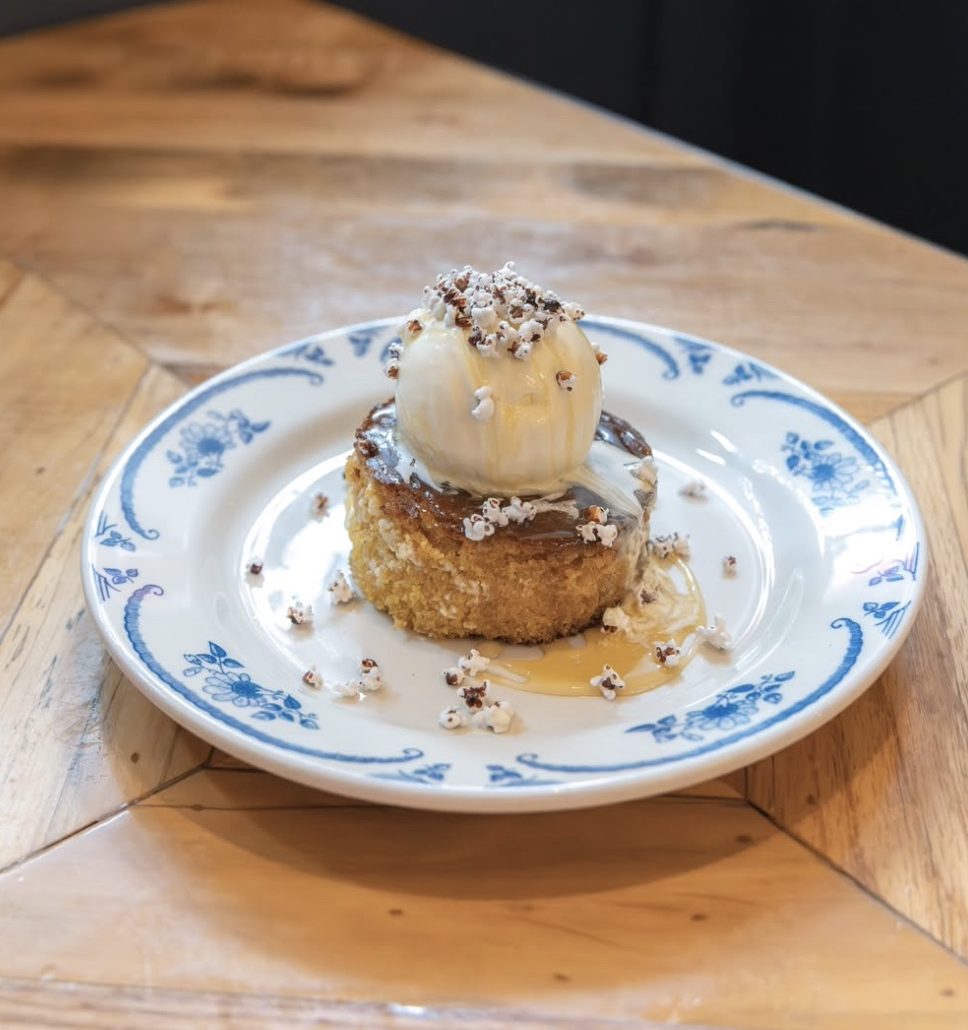
Who said cornbread is only a side dish? Not Executive Chef Brittany Kelly! Her grandfather ate his with buttermilk poured over the top, and she’d finish her slice with a scoop of ice cream when no one was looking. At North of Bourbon in Louisville, Kentucky, that childhood tradition has a permanent spot on the dessert menu.
This Cornbread Sundae recipe, complete with ice cream and puffed sorghum berries, is the stuff Southern dessert dreams are made of.
Find another grandma-approved cornbread recipe here.
Few memories stuck as strong as snow days in the South. Most of the time, it was just a couple of flurries making their way to bare ground while school closings ticked across the TV screen. But on that once-a-year snowfall that did actually stick, mom’s chili always filled the CrockPot to the brim, ready to feed the neighborhood kids when they inevitably showed up to sled (we had the best hill in the back yard). Once full and we’d had our fill of the cold, melted every last bit of snow on that poor hill, and were ready to shed our layers, a steaming mug of hot chocolate was the only acceptabe way to end the day… Swiss Miss mixed with hot milk, marshmallows if we were lucky, best enjoyed by the wood-burning fireplace.
If being a professional food writer (and the great Ina Garten) has taught me anything, it’s that sometimes “store-bought is fine.” But certain things warrant higher quality, and after taking on the task of taste-testing Southern hot chocolates, I can wholeheartedly say, this is one of those things.
Let the record reflect: this is not a ranking, because gourmet hot chocolate is impossible to score. But whether you prefer thick, bold dessert-like sippers or nostalgia-inducing powder that’s a bit more elevated than what you’ll find at Kroger, this list has three brands that we guarantee you won’t regret having tucked away for your next snow day.
This one is thick—almost mousse-like. It’s made with a combination of orange, cinnamon, and a touch of ancho chile smoke to add a different kind of “hot” to hot chocolate. The Maya base is cacao (not just cocoa), so you’re getting flavonoids and antioxidants alongside your treat… Cacao contains compounds that can improve blood flow and potentially boost mood.
Tim Gearhart started making chocolate in 2001 in a tiny office kitchenette, hand-dipping 700 pieces a day during that first holiday season. He’d been a Marine Corps cook in the Far East, trained at the CIA (the Culinary Institute of America, not the other one), and worked everywhere from English castles to Western dude ranches before landing in Charlottesville.
Now Gearharts produces over 13,000 chocolates daily, and this rich, cacao-based hot chocolate certainly has a wow factor.
Mama Lee’s Double Dutch Gourmet Hot Chocolate (Lewisburg, Tennessee)
This was the only one I made with water (per the instructions), and somehow it turned out the creamiest of the three! The chocolate flavor is strong and dark without being bitter, and I was transported right back to those childhood snow days after the first sip. I ordered mine from the Bell Buckle Country Store (Bell Buckle is the cutest little town if you ever get the chance to go), and it was a great debate over which flavor to get. Double Dutch was so delicious I might have to up my inventory with others, like creme brulee and white chocolate mocha.
Mama Lee’s hand-blends their mixes, and it’s obvious when studying the consistency. The powder texture is very smooth and mixes easily into your mug, which is much appreciated when you need your treat NOW.
Dr. Sue’s Old Fashioned Hot Chocolate (Grapevine, Texas)
Made with real Belgian dark chocolate and organic whole milk powder, Dr. Sue’s Old Fashioned Hot Chocolate is as classic as they come. At first glance, the powder is chunkier than the others, and I needed my milk hotter to get it to fully dissolve. But once I turned up the heat, the hot chocolate was properly smooth and old-fashioned, as described. It’s mild compared to the Gearharts and less sweet than the Mama Lee’s, but there’s a time and place for it all. As with Mama Lee’s, Dr. Sue’s hot chocolate comes in other flavors, and I already have a peppermint staring at me from my pantry.
I think three cups is enough for today, so it’ll have to wait.
Find more taste-tested Southern recommendations here.
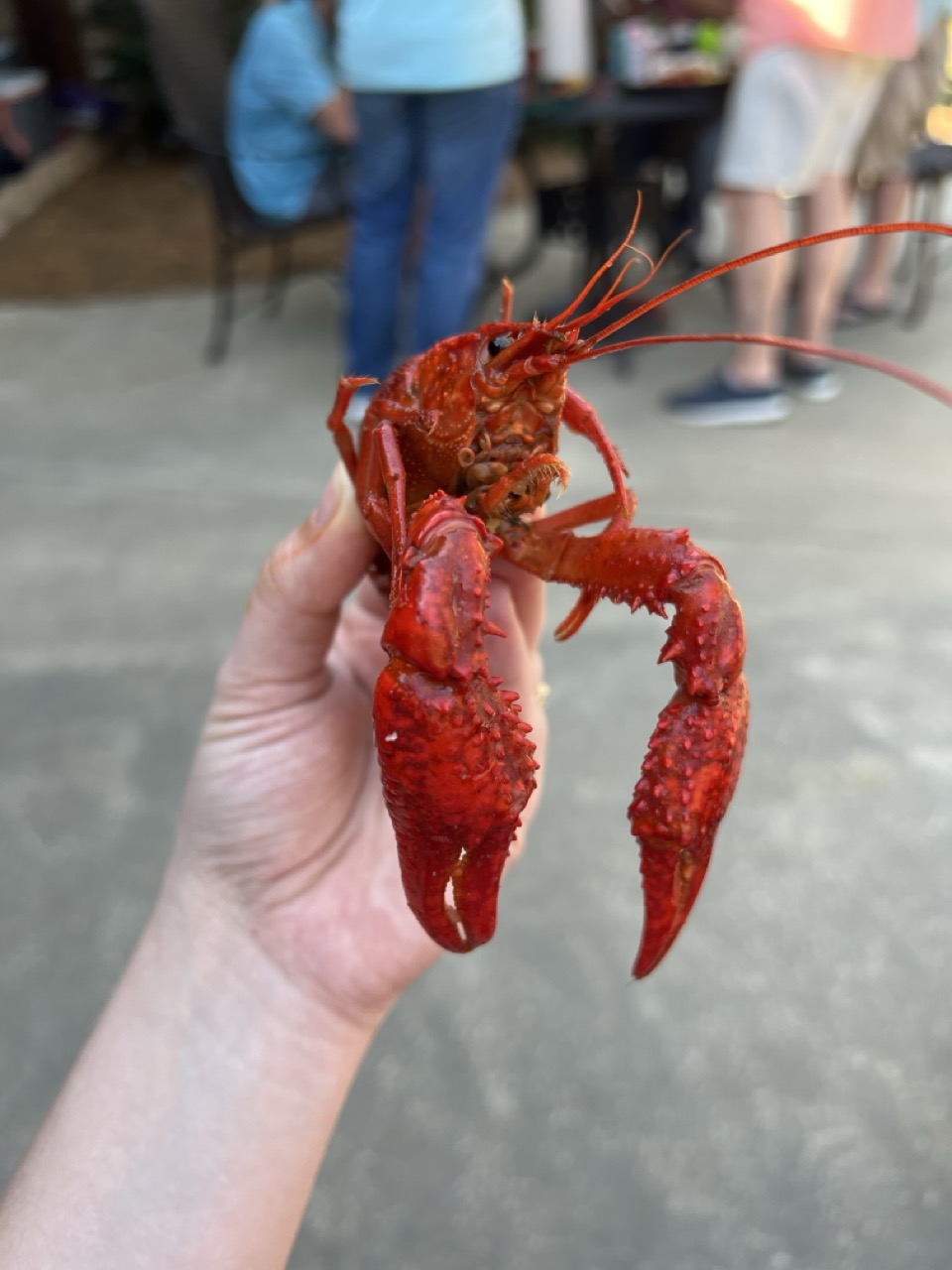
I’m Middle Tennessee born and raised, which doesn’t usually come along with a passion for crawfish. But my time as a student at Mississippi State set me on the straight and narrow.
Fun fact: I was the manager of the hockey team. (Yes, ice hockey. No, there weren’t any ice rinks in the entire state.) Some of my fondest college memories involve boils with the boys—stirring massive pots with broken hockey sticks, then chowing down on more pounds of crawfish and beer than I could ever consider stomaching now. Cracking shells at a picnic table covered in newspaper, hot spice on your fingers, condensation dripping down a Solo cup… those were the glory days.
But now I have a problem… It’s difficult to find good crawfish in Middle Tennessee. I miss it something fierce every season when my Mississippi friends are rocking up to one of many crawfish joints on a nice spring weekend while I’m up here eating… I don’t know, hot chicken for the millionth time?
I’m thrilled to tell you that Modern South is partnering with Carey Bringle’s Bringle’s Smoking Oasis to bring the first-ever Nashville Crawfish Festival to life this April. Mark your calendar for Sunday, April 19, because we’re shutting down Louisiana Avenue (appropriately) for a proper block party boil.
The festival runs from 11 a.m. to 7 p.m. at Bringle’s Smoking Oasis on Centennial Boulevard, and we’re going all in. Live music, yard games, and local vendors and artisans. You can bring the whole family, pups included.
Fresh crawfish will be sold by the pound, with pre-orders available through Bringle’s online system and day-of sales at the festival. But we’re not stopping there. Enter: an entire festival revolving around this special Southern delicacy, paired with other coastal Cajun fare like oysters, gulf shrimp, po’boys, beignets, and more. Spicy Boy’s, The Gumbo Bros, and Beignets and Brews are bringing the heat, with support from Old Bay and Zatarain’s. The bar will be slinging drinks courtesy of Peg Leg Porker Spirits, Good Boy Vodka, and other local suppliers.
Carey says, “In a sea full of crawfish boils, I wanted to stand out by doing something different and celebrate all things Cajun culture.” And we’re all in! The South has so much food worth celebrating, and crawfish season deserves more than just backyard coolers and folding tables. (Though I love those, too.)
We have so many fun ideas up our sleeves that’ll make the event memorable from the time we kick off until the last tail is pinched. We’re still finalizing some of the details (more entertainment announcements, vendor lineups, that kind of thing), but you can keep up with everything at NashvilleCrawfishFestival.com or by following @NashvilleCrawfishFestival on Instagram.
Let’s raise a glass, pinch some tails, and start a new Nashville tradition this spring. See you there!
I eat for a living, which sounds glamorous until you’re unbuttoning your jeans in a restaurant bathroom and restocking your purse stash of Tums for the third time in a week. But someone has to do it in order to make sure your hard-earned money isn’t wasted, and as a pathological people-pleaser, I’ll carry on.
2025 delivered some genuinely extraordinary meals, many hailing from the kitchens of my friends, family, and fella, and most carefully crafted by the South’s best chefs. So as I reflect on a year gone by and usher in a new one, I’m reflecting on my best bites (which MICHELIN and James Beard seem to agree with!).
These aren’t ranked because my favorite soapbox begins with, “food is subjective, and our favorites all differ.” But also, how do you compare Turkish pastrami to a raclette burger slider and a food truck smashburger? You don’t.
So without further ado, I present to you our inaugural ranking of the best bites from last year.
Hearth-Roasted Oysters at Easy Bistro & Bar, Chattanooga
This meal kicked off 2025 as a celebratory dinner for my fella’s birthday at Easy Bistro, which just earned a Michelin nod this year. Owners Erik and Amanda Niel opened the original Easy Seafood in 2005 when they were 26 and 24, driven by what I can only describe as audacious optimism and serious talent. Nearly two decades later, it’s evolved into one of Chattanooga’s most beloved restaurants, now in the West Village (double-check the address if you’re using rideshare, it dropped me off blocks away).
Every bite we had was incredible—focaccia, romanesco, all of it. But the hearth-roasted oysters drenched in smoked butter and finished with black pepper and lemon were, without a doubt, the star of the show.
Mashed Potato Bar and Corn Casserole at The Swag, Great Smoky Mountains
We visited The Swag in February during a massive Southern snowstorm and almost called off the whole trip. Thank God we didn’t, because snow-covered Smokies made the experience all the more magical (once we made it up the mountain and got a glass of wine in us). The Swag is a stunning resort-style property of cabins that borders Great Smoky Mountains National Park, and food is included—though the menu is pre-set and you make selections each morning.
I won’t lie, I had the tiniest twinge of disappointment upon finding out my one night there was a BBQ dinner and not a swanky steak night. But let me tell you, I salivate like a dang Saint Bernard when I think about that night. My plate was piled high with smoked meats and every kind of side you could want for a BBQ dinner, each one award-worthy in its own category. Live bluegrass from Darren Nicholson played for our intimate group of 10 or so guests. My cheeks hurt from smiling, and my phone battery was near dead by the end of the night.
The meat was stellar, but I’m a carb gal. My best bites were a tie between the mashed potato bar and the corn casserole that brought a pleasant sweetness and a perfect crunch anytime it mixed in a little with something else on my plate.
PB&J Bacon at Haberdish, Charlotte
Haberdish is a mill town Southern kitchen and craft cocktail bar that earned a Michelin nod in 2025. And, its restaurant group now has its own PBS show, Fork & Hammer. I dined with a friend over fried chicken, Brussels sprouts, and incredible sweet potato gnocchi, but my favorite bite was something they brought to our table that I absolutely never would’ve ordered for myself: PB&J Bacon.
Thick-cut bacon, maple peanut butter, peppadew jelly, banana vinaigrette, jalapeño slaw, and green onion sounds to me like chaos, but it was a perfect balance of savory, sweet, and spicy, and the combination of textures was delightful.
Red Flannel Hash at Switchback, Cataloochee Ranch
Cataloochee Ranch is The Swag’s sister property, but takes a totally different dining approach. Instead of all-inclusive, they drop off continental breakfast at your cabin daily (thermoses of coffee, fresh pastries, fruit), and the onsite restaurant Switchback operates more like a standalone.
I didn’t expect world-class dining in a little mountain town in North Carolina, but Chef Jeb Aldrich is doing high cuisine in the High Country—Appalachian favorites influenced by French techniques and flavored by locally grown produce. We had our favorite wine to date there (Big Table Farm and Lingua Franca Pinot Noir from Willamette Valley), and the dinners were spectacular.
But the brunch—coming from a firm breakfast hater—was what stands out the most in my memory. The Red Flannel Hash made with local beets, their own beef short rib, spinach, sunny egg, and hollandaise would get me to make the five-plus-hour drive there and back alone.
Tuna Crudo and Orange Granita at Yolan, Nashville
Yolan is back and better with a new culinary team inside the Joseph Hotel in downtown Nashville. They invited me in for the La Tavola in La Cucina (the table in the kitchen) experience, which has a minimum spend of $375 per person and gets you access to the team of culinarians whipping up dishes for the dining room and in-room dining guests.
We did the “Esperienza Yolan” tasting menu—bread service, pasta, a tray of tea-style bites, beef or fish, dessert, each carefully paired with Italian wine. Gun to the head, my best bite was the tuna crudo and orange granita, which was delightfully refreshing during a brutal Nashville summer.
Smashburger at Bad Luck Burger Club, Nashville
I go feral for a smashburger, and 2024’s reigning champion for best in Nashville got dethroned by a food truck. Bad Luck Burger Club parks in East Nashville across from the Basement East and serves simple smashers dripping with American cheese, grilled onions, dill pickles, and special sauce. You can level up with lettuce, tomatoes, jalapeños, and pineapples if you’re feeling adventurous (or crazy). They don’t have fries, but they do have tots and churros.
Raclette Burger Slider at La Cave, Charleston
I visited La Cave because I was scouting it for a future “most beautiful restaurants” roundup, and while that was solidified within three seconds of entering, I became a fan at first sip and a fan for life at first bite. It was summertime in Charleston, and cooling off is essential, so I opted for a burnt corn cocktail because I’m a savory gal and I live for weird flavor combinations.
It was so unbelievable; I ordered two, then came back for another after dinner with friends elsewhere. Don’t worry, I brought them. La Cave has French small plates, and we ordered a few as a precursor to our dinner reservations. Let’s just say we did not eat at the next location, and we did not have a single regret about that.
We had crudo, filet, pommes frites, an amuse-bouche that left us gazing with puppy dog eyes at the kitchen door in hopes they’d bring us another. But my best bite should come as no surprise if you know anything about me, my addiction to dairy, and my affinity for the Swiss: a raclette-topped burger slider.
Country Ham Corn Cake at Audrey, Nashville
Audrey is renowned Southern chef Sean Brock’s love letter to his grandmother, showcasing his Southern and Appalachian roots in an open-kitchen concept in East Nashville. The restaurant is under new ownership but maintains the same inspiration, and I was eager to try its second act in 2025.
This catapulted near the top of my best bites list. Any time I have a tasting menu, I assume there will be a bite or two I won’t enjoy, but I’ll be glad I tried it—that’s the fun of the experience. Trying something new, stepping out of my comfort zone, and the excitement when something you know you never would’ve ordered ends up being your favorite thing…
Every course at Audrey was divine—from bread service through soups and starters to mains and desserts. My best bites were a country ham-topped corn cake (doesn’t get more Southern than that!) and a crab bisque that was presented as beautifully as it tasted.
1,000 Layer Potatoes at Siren Social Club, Gulfport
Coastal Mississippi has some very unexpected culinary surprises, and Chef Austin Sumrall is getting the recognition he deserves with nods from Michelin and James Beard. He’s behind White Pillars in Biloxi and Siren Social Club in Gulfport, hidden within the charming new Hotel Vela.
Not only is Austin a delight to be around (known to dole out a tequila shot and a side-splitting story or two), but his talent is palpable. My dinner at Siren was one of those that left me clutching my purse in front of me, trying to hide my unbuttoned jeans, grateful I only had to make it to the elevator before I could hibernate for the evening.
For starters, I had a spicy margarita (or a few, I suppose) where the jalapeños were literally ground up and frozen into the ice cubes. We shared a platter of oysters on seasoned saltines, paddlefish caviar with all the proper fixings, crudo almost too beautiful to eat, rolls so good I’m pretty sure the leftovers found their way into some pockets. I’m getting overwhelmed just thinking about it all, and if you glanced at the menu prices online ($20 beef tartare, for example), you’d already be halfway there.
But the best bite(s)? Chef Sumrall’s 1,000-layer potatoes, sliced thin, compressed, and deep-fried to crispy perfection, then dressed with pesto and paprika aioli.
Fresh Pastrami in Parchment at Argos in Cappadocia, Türkiye
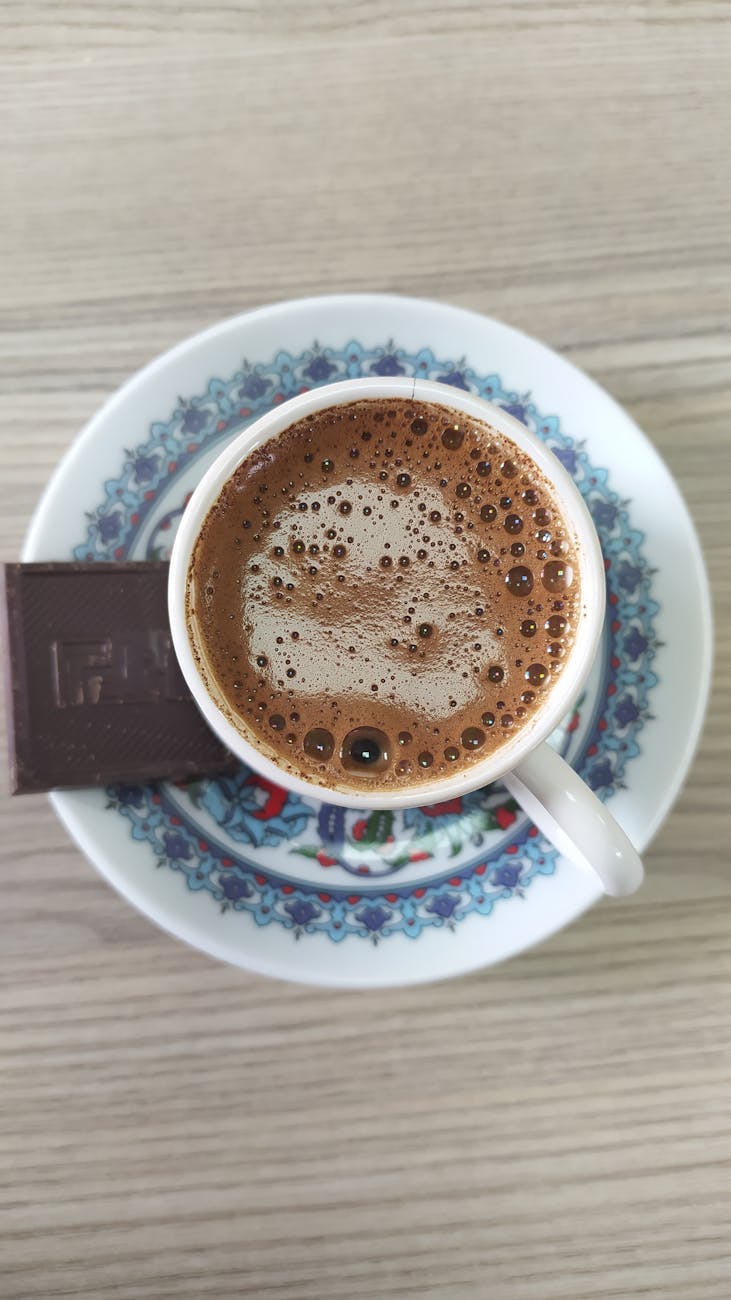
I went on a culinary adventure in 2025 that changed my approach and appreciation for international dining—I have a new favorite cuisine. I spent a week traveling Türkiye, including Cappadocia, the Riviera, and a brief stint in Istanbul, where I fell in love with doner, meze, manti, and Turkish coffee and tea.
The universal best food experience was at Argos in Cappadocia, a luxury hotel tucked in an ancient cave system that’s the perfect theater for the daily hot-air balloon launches. We enjoyed a buffet breakfast daily that, to my delight, was very savory and lunch-like. We wandered through their onsite gardens, wine cellars, and fermentation rooms where the teams keep food supply going year-round, and learned about Turkish customs, as this was my first stop on the adventure.
The highlight was a private dinner in a 2,000-year-old monastery, where we had traditional clay pot kebabs, pickled vegetables, lovely wine, and perhaps the year’s number one best bite—a dish with a name I’ve yet to track down but consisted of fresh pastrami sliced thin, baked in sheets of parchment paper with butter, tomatoes, small bits of lemon, parsley, and salt.
It was unfurled ceremoniously, and I’m unsure if it was my jet lag and sleep deprivation, a pinch-me moment in my travel writing career, the excellence of the dish itself, or perhaps a combination of it all. But it did literally bring me to tears.
Tell us, what were your best bites in 2025, and what must be on our list to try this year?