Category: Food

  • “Creamless” Cream Corn

    “Creamless” Cream Corn

    Featured image: Automatic Seafood & Oysters

    At Birmingham’s award-winning Automatic Seafood & Oysters, Chef Jacobi Williams reimagines Southern staples through a fresh lens. His “Creamless” Cream Corn captures all the sweetness and silkiness of traditional creamed corn without a dollop of dairy.

    The trick? Pureeing fresh corn kernels with oat milk and corn “milk” (the starchy liquid released when cutting kernels) to create a creamy base, then folding in more sautéed corn for texture. A touch of olive oil, a pinch of sugar or paprika, and a finishing sprinkle of chives and chili powder round it out.

    Here’s the full breakdown.

    “Creamless” Cream Corn

    Ingredients
      

    • 6 ears fresh corn shucked
    • ¼ cups oat milk
    • salt and pepper to taste
    • 1 tablespoons olive oil
    • pinch sugar or smoked paprika
    • chives garnish
    • chili powder garnish

    Instructions
     

    Split the Corn

    • Cut the kernels off all 6 ears of corn. Use the back of your knife to collect the starchy corn milk
    • Set aside 2 cups of kernels for blending and 1½ to 2 cups for texture

    Make the Puree

    • Combine 2 cups of kernels with oat milk and a bit of the corn milk (juice)
    • Blend until smooth and silky. Strain for a finer texture, if desired

    Sauté for Texture

    • In a sauté pan, heat olive oil over medium heat
    • Add the reserved whole kernels and cook for 2 to 3 minutes, until warm and slightly golden

    Looking for more recipes from around the South? Click here.

  • It’s Corn: 4 Chef-Approved Southern Corn Recipes to Try This Summer

    It’s Corn: 4 Chef-Approved Southern Corn Recipes to Try This Summer

    Featured image: The Animal Farm

    There’s no mistaking when corn is in season down South. You’ll spot it piled high at farmers markets, tucked into paper sacks on the roadside, and sizzling on the grill at just about every backyard cookout. One of the best things about corn is its versatility — while it’s excellent simply grilled with a little bit of butter (and a sprinkle of Tony Chachere’s if you’re feeling spicy), it can add a delightful touch of sweetness to salads, dips, and sides.

    Take advantage of an ingredient both cheap and delicious through these four corny recipes curated from around the South.

    A bowl of sweet corn pasta featuring rigatoni coated in a creamy sweet corn sauce, topped with red pesto, crumbled feta, toasted pumpkin seeds, and fresh basil.
    Image: The Animal Farm

    Sweet Corn Pasta

    Recipe by Hudson Terrell, Chef/Owner of The Animal Farm, Columbus, GA

    At The Animal Farm, a laid-back neighborhood restaurant in Columbus, Georgia, chef Hudson Terrell lets local produce lead the way. His Sweet Corn Pasta is a bright, rich dish that’s as comforting as it is elegant.

    The recipe starts with rigatoni tossed in a velvety sweet corn cream sauce made from fresh corn, thyme, honey, butter, and cream. Once the pasta is coated, it’s topped with dollops of red pesto (sun-dried tomatoes, roasted red pepper, garlic, lemon, and basil), along with toasted pumpkin seeds for crunch, crumbled feta for tang, and fresh basil to brighten it all up.

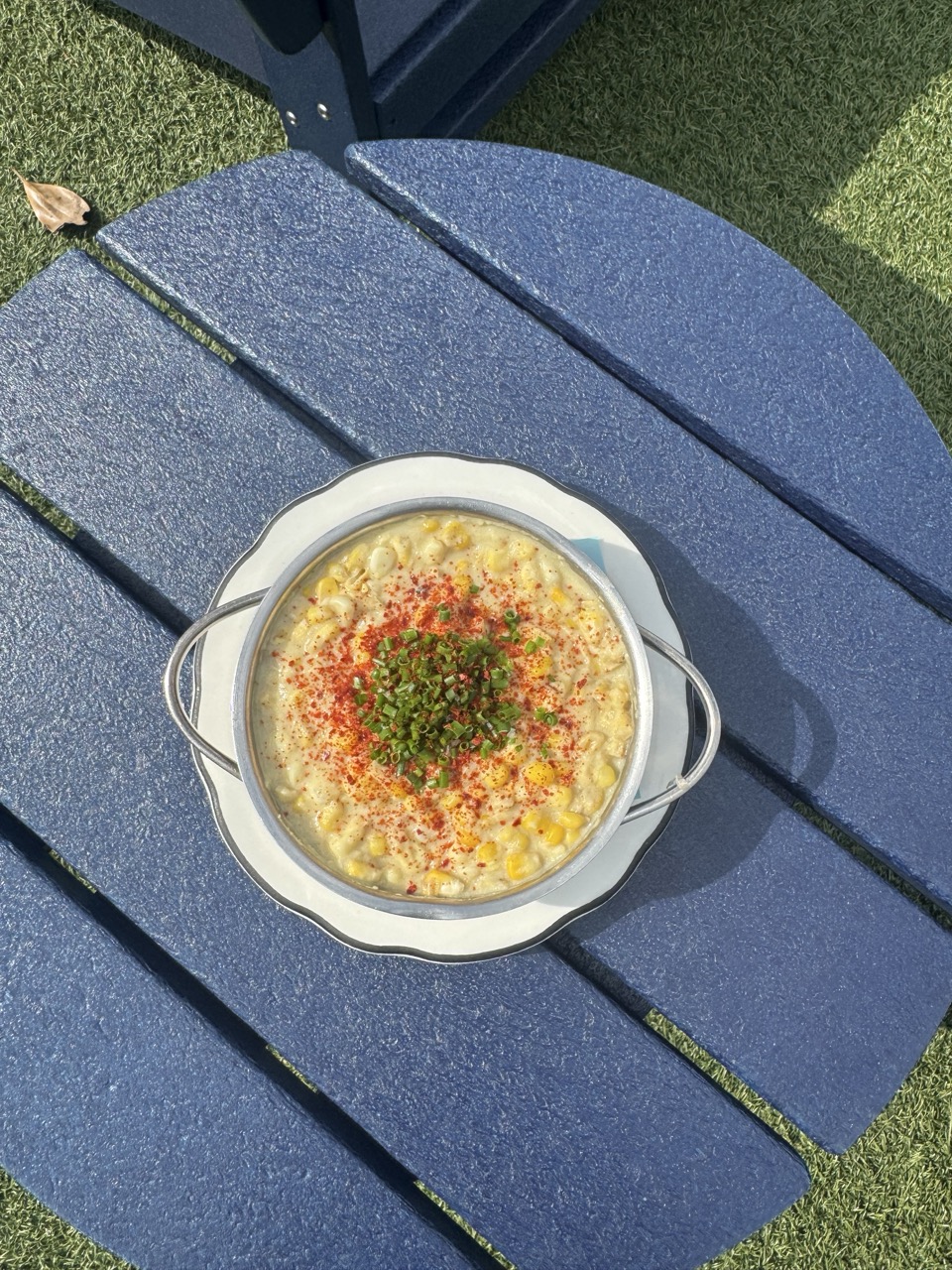
    A bowl of creamy corn topped with chopped chives, sprinkled with paprika, sitting on a blue outdoor table.
    Image: Automatic Seafood & Oysters

    “Creamless” Cream Corn

    Recipe by Jacobi Williams, Chef de Cuisine at Automatic Seafood & Oysters, Birmingham, AL

    At Birmingham’s award-winning Automatic Seafood & Oysters, Chef Jacobi Williams reimagines Southern staples through a fresh lens. His “Creamless” Cream Corn captures all the sweetness and silkiness of traditional creamed corn without a dollop of dairy.

    The trick? Pureeing fresh corn kernels with oat milk and corn “milk” (the starchy liquid released when cutting kernels) to create a creamy base, then folding in more sautéed corn for texture. A touch of olive oil, a pinch of sugar or paprika, and a finishing sprinkle of chives and chili powder round it out.

    A bowl of curry creamed corn topped with fresh cilantro and a sprinkle of spice on a wooden surface.
    Image: Curry Boys BBQ

    Curry Creamed Corn

    Recipe by Andrew Samia & Andrew Ho, Curry Boys BBQ, Nashville, TN

    In Nashville, Curry Boys BBQ fuses Southeast Asian curries with Texas-style smoked meats — and their Curry Creamed Corn brings that signature mash-up straight to your plate.

    The base is unexpected: cream cheese melted into sweet corn, seasoned with Cajun spice, garlic, onion, bouillon, and a pinch of curry powder. After the corn is boiled and dried, it’s stirred into the cream cheese and coated in a spice blend. Garnish with a pop of fresh cilantro and a dusting of curry powder, and serve it alongside brisket or straight from the bowl.

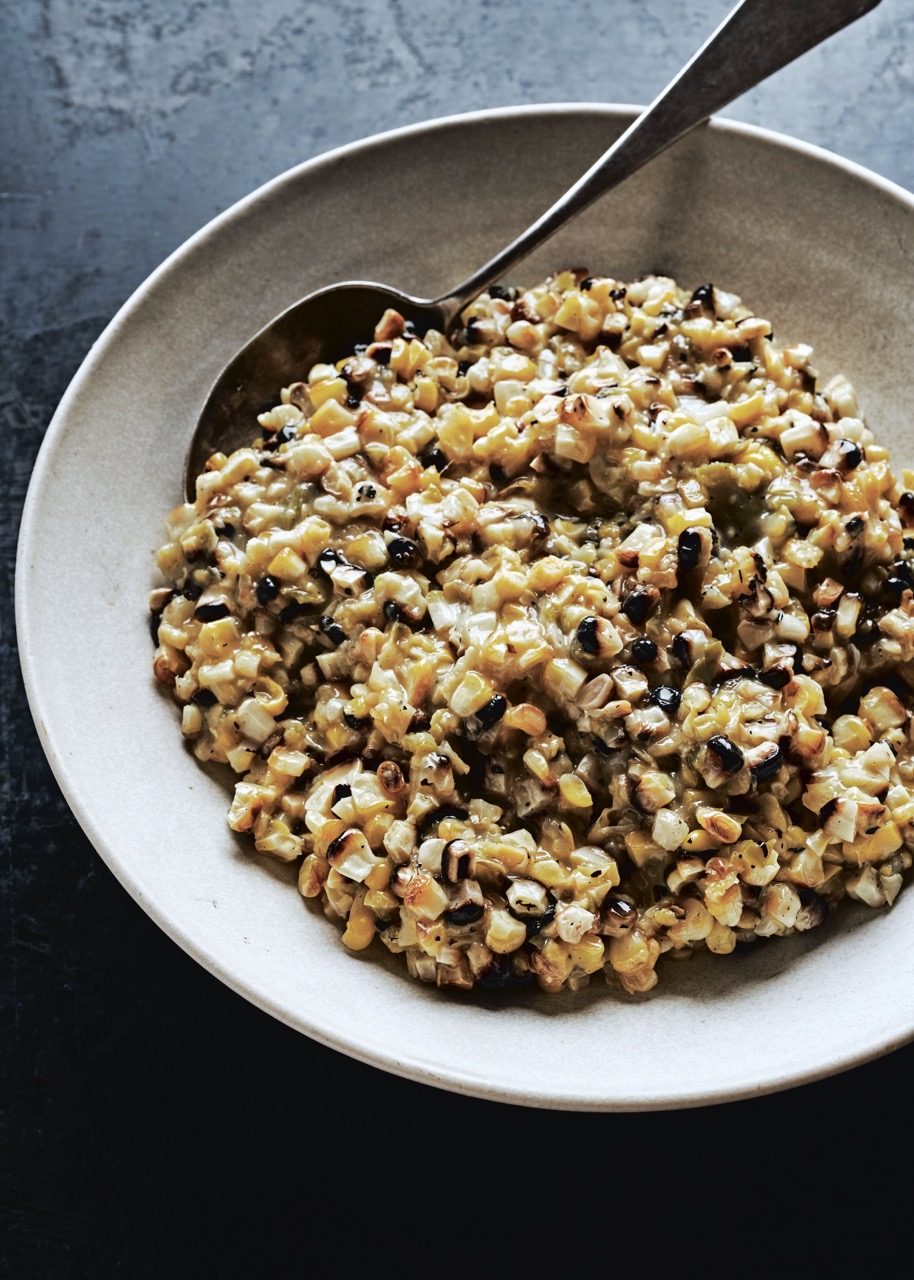
    A bowl of creamed corn with a spoon, showcasing a blend of grilled and sautéed corn kernels mixed with a creamy base.
    Image: Andrew Thomas Lee

    Creamed Charred Corn

    Recipe by Pat Martin, from Life of Fire: Mastering the Arts of Pit-Cooked Barbecue, the Grill, and the Smokehouse

    Barbecue legend Pat Martin is no stranger to coaxing deep flavor from flames, and his Creamed Charred Corn — straight from the pages of his book Life of Fire — proves that corn is no exception.

    Start by grilling whole ears of corn and jalapeños until charred and smoky. In a skillet, cream-style canned corn is heated with sugar, butter, and salt, then stirred together with the grilled kernels and finely chopped peppers.

    Looking for more recipes? Click here.

  • Sweet Corn Pasta

    Sweet Corn Pasta

    Featured image: The Animal Farm

    At The Animal Farm, a laid-back neighborhood restaurant in Columbus, Georgia, chef Hudson Terrell lets local produce lead the way. His Sweet Corn Pasta is a bright, rich dish that’s as comforting as it is elegant.

    The recipe starts with rigatoni tossed in a velvety sweet corn cream sauce made from fresh corn, thyme, honey, butter, and cream. Once the pasta is coated, it’s topped with dollops of red pesto (sun-dried tomatoes, roasted red pepper, garlic, lemon, and basil), along with toasted pumpkin seeds for crunch, crumbled feta for tang, and fresh basil to brighten it all up.

    Here’s the full breakdown.

    Sweet Corn Pasta

    Prep Time 20 minutes
    Cook Time 23 minutes
    Course Main Course
    Cuisine American
    Servings 4 servings

    Ingredients
      

    • 16 oz rigatoni pasta
    • Toasted pumpkin seeds for garnish
    • Crumbled feta for garnish
    • Fresh basil for garnish

    Sweet Corn Cream Sauce

    • 8 oz sweet corn fresh or frozen
    • 2 cups heavy cream
    • 2 sticks unsalted butter
    • 1 tablespoon honey
    • 4 thyme sprigs
    • Salt to taste

    Red Pesto

    • 1 cup sun-dried tomatoes
    • 2 tablespoons roasted red peppers
    • ½ cup grated Parmesan cheese
    • 4 cloves garlic
    • 2 tablespoons lemon juice
    • 1 cup fresh basil
    • ¼ cup extra virgin olive oil
    • Salt to taste

    Instructions
     

    Pasta

    • Cook the rigatoni in salted water until al dente.
    • While the pasta cooks, prepare the cream sauce and red pesto.
    • Drain the pasta and add it to the sweet corn cream sauce, tossing until fully coated.
    • Plate the pasta and top with dollops of red pesto.
    • Garnish with toasted pumpkin seeds, crumbled feta, and fresh basil. Serve warm.

    Sweet Corn Cream Sauce

    • In a saucepan over medium heat, melt the butter with the cream and thyme sprigs.
    • Add the corn and cook for about 5 minutes, until the kernels are soft.
    • Stir in the honey and salt to taste. Remove thyme sprigs.
    • Blend the mixture until smooth and creamy.

    Red Pesto

    • Combine all ingredients in a food processor or blender.
    • Blend until smooth, adjusting seasoning to taste.

    Looking for more recipes from around the South? Click here.

  • Pat Martin’s Creamed Charred Corn

    Pat Martin’s Creamed Charred Corn

    Featured image: Andrew Thomas Lee

    Barbecue legend Pat Martin is no stranger to coaxing deep flavor from flames, and his Creamed Charred Corn — straight from the pages of his book Life of Fire — proves that corn is no exception.

    Start by grilling whole ears of corn and jalapeños until charred and smoky. In a skillet, cream-style canned corn is heated with sugar, butter, and salt, then stirred together with the grilled kernels and finely chopped peppers.

    Here’s the full breakdown.

    Creamed Charred Corn

    Prep Time 15 minutes
    Cook Time 25 minutes
    Course Side Dish
    Cuisine American
    Servings 4 servings

    Ingredients
      

    • 4 ears corn shucked
    • 2 jalapeño peppers
    • 2 tsp canola oil
    • 2 cups canned cream-style corn
    • 2 tbsp sugar
    • 1 tbsp butter
    • 1.5 tsp Diamond Crystal kosher salt

    Instructions
     

    • Prepare a hot grill (2 to 3 second hand test). Clean and oil the grill grates well.
    • Rub the corn and jalapeños with canola oil, then grill, turning frequently, until well charred all over, about 10 to 15 minutes.
    • Remove the vegetables from the heat and set aside until cool enough to handle.
    • In a medium cast-iron skillet, combine the cream-style corn, sugar, butter, salt, and 2 tablespoons of water. Set over medium-high heat.
    • Cook, stirring occasionally, until the sugar has dissolved, the water is absorbed, and the mixture is heated through, about 7 minutes.
    • Once the corn has cooled, stand each cob upright and slice the kernels off with a chef’s knife. (Tip: Cut over a pie dish to catch stray kernels.)
    • Remove the stems and seeds from the jalapeños and finely dice.
    • Add the grilled corn kernels and jalapeños to the creamed corn mixture. Stir to combine and heat through before serving.

    Looking for more recipes from around the South? Click here.

  • Classic Tomato Sandwich with a Simple (but Necessary) Twist

    Classic Tomato Sandwich with a Simple (but Necessary) Twist

    Move over, pumpkin spice. I’m here to argue that summer has the best classic dishes of any season, and that’s largely thanks to one nostalgic dish that defined my childhood: the tomato sandwich.

    Growing up, it was on regular rotation at our house the moment tomatoes started showing up at the farmers market or in mom’s garden. Thick slices of Bradford tomatoes, soft white sandwich bread, Duke’s on both sides, and a sprinkle of salt. That’s the classic.

    But down in Loretto, Tennessee, where my extended family is from, things are done a little differently. At our reunions at Joe Wheeler State Park every other summer, there’s always a crowd in someone’s hotel room, passing around tomatoes and spreading real butter—never margarine, my mom would remind you—on slices of Granny’s homemade bread.

    Somewhere along the way, I started combining the two traditions: mayo on one side, butter on the other. It may be a little controversial, but it’s the only way it’s done around here.

    Classic Tomato Sandwich (With a Simple Twist)

    Course Main Course
    Cuisine American

    Ingredients
      

    • 2 slices soft white sandwich bread or good-quality Italian or French-style bread
    • 1 ripe summer tomato Bradford if you can find it, thickly sliced
    • 1 tbsp Duke’s mayonnaise
    • 1 tbsp salted butter softened
    • Flaky or kosher salt to taste

    Instructions
     

    • Choose your bread—either white sandwich bread or Italian or French-style. Don’t toast it.
    • Spread Duke’s mayonnaise on one slice of bread, all the way to the edges.
    • Spread softened butter on the second slice.
    • Arrange thick slices of tomato over the mayo-covered slice, overlapping slightly.
    • Sprinkle generously with flaky or kosher salt.
    • Serve with grilled corn or potato chips.
  • Pat Martin’s Blackberry Fried Pies

    Pat Martin’s Blackberry Fried Pies

    Every summer, my cousins (all 20+ of them) and I would tumble out the back door of my grandmother’s house, each holding some makeshift berry basket — an old Cool Whip tub, a plastic produce container, whatever she had on hand. She’d hand them to us with a nod toward the thicket and send us off to pick blackberries while dinner finished on the stove. We’d come back scratched, sticky, and purple-hued, baskets overflowing with whatever we didn’t sample.

    When I grew up, I couldn’t wait to have my own blackberry bush. When the time came, my grandmother dug up a few of hers to pass along. So for me, blackberries aren’t just nostalgic because of their sweet, summery flavor, but for all the sweet (and sticky and scratchy) memories they carry with them.

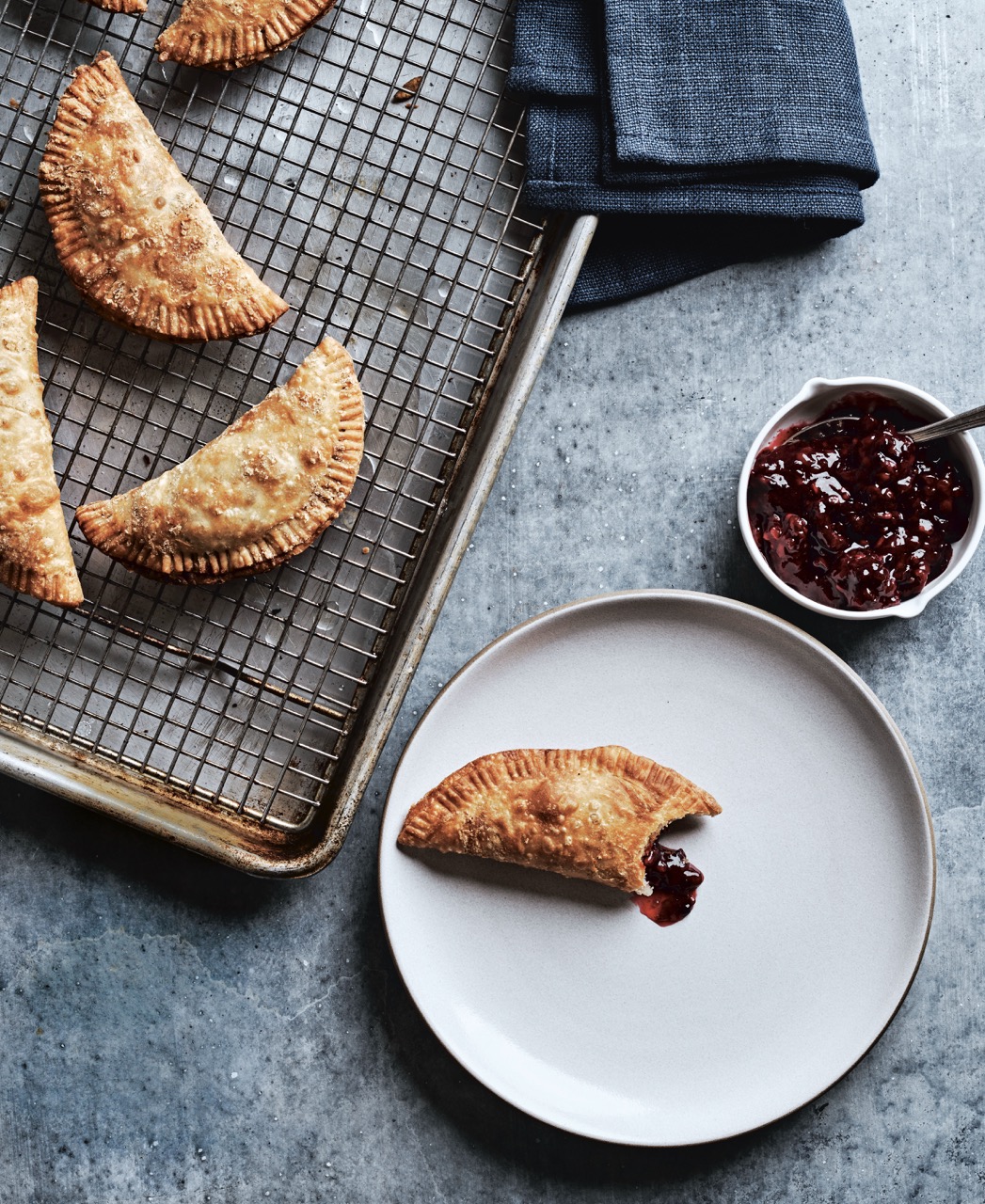
    That same flavor for simpler times is what inspired pitmaster Pat Martin (founder of Martin’s Bar-B-Que and Hugh Baby’s) to share this recipe from his mom, Pam, in his cookbook Life of Fire. She swears by serving them at room temperature, when the flaky crust softens just enough to meld with the jammy blackberry filling.

    Whether you grew up picking berries or just want a bite of summer, these fried pies are a quintessential summer classic.

    Blackberry Fried Pies

    Prep Time 2 hours
    Cook Time 20 minutes
    Course Dessert
    Cuisine American
    Servings 10

    Equipment

    • Pastry cutter
    • Rolling Pin
    • Dutch Oven
    • Kitchen thermometer

    Ingredients
      

    Crust

    • 2 cups all-purpose flour
    • 2 teaspoons sugar
    • 1 teaspoon Diamond Crystal kosher salt
    • ½ cup chilled shortening cut into small pieces
    • ½ cup cold whole milk or as needed

    Filling

    • 16 ounces blackberries about 3 cups
    • 1 cup sugar
    • Juice of ½ lemon
    • Half of a 1.75-ounce packet light pectin

    Assembly

    • All-purpose flour for rolling
    • 1 egg beaten with 1 teaspoon water (for egg wash)
    • Peanut oil for frying

    Instructions
     

    Crust

    • In a large bowl, whisk together flour, sugar, and salt. Using your fingers or a pastry cutter, work in the shortening until the mixture resembles coarse crumbs with no pieces larger than a pea. Add the milk a few tablespoons at a time, stirring just until a dough forms. Shape into a ball, wrap in plastic, and refrigerate for 1 hour.

    Filling:

    • In a medium saucepan, combine blackberries, sugar, lemon juice, and pectin. Bring to a simmer over medium heat, stirring constantly. Cook until berries begin to break down, about 10 minutes. Remove from heat and let cool completely.

    Assembly:

    • On a lightly floured surface, roll the dough out to ¼-inch thickness. Use a 4-inch round cutter to cut as many rounds as possible. Gather scraps, re-roll once, and cut additional rounds. Discard remaining scraps.
    • Spoon 2 tablespoons of filling into the center of each round. Brush edges with egg wash, fold over into a half-moon shape, and press edges closed with a fork. Chill pies in the refrigerator while you heat the oil.

    Frying:

    • In a large saucepan or Dutch oven, pour in 1 to 2 inches of peanut oil and heat to 360°F. Line a wire rack with paper towels and set it inside a sheet pan. Working in batches, fry 2 pies at a time until golden brown, 3 to 5 minutes. Use a slotted spoon to transfer to the rack to drain. Let cool before serving.
  • How To Host a Perfect Lowcountry Boil

    How To Host a Perfect Lowcountry Boil

    Featured image: Kellie Walton

    A Lowcountry Boil has long been a staple along the Southern coast, especially around South Carolina and Georgia. This beloved dish (though it may be better described as a whole event) brings together fresh shrimp, hearty vegetables, and smoky sausage in a big pot of seasoned broth often dumped out and enjoyed with fellowship and a few drinks. 

    Served everywhere from backyard gatherings to fall tailgates and holidays, a lowcountry boil is a surefire way to connect with friends and family in a way that’s both casual and delicious.

    Lucas Hanagriff, raw bar manager at Fleet Landing in Charleston, dives into what makes a Lowcountry Boil so satisfying—and, more importantly, how to do it right.

    Q: What is a Lowcountry Boil, and what are the key ingredients in the dish?

    Lowcountry boil, also commonly called Frogmore stew or a shrimp boil, is boiled potatoes, corn, sausage, and shrimp seasoned with Old Bay. They can be boiled in plain water, but commonly the addition of a beer or two from the nearest cooler adds to the dish. These are the basics of a Lowcountry boil, as other ingredients are commonly added in different kitchens and backyards to the party’s liking.

    Q: Is there a certain type of shrimp that works best?

    White shrimp are the most common harvest in the waters around Charleston and are what is most used in a Lowcountry Boil.

    Q: Do you prefer a specific type of seasoning blend? Are there any other variations that can be used?

    Every chef will have their own preference, whether commercially produced or made at home. Although more popular with some neighbors to the north, Old Bay seasoning is a staple and a fantastic option for seasoning a Lowcountry Boil.

    Q: Do you typically marinate or pre-season anything before it goes into the pot? If so, for how long?

    One thing that makes Lowcountry Boil so awesome is the ease of preparation—it’s a one-pot dish. You do not need to season or marinate any of the ingredients before going into the pot, but it is a necessity to season your water while heating it up. There is a saying among chefs that boiling water intended for cooking should be ‘salty like the sea.’ Sea water has a salinity of around 10%, and this is perfect for seasoning items that are going to cook relatively quickly. In addition, a Lowcountry favorite (or necessity) is the addition of beer and Old Bay to your water prior to adding your first ingredients. One thing that can be purchased or done ahead of time would be parboiling or partially cooking the potatoes: they take the longest to cook, and parboiled potatoes can drastically reduce the cooking time prior to serving the boil.

    Q: What’s the key to layering ingredients in the boil for even cooking?

    All the ingredients of the Boil take different times to cook when placed in boiling water. Potatoes take the longest, and shrimp take the shortest. If using all raw ingredients (except for the sausage, which is usually cooked or smoked to some degree or fully), we recommend cooking in this order: potatoes, corn, sausage, and finally shrimp. An old school method is to bring the seasoned water to a boil and add the potatoes and cover. Once the water begins to boil again, add the corn and cover. Once the water returns to a boil, add the sausage. Once the water returns to a boil, you can add the shrimp, stir, kill the heat source, and let the shrimp cook for 1-3 minutes.

    Q: How do you know when the shrimp are perfectly cooked?

    Shrimp do not take very long to cook. And while still delicious, slightly overcooked or perfectly cooked shrimp will set the dish off. Once properly cooked, the shrimp will turn a white/pink hue, with the legs and tail turning red. The meat of the shrimp will go from a translucent hue to an opaque coloring. This can take anywhere from one to three minutes, depending on how crowded the pot is. We like to stir the entirety of the pot one minute after adding the shrimp to get an eye on all ingredients and keep any items from sitting directly on the bottom of the pot atop the heat source.

    Q: Any tips for draining the liquid from the pot? Are there any fun uses for it once you’ve separated it from the rest of the food?

    Steam pots, or any pot with a basket inside, are your best options for cooking a Lowcountry Boil. They make separating the food from the now broth very easy. Once the ingredients have finished cooking, you can lift the very hot basket out of the boiling water with rags or oven mitts. You can then turn your heat source off and let the broth cool. This broth, or stock, can be used to cook many other things, such as rice and pasta, and can easily be added to sauces or gravy for additional flavors. Commonly, the ingredients are dumped onto a table, seasoned more, and the dinner bell is rung. Friends and family will gather around, picking their next favorite bite from the pile. Be careful, as more hot water will be draining off the ingredients as you enjoy.

    Q: Any personal touches you always add to make it your own?

    Adding onions is a great touch as they add great flavor and aromatics. This especially rings true if you plan on using the broth for any additional dishes. If you make your own sausage, it would be a great addition. Dipping sauces and condiments are a great tableside addition for Lowcountry Boil, such as melted butter, cocktail sauce, ketchup, lemons, and your favorite hot sauce.

    Q: Any tricks for elevating the classic recipe for a more upscale experience?

    Creating an upscale Lowcountry Boil can be done very easily, but it can also greatly depend on your crowd. Additions such as mussels, crabs, and crawfish can add seafood diversity, while other vegetables such as mushrooms and onions can be great additions too.

    Q: How do you calculate portions per person?

    This is usually the hardest question to answer with Lowcountry Boils, as purchased fresh shrimp can fetch a pretty penny depending on your location; all while some guests will eat like birds and others like it’s their last meal. A good starting point is to plan on a pound of raw, unfrozen head-on shrimp per guest (or roughly 1/2 pound of headless shrimp), two regular-sized potatoes, one full ear of corn, and 4-6 small links/pieces of sausage per guest. If your guests are shrimp fanatics, one pound of headless shrimp per person could be more appropriate.

    Q: What equipment is needed to prepare it?

    The common backyard method requires a propane tank and propane cooker, lighter or flame source, and a large pot with a basket and lid. You can also tackle this dish in your own kitchen with a large pot with a lid atop your stove. You do not need the basket, but you will need a colander to dump the ingredients into, or you will need a slotted spoon to remove the ingredients if you’d like to save the broth.

    Q: Any beverage pairings that complement the flavors especially well?

    Your favorite light beer is what you’ll see adorned most tabletops while the pile of Lowcountry Boil is still steaming. At this moment, beverages are usually ignored for the first few minutes after a basket of Lowcountry boil has been dumped on a table, though. While cold beer is a staple with Lowcountry Boil, crisp white wines, both still and sparkling, are fantastic pairings. But don’t be alarmed when you see a glass of sweet tea or a Capri Sun from the young’n next to you as this meal can be super fun for kids too!

    Q: When is the best time to host a shrimp boil?

    The commercial shrimp season in Charleston ranges from June until the end of the year, and any time during the summer on you are likely to hear about a Lowcountry Boil. Recreational anglers are likely to catch a large quantity of shrimp in our local water during this time, but the peak season for catching shrimp comes during the fall months. September–November is when you’ll see many anglers ditching their rods for shrimp poles and cast nets to catch their harvest of large white shrimp. This also happens to be when you’ll hear of the most Lowcountry Boils happening, as the shrimp are most prevalent. It is a great party dish, so it is common around the fall holidays and big sporting events as well.

    Q: Anything else you’d like to share?

    Lowcountry Boils, oyster roasts, and the like, are meant to be that of a family dinner vibe, including many friends and neighbors gathered around a table having a great time. Food is one of the few languages that everyone speaks, and it is a great excuse for a great gathering. It’s a comfort food for many, and the experience of all diving in together is tethered to the dish by tradition and colloquialism.

    The dumping of the pot will produce quite a bit of runoff, so to save your kitchen, this is a great excuse to get out an old plastic or wood table and enjoy the great outdoors. The shrimp can be cooked with the heads on or off. While the heads can add tremendous flavor, they aren’t for everyone. Whether your shrimp are whole or not, we do recommend cooking them with their shells on. The shells can help protect the delicate meat from overcooking. When it comes to peeling a cooked shrimp, the shell wraps around the back, larger part of the shrimp, and meets on the underside of the meat where the legs are. You should be able to grab one side of the legs and basically unwrap the shell from around the back of the shrimp. It does not always work perfectly, but it will remove most of the shell.

  • Savory Tomato Margarita

    Savory Tomato Margarita

    Summer is full of bold, fresh flavors—but don’t limit them to dips and desserts. Put it in a glass! While sweet drinks tend to get all the love this time of year, there’s a growing trend toward something a little more unexpected: savory cocktails. It’s no longer just dirty martinis and bloody mary riffs, things like pickles, peppers, and tomatoes are popping up in cocktails everywhere.

    This Tomato Margarita leans into the savory trend in the best way. Made with a tomato simple syrup, it’s bright, slightly earthy, and perfectly refreshing. If you’re the kind of person who always goes for chips and salsa over something sweet, this one’s for you.

    Savory Tomato Margarita

    Prep Time 20 minutes
    Cook Time 5 minutes
    Total Time 25 minutes
    Course Drinks
    Cuisine Mexican
    Servings 1 drink

    Ingredients
      

    • 1.5 oz tequila
    • 1.5 oz orange liqueur
    • 1 oz lime juice
    • 2 oz tomato simple syrup

    Tomato Simple Syrup

    • 2 cups tomatoes diced
    • 1 cup water
    • 1 cup sugar

    Instructions
     

    • In a cocktail shaker, combine tequila, orange liqueur, lime juice, and tomato simple syrup.
    • Fill the shaker with ice and shake until well chilled.
    • Strain into a glass over fresh ice.
    • Garnish with a cherry tomato, lime wedge, or sprig of cilantro, if desired.
    • Sip slowly and savor the savory side of summer.

    Tomato Simple Syrup

    • Bring water, sugar, and diced tomatoes to a boil.
    • When boiling, stir frequently until sugar is dissolved and tomatoes are incorporated.
    • Allow syrup to cool completely, then strain with a fine mesh strainer and store until ready to use.
  • Watermelon Mint Granita

    Watermelon Mint Granita

    There’s something magical about the flavors of summer: the sweetness of ripe fruit, the smell of fresh herbs, a squeeze of bright citrus. When the heat hits its peak and the humidity becomes down-right oppressive, few treats refresh quite like a granita.

    This icy Italian dessert is a cross between a snow cone and sorbet, with a texture that’s flaky, light, and oh-so-refreshing. Typically made by freezing and scraping fruit juice or other liquids, granitas are endlessly customizable. And yes… that includes a grown-up version.

    Here’s how to make a watermelon mint granita, perfect for sipping poolside (or nestled in the comfort of A/C like me).

    Watermelon Mint Granita

    Prep Time 10 minutes
    Cook Time 0 minutes
    Total Time 10 minutes
    Course Drinks
    Cuisine Italian
    Servings 1

    Equipment

    • 1 Cocktail Shaker

    Ingredients
      

    • 1.5 oz vodka
    • 1 oz elderflower liqueur
    • 2 oz watermelon juice
    • Fresh mint leaves
    • 0.5 oz lime juice
    • 0.5 oz agave
    • Shaved ice

    Instructions
     

    • Fill your glass or dish with a generous scoop of shaved ice.
    • In a shaker, combine vodka, elderflower liqueur, fresh watermelon juice, fresh mint leaves, lime juice, and agave.
    • Shake well until chilled and the mint is lightly bruised.
    • Strain the mixture over the shaved ice.
    • Garnish with a sprig of mint and enjoy immediately.
  • You Won’t Believe How Many Countries You Can Taste in This One Southern City

    You Won’t Believe How Many Countries You Can Taste in This One Southern City

    Featured image: Sam Dean Photography / Visit Virginia’s Blue Ridge

    Nestled in the Blue Ridge Mountains in Southwest Virginia, Roanoke has a long-standing reputation for welcoming immigrants and refugees into the community, even getting national recognition last year for its efforts. From Filipino to Middle Eastern to Jamaican and more, this hospitable nature has translated into diverse and flavorful dishes available across the city.

    Here’s just a taste of the global bites Roanoke has to offer.

    A clay pot filled with a colorful medley of vegetables and chicken, including okra, greens, and tomatoes, alongside a serving of rice.
    Image: Pinoy Kitchen

    Pinoy Kitchen | Filipino

    Owner Franchesca “Fran” Maglalang recently closed her popular restaurant and grocery in nearby Vinton, Virginia, but is still serving up authentic Filipino food every Saturday at vintage and antique store Unusual Finds in Downtown Roanoke. Classic dishes like Lumpiang Shanghai, a deep fried appetizer akin to a spring roll, Dinakdakan, a spicy pork belly dish and banana fritters dot the menu. Maglalang will have her Pinoy Kitchen food truck up and running later this summer to bring Filipino favorites to the people on a regular basis.

    A plate of sweet and sour chicken featuring crispy pieces of chicken tossed in a tangy sauce, garnished with chopped green onions, served alongside broccoli and red peppers.
    Image: Nakhon Thai Cuisine

    Nakhon Thai Cuisine | Thai

    Nakhon Thai is a Thai restaurant that focuses on quality over quantity, says owner Chanya Hanchana, who says the menu is purposely on the smaller side to allow her to “carefully control the quality of each dish.” The focus has paid off as the eatery has near perfect reviews on Google thanks to the vibrant and bold flavors in crowd favorites like the sweet and savory cashew stir fry or crispy chicken.

    Three elote corn on the cob skewers covered in cheese, chili powder, and a drizzle of sauce, placed on a wooden plate with lime wedges.
    Image: Diablos Tacos Facebook

    Diablos Tacos | Mexican

    Located just outside of Roanoke in neighboring Salem, Virginia, Diablos Tacos was a fan favorite at various food festivals around town for a number of years before opening a permanent location just under a year ago. Every Tuesday tacos are just $1.99 each, making it even more of an appealing spot to try—but don’t discount how delicious the street corn or tamales are, too. There’s also a traditional salchicha torta (a grilled sandwich with split hotdogs tucked inside) that’s worth a taste.

    A plate of fried plantains, featuring both round and elongated pieces, garnished with a leafy green design.
    Image: Cuban Island

    Cuban Island | Cuban

    You’ll find this acclaimed Cuban hotspot in the Williamson Road district in Roanoke, a well known destination for international cuisine. Estela Perez and her husband Manuel Hidalgo have been in the neighborhood for 15 years and are well known throughout the community for their homestyle cooking and hospitality. Enjoy Travel recognized them as one of the top Cuban restaurants in the country in 2023. Stop in for a strong Cafe Cubano before moving on to a plate of ropa vieja or one of their Cuban sandwiches.

    A bowl of Vietnamese vermicelli noodles topped with spring rolls and crushed peanuts, accompanied by a side of pho, jalapeños, and lime, with a couple of dumplings in the foreground and a bánh mì sandwich in the background.
    Image: Virginia’s Blue Ridge

    Viet Sub | Vietnamese

    Owners Tu Doan and her husband Khoi Nguyen relocated to Roanoke from Vietnam in 2013 and have been crafting their signature Banh Mi Sandwiches pretty much ever since. A perfectly crispy homemade baguette is slathered with mayonnaise and chicken liver pate before being topped with proteins like honey glazed pork herb and veggies and is an all-around winner, but things like pho and Bun Thit Nuong—rice vermicelli noodles—are also available.

    Owner of Sudha's Kitchen Indian food truck standing in front of the truck's vibrant exterior, showcasing its 'OPEN' sign.
    Image: Sudha’s Kitchen

    Sudha’s Kitchen | Indian

    After a year-long hiatus, owner Sudha Tumuluri celebrated a grand reopening of her beloved food truck specializing in vegetarian South Indian flavors in March. Fans flock to the truck, parked on Colonial Avenue about ten minutes from downtown, for the multitude of dosa options and other traditional plates like biryani and samosas on offer. Delight your taste buds with the cheesy paneer or spicy masala dosa and wash it all down with a cool mango lassi to drink.

    A plate of grilled quesadillas filled with melted cheese and shredded meat, showcasing a crispy golden-brown exterior.
    Image: Empanada Nirvana

    Empanada Nirvana | Puerto Rican

    As the name suggests, empanadas are a main attraction at this food truck that pays homage to Puerto Rican cuisine. Filling flavors rotate often and run the gamut from mac and cheese to chorizo to a Philly cheesesteak option. At only $5 a pop, it’s a no-brainer to try more than just one. Check out the traditional and popular shrimp mofongo on the menu while you’re at it, or try the Puerto Rican smash burger. You can keep up with where the truck will be by following Empanada Nirvana’s social media accounts.

    A plate of omurice featuring a fluffy omelette filled with fried rice, drizzled with ketchup and garnished with parsley.
    Image: Ike’s Kitchen

    Ike’s Kitchen | Japanese

    The Roanoke community was crushed when Ike’s Kitchen closed in March of 2022, only to be elated when the well-loved establishment reopened toward the end of 2023. Originally from Japan, Chef Ike has lived in Roanoke for the last 30 years and serves a range of classic Japanese dishes. The katsudon rice bowl with deep fried pork and egg is a must-order, as is the agedashi tofu or the spicy tantanmen ramen.

    A plate of Jamaican jerk chicken served with rice and peas, green beans, and colorful bell pepper strips, alongside a pineapple soda on a wooden table.
    Image: Reggae Grub

    Reggae Grub | Jamaican

    Roanoke’s City Market Building houses Reggae Grub, a newer spot in town celebrating Jamaican culture. Owner Kevin Brown developed his passion for cooking growing up in Jamaica and decided to bring the flavors of his home country to the city in 2023. Try classic dishes like the spicy jerk chicken, oxtails or curry goat for a main and pair it with a side of fried plantains or red beans and rice. Brown is known for doling out substantial portions with each order, but you still may not end up with any leftovers given how good it is.

    A plate featuring Middle Eastern cuisine, including hummus topped with spices and olive oil, flatbread, seasoned chicken and beef, and a fresh salad with lettuce, tomatoes, and cucumbers.
    Image: Bethlehem Restaurant & Grocery

    Bethlehem Restaurant & Grocery | Afghani and Mediterranean

    Bethlehem Restaurant & Grocery is part restaurant and part specialty grocery store that weaves together Afghani and Mediterranean flavors. On the grocery side, you’ll find a mix of Afghani clothing and provisions like the viral pistachio Dubai chocolate bar, spices, and frozen food, while on the restaurant side you’ll find things like succulent kabobs, falafel and specialties like Qurma Chalow, an Afghan lamb curry. The menu is fully halal as well, one of the few in Roanoke.

    Looking for more great Southern restaurants? Click here.