As a professional food writer, I’ve sampled fried green tomatoes in countless forms: topped with lump crab, slathered in remoulade, doused in bacon jam—you name it. And yet, none have ever come close to rivaling my mom’s. Turns out, the secret sauce isn’t in fancy toppings or elaborate, well, sauces; it’s in the old Southern adage that consistently rings true in my life and in her kitchen: less is more. Her fried green tomatoes rely on just three things: quality produce, simple flavors, and a little love (aka vegetable oil).
Over the years, she’s become a neighborhood celebrity and a family legend, appearing at front doors with a covered plate of just-out-of-the-grease green tomatoes that mean she truly loves you (she has the burn scars to prove it—invest in a splatter screen).
Here’s how she makes a Southern delicacy with just three ingredients.
Oil Canola or vegetable, enough to reach halfway up the sliced tomatoes
Instructions
Slice the green tomato to your preferred thickness. I like mine about the size of an Oreo cookie.
Drench the slices in buttermilk.
Dredge each slice in cornmeal, lightly pressing so it sticks. Add salt and pepper if desired, though mom doesn't do it.
Heat oil in a skillet, enough to reach halfway up the tomato slices. Fry the tomatoes until the edges begin to brown, about a few minutes per side, flipping once.
Remove and allow to drain on a tray lined with paper towels. Serve immediately.
What if we told you Clarksville has swanky cocktail bars, effortlessly cool coffee shops, and even its own destination whiskey distillery? Oh, and Tennessee’s oldest single-family-owned vineyard, too. In under 100 square miles, this booming destination packs in some serious sips that are just as charming as they are tasty.
Whether you’re sipping a frothy latte in a former mechanic’s garage, sampling small-batch spirits from a local distillery, or pouring your own pint at the city’s newest taproom, there’s no shortage of spots to raise a glass (or mug).
Image: Visit Clarksville / Jayson Rivas
Coffee
Image: @Salty_Gypsea / Visit Clarksville
Amsterdam Local
Nestled inside a former mechanic’s garage, the interiors of Amsterdam Local today have the kind of vibe that makes you yearn to be a regular. Cozy couches, a faux fireplace, and an outdoor seating area under an awning all contribute to the ambiance, and the experience is rounded out by delicious bites (the avocado toast is a favorite) and excellent drinks.
Image: Visit Clarksville
Asulon Collective
Connection is at the heart of Asulon Collective, a brand that started as a rentable coffee cart and has blossomed into a brick-and-mortar in downtown Clarksville. The dressed-up industrial interiors invite you to stay a while, sipping third-wave specialty coffees, snacking on fresh pastries, and soaking up good conversation.
Image: Visit Clarksville
Flora + Ivy
Wallets at the ready – Flora + Ivy goes beyond a craft coffee shop to transform its space into a boutique feel with a tucked-away library. Grab a cup of tea and browse local products, adorable home decor, books, and boutique fashion, then grab a pastry for the road while making your purchases.
Image: Visit Clarksville
Mug Shot
We love a play on words, and this cheeky downtown coffee shop has fun nods to the world of true crime and classic mugshots. At Mug Shot, you can sip themed lattes under the watchful, just-booked eyes of Elvis, Jimi Hendrix, and other infamous locked-up icons, complete with a lineup wall perfect for your next coffee-fueled selfie.
Image: Visit Clarksville / Interiors by EMJ
Plumb Line Coffee
Tenured Plumb Line Coffee has high standards – they serve third-wave coffee harvested sustainably by farmers fairly compensated, they specialize in pour-over coffees and housemade syrups, and the interiors are chic and curated. And good news, their blends are available to purchase alone or as a subscription.
Image: Visit Clarksville / Mapping Our Tracks
Cocktails + Mocktails
Image: Visit Clarksville
Old Glory Distilling Co.
One of the most surprising parts of my visit to Clarksville was Old Glory Distilling Co. – this place is truly state-of-the-art, from the branding to the stunning interiors and delicious product. It’s truly a destination distillery, complete with a stellar onsite barbecue restaurant and a great backyard with fire pits, cornhole, and an outdoor bar that resembles a grain silo.
Image: Visit Clarksville / MariaMariaaa19
Beachaven Winery
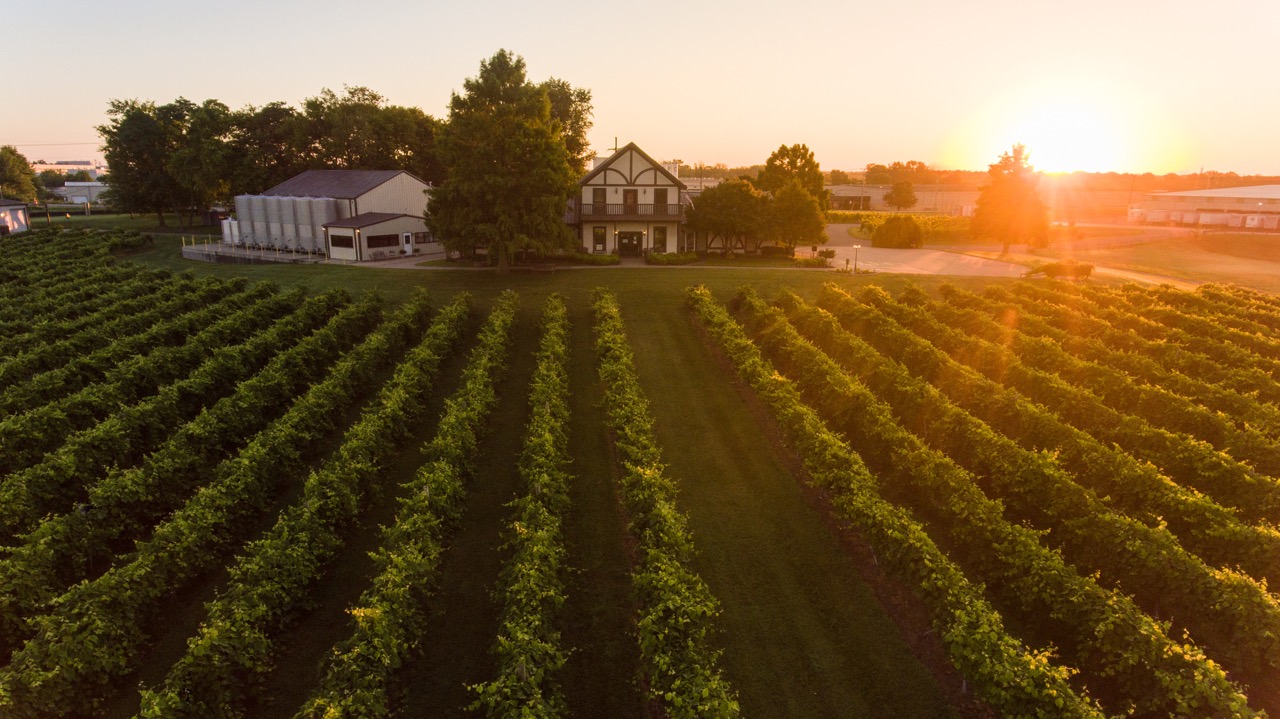
Tennessee’s longest-running single-family-owned vineyard can be found right off the interstate in Clarksville. The picnic table-covered grounds at Beachaven Winery fill up with locals for weekly live music and food truck gatherings between the vines, all merrily sipping their favorite iteration. And there are plenty – from sweet, fruit-forward whites to blended reds and bubbles made in the traditional Champagne method. The brand will celebrate its 40th anniversary in 2026.
Image: Visit Clarksville
Blackhorse Pub + Brewery
This longstanding downtown staple brews its own beers in the back of the house. From creamy stouts to hoppy IPAs and specialty ales in flavors like vanilla cream, guests can pair their favorite Blackhorse brew with a slice of specialty pizza. Pro tip: Blackhorse serves boozy brunch on the weekends.
Image: Visit Clarksville
Skyline 500
For elevated sips (literally), head up to Skyline 500 at Shelby’s Trio, the top floor of this multi-story dining destination. City views pair well with signature cocktails like an old fashioned or mojito, or opt for a glass of wine and trio of dips.
Image: Visit Clarksville
Yada on Franklin
It’s often a packed house at swanky downtown spot Yada on Franklin, which serves pretty craft cocktails and Italian dishes that guarantee a giggle (searching for a side? Check out the “I Don’t Give a Shitake” section. Noodles? Head to “Pasta La Vista, Baby”). Mocktail options here are also excellent – choose between “The Sweet One” or “The Tart One.”
Image: Visit Clarksville
Tap This
Clarksville’s newest libation lounge is Tap This, a downtown beer joint that allows guests to pour their own beers through a fun, vending machine-style tap wall. While lots of beer and cider options are available, they also offer non-alcoholic sippers and shareable charcuterie boards.
Planning a trip to Clarksville? Here’s everything you need to know.
Presented in partnership with Visit Clarksville, a Modern South Founding Partner.
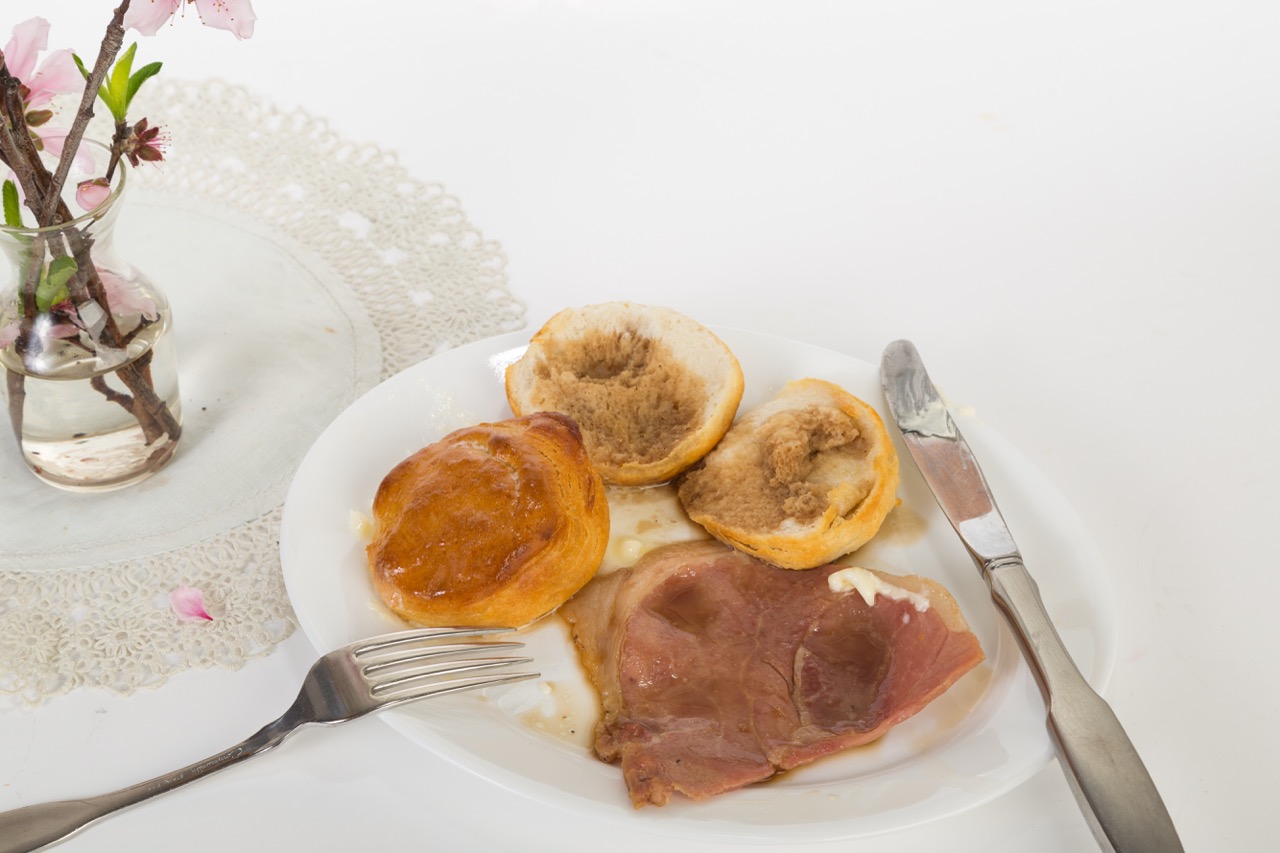
Red-Eye Gravy is one of those Southern curiosities that surprises first-timers: a thin, savory sauce made by mixing salty ham drippings with strong black coffee. Unlike the thick, creamy gravies most people expect, Red-Eye Gravy is runny and dark, perfect for soaking into a warm biscuit. The name either comes from the reddish ring of grease that floats atop the coffee-infused drippings, resembling a bloodshot “red eye,” or the caffeine’s jolt that keeps early risers wide awake.
In Savannah, Executive Chef Nate Cayer of Sorry Charlie’s reimagines this classic dish by folding brewed coffee into a rich, roux-based sausage gravy and finishing it off with orange zest. Served over scratch-made biscuits, Chef Nate’s version keeps the tradition alive while giving it a modern Southern spin.
Orange zestto taste (just a kiss to brighten it up)
Fresh parsleychopped, for garnish
Instructions
Brown the sausage in a heavy-bottomed pot (cast iron works well). Break into crumbles and cook until edges are crispy and deeply golden. Remove sausage, reserving the fat in the pan.
Add the butter to the fat and melt. Whisk in the flour slowly to make a roux, stirring until golden and toasty, about 2 minutes.
Whisk in the brewed coffee—it will sizzle. Then, gradually stream in the milk, whisking constantly until smooth and velvety.
Bring to a gentle simmer, stirring often, until thickened, about 10 minutes.
Stir in the sausage, salt, pepper, garlic powder, onion powder, and paprika.
Just before serving, grate in a touch of orange zest for brightness. Garnish with parsley and serve hot over biscuits, mashed potatoes, or your carb of choice.
I had never heard of Red-Eye Gravy, so I did what I usually do and called my mom. I interrupted her soap opera—I know better than to call during the one o’clock hour—but, being on a deadline, she obliged me.
“What’s Red-Eye Gravy?” I asked. Without missing a beat, she said, “You make it with country ham.” I heard the TV click off. “Don’t you remember eating it every year at Betsy’s house?” she asked. I did not.
Christmas gatherings at my Aunt Betsy’s—not an actual hierarchical aunt, but my grandma Melba’s older sister—were as Southern as could be. A spread of country ham, fried eggs, homemade biscuits (she was famous for those; the two sisters competed for the “best of” title), and she always served homemade pear preserves in a pretty little bowl. Betsy gave me a Barbie doll every Christmas, which—aside from bites of country ham salty enough to dry my mouth—is what I remember most about that annual tradition.
Red-Eye Gravy, as my mom explained, starts with that country ham.
“You cook it like you cook bacon in a skillet, and those things that come off of it—what do you call it—the drippings. That grease and drippings are what Red-Eye Gravy is made out of.”
It doesn’t look or behave like the gravies most people know.
“It looks more like coffee,” she told me. “It’s not thick. When you make chicken or roast beef gravy, you put flour in the grease and then you add water to the flour. Red-Eye Gravy is runny like water. You spoon it over a biscuit and the biscuit soaks it up.”
The liquid is a mixture of leftover coffee from breakfast and water, which may sound terrible but it’s the ultimate “trust the process” dish.
“The coffee you didn’t drink in the mornin’,” Mom said. “You water it down a little bit and pour it in the skillet and that’s your gravy.”
The coffee loosens the salty ham drippings and creates a dark, briny liquid with just enough bitterness to balance it all out.
As for the name, there are two camps. Some say it comes from the way the coffee and grease separate in the skillet, creating a reddish circle of fat floating on top that looks like a bloodshot eye. Others swear it’s because the strong coffee in the gravy will keep you wide awake—red-eyed—from the caffeine. Either way, the name has stuck for generations, passed along with the recipe in church cookbooks, family kitchens, and diner menus across the South.
Image: Sorry Charlie’s
In Savannah, Executive Chef Nate Cayer of Sorry Charlie’s serves a version that keeps the coffee but shifts the texture. Instead of staying thin, he folds the coffee into a creamy sausage gravy built on a butter-and-flour roux. It keeps that distinctive smoky bitterness but mellows it with milk and spices. A grating of fresh orange zest before serving rounds it all out.
“Our red-eye gravy is a bold, reimagined take on the Southern classic—built on rich breakfast sausage, a buttery roux, and strong black coffee for depth,” Chef Nate says. “Instead of the traditional ham drippings and thin texture, we craft a hearty, creamy version that still nods to its roots with savory intensity.”
At Sorry Charlie’s, the Red-Eye Sausage Gravy comes ladled over scratch-made biscuits (jury’s out on how they compete with Betsy’s), but Chef Nate says it’s equally good over mashed potatoes or grits.
Snag Chef Nate’s recipe and create a new breakfast tradition this fall.
Once roasted, coffee beans deteriorate quickly in quality, vacuum-packed or not. But who wants to hop in their car and head down to a local roaster to pick up freshly roasted beans every other day or so?
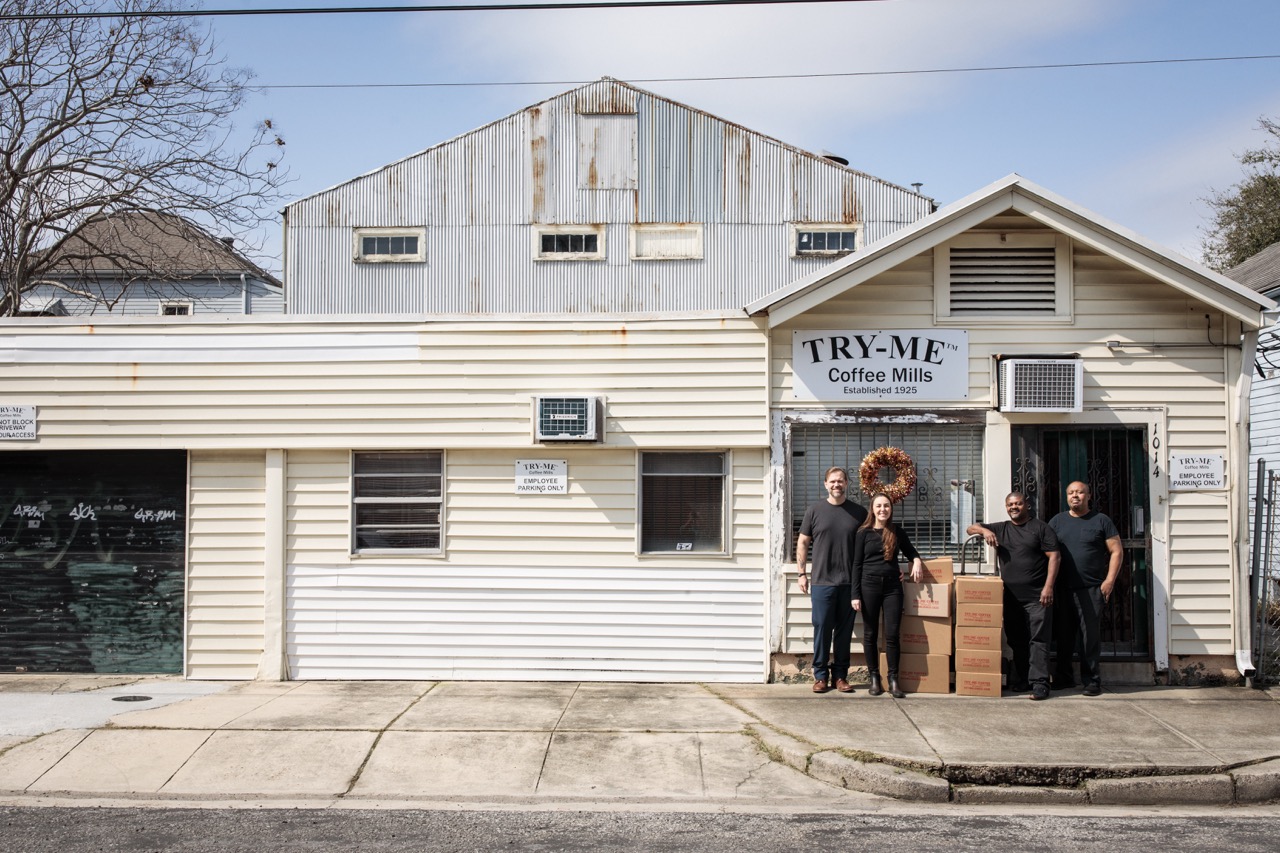
That dilemma is easily answered in New Orleans this year, where Try-Me Coffee is celebrating its centennial by offering free delivery of roasted-to-order beans to residents throughout the Crescent City metro area. Call ’em up, ask for a pound of their Guatemalan Antigua, say, and a truck will bring it by. Perhaps that same day.
“We have wholesale delivery drivers covering most of the metro area on a daily basis,” co-owner Lauren McCabe explains of Try-Me’s largely wholesale business. “So, thinking about the company’s centennial and how to commemorate it, we thought, this is part of our origin story. It’s a no-brainer. Let’s do it. We believe people in our community should have access to delicious coffee every day.”
Try Me Coffee Founder | Image: Try Me Coffee
McCabe, aka “Mermaid” in the Crescent City hospitality community, is a lifelong New Orleanian who bought Try-Me in partnership with her husband Abby King in 2023, taking over from Bob Lutz and his mother, Carol Stogner, who had operated the company for decades. McCabe and King were (and are) residents of Bywater, the company’s neighborhood east of the French Quarter, and Lutz wanted to pass the business along to local owners who would honor and enhance the company’s long tradition.
New Orleans is where I myself long ago became a coffee zealot, and I’ve spent a lifetime not only practicing that affection every day but covering it as a journalist and editor. To this day I begin every morning with a few cups of chicory coffee, the New Orleans signature brew whose nutty, intense flavor is an acquired taste just as much as coffee itself. That’s how NOLA teenagers would end a night of carousing in the French Quarter back in the Sixties, at midnight at Café du Monde, and while I’ve been to coffee’s birthplace in Ethiopia, and savored it in the cafes of Vienna, and picked it on the hillsides of Hawai’i, and roasted it myself in clunky toaster ovens in my kitchen, my loyalty to that Crescent City mainstay stays strong.
But in that lifetime of steadfast coffee devotion, I’ve never heard of free delivery of fresh-roasted beans—anywhere. This does not give McCabe or King pause; they have set out as owners to preserve and promote the traditions with which bank teller Henry Kepler launched his business in 1925. He went door-to-door back then, offering his coffee. “So we’re honoring that legacy now,” McCabe says.
Try-Me still operates in the same building as a century ago. Roasting is done in antique roasters that are as strong and enduring as cast iron—one of which is the original 30-pound roaster Try-Me began its operations with, as well as the original chicory mixer. The company’s master roaster, Jerico Cyres, has worked for Try-Me 35 years. Beans and ground coffee are still sold in full pounds, not the 12-ounce faux pounds that have become common lately. “Full pounds at a fair price,” Try-Me vows; most blends are $14 a pound.
“Innovation” need not knock on Try-Me’s door, and I mean that as a compliment. Coffee roasting and preparation is a craft more than 500 years old, and anyone who has tasted Turkish coffee (or, better yet, a similar preparation in Harrar, Ethiopia) will be inclined to resist changing it much. Having spread from Vienna throughout Europe, and from there to New Orleans under its original French governors, coffee was vital in a city devoted to the good life. Chicory, a roasted root, was a traditional French amendment added to the mix when war blockades crimped supply of coffee, and wedded itself to the New Orleans lifestyle.
“Who really knows how chicory came to be so intrinsic to our coffee—no doubt there’s some truth in old stories like Civil War blockades—but I think it was also because chicory cuts the caffeine somewhat, so you could drink chicory coffee day and night in a city devoted to a 24-hour lifestyle,” McCabe says.
“And it pairs well with sweet treats like beignets,” King adds. “Whatever the case, it’s definitely distinct to New Orleans.”
While chicory coffee is a mainstay of the Try-Me catalog (and has been since the beginning), the company offers many single-origin and blended varieties, ranging from Costa Rican to, yes, Ethiopian Harrar. There is no in-store café, though, and King and McCabe plan none, preferring to provide their beans to many famous New Orleans dining establishments such as Court of Two Sisters and Café Degas; and to continue selling online and by order.
Image: Try Me Coffee
Though Seattle, where I also spent many years, is usually considered the American coffee capital (supposedly more caffeine consumption per capita than any other US city), and it’s incorrectly considered the birthplace of modern artisan coffee roasting, its coffee roots are puny compared to New Orleans, where culinary hospitality goes back 300 years. And that’s part of the visceral appeal that McCabe and King discovered in Try-Me.
“We were seeking a business we could operate together that would allow us to pursue our principles with personal passion,” King declares. “And coffee is something that can easily be a lifelong journey.”
I’ll drink to that. French roast Colombian with chicory, please.
Lifelong journalist and editor Eric Lucas lives on a small farm on an island north of Seattle, where he grows organic hay, garlic, apples, beans and corn—but not coffee, alas. He grew up in New Orleans, and still considers an oyster po’boy the best sandwich in the United States, and NOLA the only place one can find a beignet worth eating… with chicory coffee.
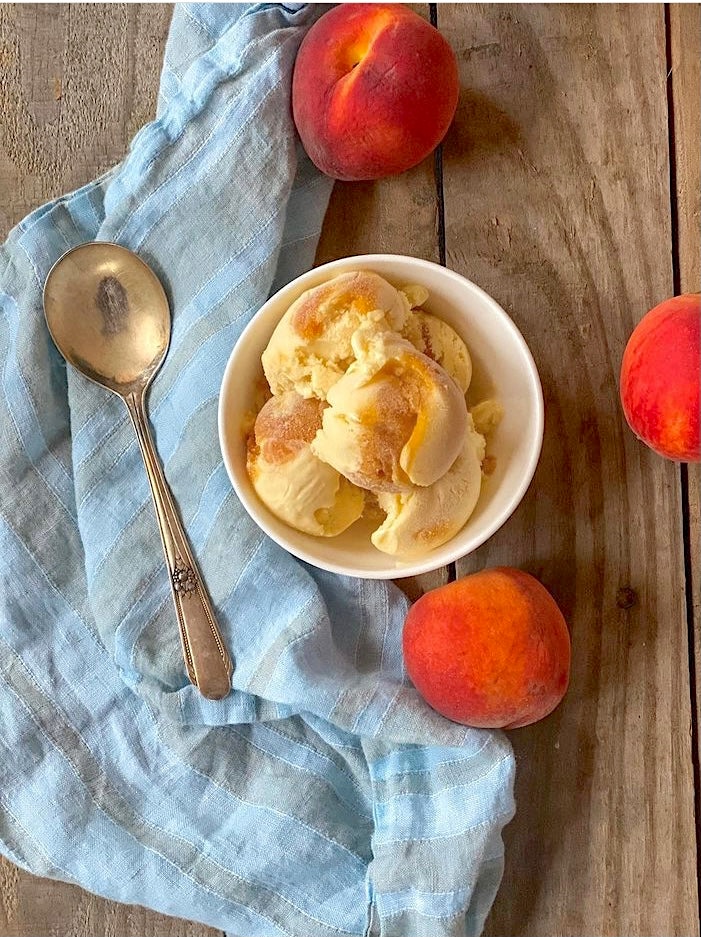
August is National Peach Month, a perfect time to celebrate one of summer’s juiciest fruits. Whether enjoyed fresh from the orchard or folded into a sweet treat, we’re celebrating accordingly—with peach ice cream, of course! This month invites us to get creative in the kitchen and make the most of summer’s finest fruit using juicy, Georgia-grown peaches.
Pearson Farm, a five generation family farm in Zenith, Georgia, is a pioneer in peach growing and picking, with roots deep in the red clay of the Peach State for more than 135 years. While their fresh peach season has come to a close, you can still purchase peach preserves, a cobbler kit, and their famous pecans on their website. Plus, you can find recipes for peach-inspired dishes (like the one below!) here.
Peach Puree:Combine the ingredients in a saucepan and bring to a simmer. Simmer until the peaches have begun to break down. Pulse with a hand blender until smooth and simmer for another 10 minutes. Transfer the peaches to a bowl. Press cling wrap onto the peaches and allow to cool.
Fresh Peaches:Toss diced peaches with sugar and lemon juice in a bowl. Allow to stand at room temperature for 30 minutes until a syrup forms. Pour the peach mixture into a fine mesh strainer and allow juices to drain into a bowl. Allow to drain for 30 minutes. Pour the drained peaches in a bowl, press cling wrap tightly onto the top and refrigerate. Save the liquid.
Custard Base:Whisk together the egg yolks and 1/4 cup sugar until light in color. In a saucepan, whisk together the cream, milk, remaining 1/2 cup of sugar and the salt. Heat over medium-low heat until bubbles appear around the edges of the pan. Whisking constantly, slowly pour in 1/2 cup of the hot custard base into the egg yolks to temper the eggs. Add an additional 1/2 cup of hot custard base, continuing to whisk the entire time.
Pour the tempered egg yolks into the saucepan with the rest of the custard base and whisk for 3-4 minutes, or until the temperature is between 170-175 degrees. Remove from the heat and stir in the vanilla. Strain the custard base through a fine mesh strainer into a clean bowl. Stir in liquid from the fresh peaches and refrigerate for a least 4 hours.
Pour the custard into the ice cream maker and churn according to manufacturer's instructions, until it looks like soft-serve ice cream. Add the reserved fresh peaches during the last minute. Move 1/2 of the custard to an airtight container. Spoon 1/2 the peach puree evenly over the custard. Layer the other 1/2 of the custard on top and spread the remaining puree on top. Using a knife, gently swirl the puree into the custard. Do no over mix. Cover and freeze at least 6 hours until ready to eat.
Looking for more recipes from around the South? Click here.
From saloon-owner mayors and moonshiners to today’s craft cocktail renaissance, she explores how the city’s bars have gone beyond local watering holes into something truly worth experiencing.
We caught up with Caroline to chat about what inspired the book, the characters she discovered, and what’s on her bar cart.
Image: SCAD
What inspired you to write this book?
Caroline Eubanks: This book really came out of my own curiosity. We hear a lot about the famous cocktails of places like New Orleans but I didn’t know much about my own backyard. It combines history and recipes, really telling the story of Atlanta through the bars and drinking spaces. It starts with colonial Georgia and the early settlement of Atlanta, spanning to the present.
I write about the drink culture of other places, especially around the South, so this was something I was very interested in. I’ve written about drinks for Wine Enthusiast, Food & Wine, Vinepair, InsideHook, and several others.
What was one surprising thing you learned about Atlanta’s sip scene?
CE: What surprised me was just how much of a role alcohol played in the city. The first mayoral race was between pro and anti alcohol parties. There are also characters that reappear throughout history.
For example, Hannibal Kimball came to Atlanta after the Civil War to open a grand hotel, where visiting presidents stayed and travelers enjoyed their time during the International Cotton States Exposition. The Kimball House Hotel was the place to see and be seen, to drink champagne, even during Prohibition. It was demolished before I was born, but the name was later passed to one of the city’s top cocktail bars, which has revived many of these pre-Prohibition recipes.
What’s your drink of choice?
CE: It really depends on the place. If I’m at a dive bar, it’s always a beer. But at a cocktail bar, I like to let the bartenders steer me—I trust their creativity. Otherwise, I’d probably go for a Manhattan.
What does your personal bar cart look like?
CE: My bar cart is overflowing at the moment and has a little bit of everything. I like experimenting with cocktails, so there are plenty of bitters and liqueurs as well. I’m really enjoying companies like El Guapo and Atlanta’s 18.21 Bitters. I also recently wrote about a Georgia company called House of Applejay that makes fruit liqueurs. The cherry version goes into my Manhattan.
Today, Kentucky Fried Chicken, or KFC for short, and its iconic cartoon mascot Colonel Harland Sanders, are recognized worldwide. The fast-food chain boasts over 24,000 locations in more than 145 countries and territories.
Less known, however, is the real story of the Colonel and his wife, Claudia Sanders, whose own namesake restaurant—the Claudia Sanders Dinner House in Shelbyville, Kentucky—has been serving up Southern comforts for more than 50 years and counting.
Image: Claudia Sanders’ Dinner House
In the late 1950s, at the ripe age of 69, the Sanders relocated to Shelbyville, following the then-brand-new Interstate 75. Here, the couple took up residence at Blackwood Hall, a circa-1860s mansion, and constructed an adjacent building that would become their company’s home base and warehouse.
In a phase of life when many people might retire, the Sanders’ fame was just getting started. Although Harland first began serving his food at his service station in Corbin in the 1930s, earning him the title of a Kentucky Colonel for his contributions to the state’s cuisine, it took several more years for him to perfect his signature blend of 11 herbs and spices that later made KFC a household name.
His culinary acumen wasn’t just a passion; it was a financial pursuit. The $105 monthly Social Security income was not enough to live on, so he incorporated the business and began recruiting franchise owners.
By the time Harland sold KFC to investors in 1964, there were 600 locations. With the sale, the offices moved—but the couple didn’t stop serving their authentic recipes to the community. In 1968, the Sanders converted the former KFC office into a dinner house, originally called The Colonel’s Lady.
Image: Claudia Sanders’ Dinner House
While the restaurant is now known as Claudia Sanders and is in a new building on the property, little else has changed in the past five decades. People come by the busload for plates of country ham, chicken livers, Kentucky Hot Browns, yeast rolls, and of course, the famous fried chicken—all served with a heaping side of history.
Just ask Janette Marson, president and CEO of ShelbyKY Tourism. “You’re surrounded by nostalgia when you walk into that restaurant,” she says. “You can feel the history.”
Upon entering, guests are greeted by a portrait of the late Colonel and Claudia. The couple passed in 1980 and 1996, respectively, yet their legacies are alive and well in the food and the conversation that fill the dining room.
“A lot of older people come because they are reliving their days of yesteryear,” Marson adds. “You can ask your server, and they are happy to regale stories.”
Everyone has their own special connection to Colonel Sanders. For Marson, it’s a memory from her childhood. Growing up in nearby Indianapolis, Marson recalls a family road trip that included a stop at a KFC, where she met the Colonel in person. “He was very friendly, I remember the white suit and the little white beard, the whole thing.”
Image: Claudia Sanders’ Dinner House
As much as folks crave the timeless taste of the crispy chicken and more sides than a Thanksgiving meal, Marson believes it’s the sharing of these memories that truly keeps locals and visitors alike coming back to Claudia Sanders’ Dinner House.
“It’s the remembrance of eating it as a child,” she says. “Everything that is authentic Kentucky comfort food is on that menu.”
To accommodate the demand, the restaurant can seat around 500 people across two levels. Its close proximity to Jeptha Creed Distillery or the Bulleit Distilling Co. Visitor Experience Center, Claudia Sanders’ Dinner House is a popular option for large groups who want to sample the best of the Bluegrass state.
Dishes are served family-style, complete with a dessert cart, from 11 a.m. to 8 p.m. Tuesday through Thursday, and until 9 p.m. on Friday and Saturday. Every Sunday and on select holidays, guests line up at the buffet.
Regardless of what day you visit, one thing you can count on is a slower pace.
“It’s very relaxed. It’s definitely not fast food.” Marson adds. But it’s most definitely worth the stop. “I like to call the Claudia Sanders’ fried chicken the original original recipe,” she says.
Looking for more stories from around the South? Click here.
Cheese dip has always been more than a side dish in Arkansas. In the Natural State, it’s a comfort, a calling, and for many (myself included), a core memory.
Before it landed on fast-casual menus, late-night cravings, and TikTok tables, cheese dip was already bubbling away in a dirt floor restaurant in Hot Springs, Arkansas. What started as a humble house blend of melted cheese and spice has grown into something much bigger: a shared tradition, a source of pride, and arguably—though we’ll save that debate for another day—a contender for one of America’s great regional foods.
This story isn’t about winning an argument about what constitutes “cheese dip” and the case for “queso.” This is about honoring where it began. This is the history of cheese dip, as told by the people who live it, live it, stir it, and serve it. And for me? It’s personal.
A Back Story: Born Into the Dip
The night before I was born, my family dined at (much missed institution) El Palacio, a Huntsville, Alabama, restaurant and Mama had her fill of their classic piping hot yellow cheese dip. Just hours later in the early morning my mama would go into labor—so it’s true I was quite literally born into a cheese dip story. As a toddler, I choked on a chip there. It closed in 2016, but by then, the dip had already become part of me and my found neurodivergent food blogger identity, “the queen of queso.”
Growing up in North Alabama, Velveeta and Rotel were holiday staples. We fancied ours up with hot breakfast sausage. But no one else I’ve met (yet) ever dipped shrimp cocktail into cold cheese dip like my Papaw. It’s weird. It’s good. Don’t knock it!
So when I pulled back into Little Rock—ironically, the first place my parents lived after they married in 1978 after a decade spent chasing cheese across Texas, it wasn’t rivalry I was chasing. It was recognition. 42 years (and countless bowls) after being born to eat cheese dip, I’ve chased that comfort back to its roots in Little Rock, Arkansas—the state that profoundly claims to have invented cheese dip.
Screenshot
The History of Cheese Dip: Mexico Chiquito
It all started in 1935 at a little spot with dirt floors called Mexico Chiquito, founded by Blackie Donnelly. It opened in Hot Springs but quickly moved over to North Little Rock. Donnelly was a pilot who flew a twin-engine plane between Mexico and Arkansas, smuggling back ideas, spices, and maybe a secret or two. Some say he only “landed” in Arkansas because he literally crashed his plane here. Another version gives Donnely’s wife the cheese dip credit—a mirror to Nashville’s spicy, woman-powered (albeit faceless and nameless) hot chicken origin story.
Some of the stories could be folklore. But the cheese dip? That’s fact, when you roll into the Natural State.
Yellow, velvety, garlicky. Chili powder, cumin, onion, maybe jalapeños. A smooth base of American or Velveeta-style cheese product. Sometimes milk, sometimes butter and flour. It wasn’t the same Tex-Mex. It wasn’t standard Mexican fare. THIS was something new. Call it Ark-Mex. And yes—it came with a fruit punch on the side.
Mexico Chiquito is still around, by the way. It’s currently owned and operated by the five daughters of Jerry Haynie, who passed away in 2011. Haynie purchased the restaurant and its cult-favorite recipes in 1979 from Donnely and expanded it into a mini-chain—now a woman-owned legacy still serving that same secret dip.
Image: Delia Jo and Mark Abernathy
The White Cheese Dip Revolution
Enter the 1980s. Mark Abernathy, freshly back in Little Rock from a stint helping launch TGI Fridays in Dallas, decided to try something bold at Blue Mesa Grill. Alongside Frank McGehee, he created the first-ever white cheese dip—a spicy, creamy mix of smooth melty cheese: mozzarella, provolone, and roasted green chiles. Later, at Juanita’s, he gave it a stage. Just like the national music acts he hosted there, white cheese dip became a hit. It didn’t replace yellow—it joined the family, in true Southern style.
Mark didn’t just invent a new dip. He cemented cheese dip’s place in Arkansas civil rights, food, and music culture. He helped launch the Central High School Historic Site, brought artists like John Prine and Joan Baez to town, and secured a lifetime supply of cheese dip in his restaurant sale deal. As one should.
Image: Queso at Dizzy’s Gypsy Bistro
Cheese Dip (or Queso) on Every Menu
Everywhere you go in Little Rock, cheese dip is there—sometimes front and center, sometimes quietly hidden in a breakfast burrito or on poutine.
At Dizzy’s Gypsy Bistro, now run by Don Dugan, the award-winning le Petit Roche cheese dip recipe remains top-secret. Don took over the business and its emotional legacy—there’s a mural tree painted inside in memory of the original owner’s son. The cheese dip is buttery, beloved, and fiercely guarded.
At El Sur Street Food Co, Louis didn’t put cheese dip on his original Honduran food truck menu. But once he opened a brick-and-mortar in SoMa, the requests poured in. Now it’s on the happy hour menu, served glowing over a tea light in a custom dish—next to baleadas and anafre. Because in Little Rock, even Honduran menus bow to the queso gods.
At The Fold, a former Altel station turned taco-and-margarita haven, the queso is white, thin, spiced with habanero, and studded with bison. It was unexpected. It was delicious. And it confirmed that cheese dip has permission to evolve.
At The Faded Rose, a New Orleans-inspired restaurant, the dip wasn’t even part of the original concept… but guests kept asking. Then a bankruptcy judge literally ordered it to stay on the menu. It’s the only court-mandated cheese dip I’ve ever heard of. Honestly? Respect.
At Samantha’s, chefs Chris Tanner and Samantha are building a Little Rock legacy—cooking with Gulf seafood, Arkansas bacon, and Hatch green chiles. Their cheese dip is white, clean, comforting, and respectful of the people who make it. They even kept staff on payroll during COVID by putting them to work on demo crews.
At @ the Corner, cheese dip meets brunch. Their team sources local eggs and cream, and they’ll tell you proudly they once bought chickens to control egg prices. The dip comes from scratch. But the feeling? Pure Southern comfort.
And at Lost Forty Brewery, part of the Yellow Rocket empire, there’s not just cheese dip—there’s cheese dip dust.
Imag: World Cheese Dip Championship awards
The World Cheese Dip Championship, Food Tours, and Chips & Dip as Communion
In the early 2010s, filmmaker and researcher Nick Rogers set out to find the origin story of cheese dip.
But what he uncovered went deeper than melted cheese and recipe scraps. His documentary, In Queso Fever: A Movie About Cheese Dip, became the first real cultural excavation of the dish. It wasn’t just about who made it first, but why it mattered.
Nick interviewed historians, home cooks, restaurant owners. He filmed conversations over stoves and across bar tops. He connected the dots between family memories and regional identity. And then he did something big: He founded the World Cheese Dip Championship—a festival, a contest, and a homecoming all rolled into one. There are trophies and keepsake cheese dip serving trays. Judges. Banners. But it was the last line of his documentary that stayed with me.
“It’s not about who made it first. It’s about the people standing around the bowl.”
That line echoed something I’d already been living.
After my mama and my bonus dad died, I found myself hollowed out and unsure how to hold space for grief. I started hosting quiet meetups in Nashville, originally just a few friends in folding chairs. No rules. No name.
But I always brought cheese dip. A big warm crockpot. A stack of chips.
People came not knowing what to say. But then they’d hover near the bowl. They’d scoop. Sit. Stay a little longer than they meant to. Somehow, cheese dip softened the edges. It gave us a reason to linger.
Now, I call them Queso Connection Nights—simple gatherings built around melted cheese and real conversation. It’s not about healing all at once. It’s about having something warm in the middle of the table when the world feels cold.
Rex Nelson, Fried Catfish, and the Food That Brings Us Back
No story about Arkansas culture is complete without Rex Nelson—author, journalist, political columnist, radio host, and lifelong chronicler of the Delta. He’s written for the Arkansas Democrat-Gazette, covered state politics, and shined a spotlight on everything from small-town football to barbecue joints off Highway 70. But he’s also spent decades documenting the soul of Arkansas food.
When we met up at the iconic Buffalo Grill, we talked about cheese dip (theirs has chili, too, and is a local favorite)—but also about what it means to the South. Rex sees cheese dip the way he sees fried catfish at tables in Central Arkansas—as more than food. As ritual.
Catfish, he said, belongs right next to cheese dip in Arkansas’s culinary pantheon. They show up at the same kinds of places: reunions, wakes, church picnics, political fundraisers, roadside fish fries.
He described them both as “the dishes people remember being around when something big happened.”
Rex is someone who understands that Southern food isn’t always fancy—but it’s always meaningful. It anchors us. It welcomes us back.
He reminded me that what’s in the bowl matters—but who’s around it matters more.
And honestly? That might just be the thesis of cheese dip itself.
Looking for more food stories from around the South? Click here.
In Nashville, Curry Boys BBQ fuses Southeast Asian curries with Texas-style smoked meats — and their Curry Creamed Corn brings that signature mash-up straight to your plate.
The base includes cream cheese melted into sweet corn, seasoned with Cajun spice, garlic, onion, bouillon, and a pinch of curry powder. After the corn is boiled and dried, it’s stirred into the cream cheese and coated in a spice blend. Garnish with a pop of fresh cilantro and a dusting of curry powder, and serve it alongside brisket or straight from the bowl.
Bring a medium pot of water to a boil. Add frozen corn and boil for 5 minutes.
Pour corn into a strainer and let drain to dry for 15 minutes. Set aside.
In a medium empty pot, bring to low to medium heat.
Add in cream cheese and heat until softened.
Add boiled dry corn in with cream cheese and stir well. Making sure all corn kernels are covered with melted cream cheese.
Add in sugar, granulated garlic, granulated onion, cajun seasoning, chicken bouillon, and black pepper. Stir well to ensure everything is evenly coated.
To serve, plate in small side bowls and pinch with a touch of curry powder on top. Garnish with a sprig of chopped cilantro!
Looking for more recipes from around the South? Click here.