If you’ve ever found yourself in Ridgeland—often called the steakhouse capital of Mississippi—chances are you’ve heard of Tico’s Steakhouse. Opened in 1989 by its namesake, Tico Hoffman, the longtime local favorite delivers the kind of classic steakhouse experience that leaves you reaching for a post-meal peppermint and toothpick.
Housed in a rustic log cabin, the restaurant is filled with warm wood paneling, crisp white tablecloths, and the unmistakable smoky aroma that has defined old-school steakhouses for generations. From the moment you step inside, it’s easy to see why Tico’s has remained a fixture in the community for more than three decades. The atmosphere is refined without feeling stuffy, and the menu is timeless without sacrificing flavor—an intentional balance that Hoffman has embraced since opening the restaurant.
“[When it comes to running a restaurant] you want to treat people as if you’re entertaining at your house. You don’t want them to have to ask for anything and have really good service and high-quality food,” Hoffman said.
This philosophy has served Hoffman well, helping Tico’s stand out in Ridgeland’s celebrated steakhouse scene for more than 37 years. But a career in the restaurant industry wasn’t always part of the plan. In fact, Hoffman says he found his way into the business almost by accident. During his final year at LSU, a golfing partner who had recently opened a steakhouse invited him to spend some time at the restaurant to see if he enjoyed the work. As it turned out, he did.
“It fit me because we played golf during the day and worked at the restaurant at night, and that rhythm just worked,” he said.
About a decade later, Hoffman decided to put his years of restaurant experience to the test by opening Tico’s Steakhouse in Ridgeland. He remembers opening day as a mix of excitement, nerves, and gratitude. Owning a restaurant had long been a dream, but he knew it was a gamble. His father even warned him that whatever he thought it would cost to open, he should double it. He took the advice, and on the day of the restaurant’s debut, he simply opened the doors, laid out heavy hors d’oeuvres and cocktails, and watched as a couple hundred friends and curious locals streamed through. Their support carried him into the next day and on for the next 37 years. As he puts it, the rest is history.
Today, Tico’s remains a pillar of Ridgeland’s celebrated steakhouse tradition, serving generations of loyal diners while its legacy continues through Hoffman’s son, who opened a second Tico’s in Oxford in 2024. If you ask Tico what keeps people coming back after all these years, he’ll tell you it starts long before the dish ever hits the table.
“We cook our steaks under overhead gas broilers and serve them on hot plates—as the old saying goes, don’t sell the steak, sell the sizzle,” he said. “When people walk in and smell a hot steak on a buttered plate, it just makes them hungry.”
Planning a trip to Tico’s soon? Order like the man behind the restaurant with Hoffman’s go-to menu picks:
There is a reason this steak has earned Hoffman’s stamp of approval. Cut from the short loin, it offers a bold, beefy flavor and a tender yet pleasantly firm texture that he says sets it apart from the rest.
Filet
Hoffman ranks this cut just behind the New York strip among his personal favorites. Exceptionally juicy and buttery, with melt-in-your-mouth tenderness, it’s a standout for anyone craving a classic steakhouse experience.
Potato Au Gratin
Cheesy, creamy, and oh-so-indulgent, these potatoes are the perfect side dish for any entree at Tico’s, whether it’s steak, seafood, or poultry.
New York Cheesecake
Tico’s homemade cheesecake is lighter than a traditional New York slice, whipped with plenty of Cool Whip and set on a brown sugar–pecan crust that Hoffman says is the star of the dish.
Ridgeland is the Steakhouse Capital of Mississippi, not only because it holds the most steakhouses of any other Mississippi city, but because steaks here are notoriously the best around. But there are more decisions at stake than steak, because the city also boasts excellent Italian food, casual dining, craft coffee, a Mocktail Trail, and charming eateries ranging from a tea room to a philanthropic café.
We’ve spent the better part of a year eating our way through this town for Explore Ridgeland — steakhouse by steakhouse, bakery case by bakery case. Here’s everything in one place, plus where to go deeper.
Steaks at this longstanding dining room have earned national chops from outlets like MSN and Business Insider, and most importantly, it’s a fan favorite among locals. Owner Richard Shapley named it after his grandfather Elias “Ely” Shapley of Greenville, opened the doors in 2008, and has been aging steaks 28-plus days ever since. Choose between tender filets, ribeyes, and a New York Strip, or turn to the seafood menu with gulf redfish (a regional delicacy), tuna, and broiled crab cakes. The Filet Louisiane, drenched in Creole barbecue butter and topped with shrimp, is regularly lauded. It sits upstairs overlooking the Railroad District in Olde Towne, which gives it an atmosphere all its own.
The original Shapley’s opened in 1985, then after a few years’ hiatus, reopened to the delight of locals in 2018. Its owners are kin to the Ely’s team, so the steaks here are up to snuff — but the menu also includes grilled fish, stuffed shrimp, rack of lamb, and crab claws. Start your meal with an order of hot tamales; there’s a reason this family tradition spans more than 75 years. It’s a true farm-to-table restaurant, with a vegetable garden blossoming right outside the dining room.
Insider tip: plan your trip around eggplant season.
Tico’s Steakhouse
Tico’s has been doing its old-school steakhouse thing since 1989, and recently expanded to Oxford in 2024. The menu spans steaks, seafood, chops, and chicken, with all the classics — wedge salad, garlic bread, steak and lobster, potato sides in many forms. Don’t let the neon lights or the log cabin exterior fool you.
Kathryn’s Steakhouse and Seafood
What sets Kathryn’s apart is not only its (near) daily food and drink specials, but its nightly live music, serving dinner with a side of show. Kathryn’s has kept many of the same recipes that have delighted visitors since opening in 1979, from hand-cut steaks to seafood, prime rib, and classic sides and desserts.
Father-daughter duo Christian and Anne Amelot-Holmes run this lakeside bistro, merging forty-plus years of French culinary training with Southern sensibility. Christian trained at the Savoie-Leman culinary school in France; Anne grew up in Le Ferte-Bernard and now manages the front of house. The fried crab claws are regularly recommended to kick things off, then carry on with a redfish entrée and a strawberry crepe or crème brûlée to finish. On a nice night, the lakeside patio dials up the ambiance.
CAET [seafood | oysterette]
CAET is equal parts eatery and wine bar, and does both with expertise. Get settled on the outdoor patio, then browse a wine menu that offers tastes, half-glasses, and full pours — much appreciated if you’re indecisive like me. Then the decisions get tougher: jumbo scallops with shrimp and feta risotto and tarragon-Meyer lemon butter sauce, or prime rib with smoked Gouda and caramelized-onion mashed potatoes. We’ll stop there.
Local 463
Chef Derek Emerson has mastered the art of culinary innovation here — peep the Dr. Pepper braised beef short ribs, the pan-seared grouper with grain mustard lemon butter, and the Manchego-topped shoestring fries. Despite the multi-page wine list, the menu also includes a collection of zero-proof brews.
A brand new addition, TASTE comes to the Renaissance at Colony Park from neighboring Starkville, where it opened its Ridgeland location in July 2025. Executive Chef Shannon Lindell runs the kitchen, turning out classic pastas, hand-tossed pizzas, and fish and steak entrees — but perhaps the most exciting draw is the expansive bourbon menu chock full of rare sippers. There’s a bar, a lounge, and a gorgeous new patio on the way for warmer days.
Pro tip: prices are notably lower here than your average Italian spot, which we thought we’d share if you’re picking up the check.
Amerigo
Amerigo has been around since 1987 and features a menu that covers all the bases: pizzas, pastas, steaks, and seafood, plus a Sunday brunch if you’re opting for a daytime date. Italian food is usually an easy sell, but Italian cocktails? I’m there in a heartbeat — citrusy limoncello, a tiramisu martini, and Italian wines are all on the menu. While the restaurant started in Ridgeland, it’s since expanded around the South.
Fratesi’s
Another spot where the pasta options are endless and the big pizza pies are divine.
Image: Explore Ridgeland
Casual Eats
Lou’s Full-Serv has a fabulous spin on Southern fare, especially when it comes to the LA crawfish fondue. Bulldog Burger Company offers multiple takes on the classic American burger to satisfy any appetite (if you like a little spice, the jalapeño popper burger is the move). Aplos Simple Mediterranean serves a Mediterranean-Middle Eastern fusion menu, and Sombra Mexican Grill scratches your margarita itch. Zea Rotisserie and Bar adds global flavors to a well-rounded menu — you can even drink your dessert with their chocolate-tini. And Pelican Cove Grill sits right off the Rez with nautical classics, fish tacos, shrimp baskets, and buckets of beer.
For one of the most memorable, heartwarming meals you can find anywhere in the world, the Lily Pad Café tops the list. Its mission is to employ and train community members with intellectual and developmental disabilities, giving them the tools to thrive elsewhere. It’s a lily pad — a jumping off point — and a delightful experience for diners. While the mission is reason enough to get you in the door, the food is also excellent, including classic Southern fare like chicken salad, deviled eggs, and cucumber salad.
There’s something magical hidden in a Ridgeland business park — up the stairs and down the hall sits a whimsical, floral-covered tea room plucked straight out of wonderland. The back wall is trimmed with tinctures built for tackling any ailment, and dried flowers carry the earthy vibes through the rest of the restaurant. It’s tough to choose your tea, but when it comes to food, the full tea service is a must. You’ll be showered with sweets, scones, sandwiches, and one of my all-time favorite bites, deviled strawberries.
Ridgeland days are best spent shopping at Renaissance or boating on the Rez, which means you’ll want to fuel up before and wind down after.
For coffee, Whirl Smoothie Bar & Coffee House is a cozy little cottage beside the Bike Crossing store and close to a Natchez Trace Parkway entrance, making it a perfect stop before or after a scenic ride. CC’s Coffee House, a beloved New Orleans-based brand, opened just off Highway 51 to the delight of locals — order a frozen Mochasippi and go antiquing nearby. Fusion Coffeehouse simplifies the whole experience with straightforward coffees, lattes, and teas paired with knowledgeable baristas, and blends in gelato and café fare while it’s at it.
For cocktails, Dogmud Tavern houses more than 250 board games alongside a full bar, from Battleship and Scrabble to Candy Land and Uno. Zea runs a happy hour worth planning around: $1 off beers, $2 off cocktails, and an extra half glass of wine on the house, plus seasonal craft cocktails like tart honeysuckle lemonade and a spicy Caribbean heat margarita rimmed in Tajín.
For zero-proof, Aplos keeps a small but mighty mocktail menu — a nonalcoholic Mint Julep with pomegranate, a fizzy Honey Crisp with fruit juices and ginger beer, and a cucumber, lavender, and citrus spritzer. Explore Ridgeland also recently unveiled its Mocktail Trail, so you can make a whole afternoon of it.
Primo’s Café and Bake Shop has been serving the community since 1929 and remains a Mississippi go-to for cakes, pies, cookies, and all the pastries in between (they’ll also cater your holiday ham and Southern sides). Buenos Aires Bakery brings Argentinian flavor to American classics, with dulce de leche, tropical fruits, and warm spices as frequent fliers in the rotating case — and some of the best tres leches-inspired desserts you’ve ever tasted.
For desserts with an emphasis on Southern comfort and tradition, Mo’ Betta Dessert Bar is the way to go. Banana pudding, cream cheese pound cake, lemon ice box pie, several cheesecake variations, and so much more are available at their food truck or brick and mortar store. And Mochinut combines donuts and mochi into one unique pastry with frequently rotating flavors — if you’re feeling adventurous, build a Korean corndog down to the filling and topping (Hot Cheetos, crispy ramen, cheddar cheese).
Ridgeland’s Culinary Passport covers a lot of this ground if you’d rather eat your way through with a checklist in hand. Either way, come hungry.
| This article is presented in partnership withExplore Ridgeland, a Modern South Founding Partner.
From chunky scoops in waffle cones to luscious milkshakes topped with whipped cream, ice cream holds a nostalgic spot on everyone’s summer itinerary. There’s something dreamy about hitting the drive-thru on a road trip for a swirly soft serve or capping off the perfect day at the beach with a frozen delight.
From the coast of Florida to North Carolina’s Blue Ridge Mountains, we’ve rounded up some of the South’s most enduring ice cream parlors. You might even be tempted to hit the road just for a tasty treat from these historic shops.
Image: Virginia Tourism Corporation
Doumar’s | Norfolk
In 1904, Syrian immigrant Abe Doumar had a craving for ice cream and a keen eye for business when he bought a waffle at the St. Louis World’s Fair and topped it with ice cream. For the rest of the fair, Abe sold ice cream in his new creation, the world’s first waffle cone.
Doumar’s still uses the original four-iron waffle cone machine that launched the Virginia family’s successful chain. The Norfolk location became the most successful, selling nearly 23,000 cones in one day. The menu now includes indulgent treats like cheesecake shakes, ice cream sundaes, and those original handmade waffle cones filled with custom scoops.
Image: Fredericksburg Economic Development and Tourism
Carl’s Frozen Custard | Fredericksburg
Since 1947 Carl’s has attracted fans with a classic lineup of frozen custard, ice cream’s richer, thicker cousin. The secret? Lots of eggs, and Carl’s vintage Electro Freeze machines that blend the custard without adding air like newer models, resulting in a thicker frozen treat.
Carl’s sticks with the winning formula: unchanged recipes for vanilla, chocolate, and strawberry custard, with a few sundae toppings to round things out. You better come early since the custard is made fresh daily and sells out quickly. You can’t miss Carl’s – just look for the scoop-shaped neon sign, a Virginia Historic Landmark.
Fava’s 1910 Diner | Georgetown
Started as a Kentucky confectionery by Italian immigrants Lois and Susie Fava more than a century ago, Fava’s maintains its vintage soda fountain charm. This multi-generational diner has expanded its menu over the years, but the nostalgic experience remains. Slide into a booth or hop on a swivel stool for a classic shake or hand-dipped sundae. Go all out and order a slice of homemade pecan or apple pie. Pie a la mode anyone?
Image: Visit Savannah
Leopold’s Ice Cream | Savannah
The original Leopold’s Ice Cream nailed the location: a busy intersection of two streetcar lines. Started in 1919 by three Greek brothers, this historic shop relocated but still features original flavors like Tutti Frutti – rum ice cream with candied fruits and Georgia pecans – served behind the black marble soda fountain. Classic Banana splits, shakes, and sodas share the menu with vegan flavors and modern hits like the Savannah Socialite – milk and dark chocolate ice creams with roasted Georgia Pecans and swirled with homemade bourbon infused caramel.
Image: Visit Hendersonville
Piggy’s Ice Cream | Hendersonville
Road tripping through the Blue Ridge Mountains? Piggy’s Ice Cream is known for its quirky décor and thick milkshakes. It’s one of over a dozen stops on the Hendersonville Ice Cream Trail so why not try more than one?
Family owned in North Carolina since 1979, this scoop shop is hard to miss with its two-story-tall statue of Yogi Bear holding an ice cream cone. Animal figurines on the roof, retired restaurant advertising signs and a collection of antiques add to the nostalgia. Try a Hooterville Cooler (a citrusy shake with orange sherbet) or a decadent Hot Fudge Cake, layers of cake, ice cream and hot fudge.
Image: Visit the Shoals
Trowbridge | Florence
In 1917 founder Paul Trowbridge fell in love with this Alabama town and set up shop with Trowbridge Ice Cream’s original orange pineapple flavor. Still on the menu today, this refreshing scoop has been recognized by many as one of the best things to eat in the state.
Stop at this vintage-style soda fountain for the popular citrus flavor or try the decadent “Oh My Gosh” sundae: a shareable-sized warm brownie-topped ice cream, caramel syrup, and whipped cream. Non-dairy options include cookies and cream, and an unusual dill chill, pickle flavored ice cream.
Smith Drug Company | Hattiesburg
Part museum, part milkshake parlor, Smith Drug Company holds a special place in Mississippi history. Founded in 1926 by E. Hammond Smith, the drug store served as a commerce center and focal point for the community during the Civil Rights era. Now open on Saturdays only, stop in for a tour and famous malt shake served up with stories of resilience, triumph, and community.
Image: Visit Corinth
Borroum’s Drug Store & Soda Fountain | Corinth
As the oldest drug store in the US still operated by the same family, Borroum’s Drug Store spans multiple generations, managed by the late Camille Borroum-Mitchell into her nineties. The original charm is preserved, with photos and memorabilia from this Mississippi shop’s early days. Try a hot fudge brownie, cherry phosphate, or an M & M milkshake made with real malted milk. And you can’t stop without trying an iconic slug burger, a depression-era hamburger invented in Corinth.
Dairy Queen | New Smyrna Beach
More than a franchise, this Central Florida Dairy Queen is a family legacy spanning three generations. With iconic signage and blue and yellow patio umbrellas, this retro soft-serve spot is one of the first things visitors see when hitting New Smyrna Beach, one Florida’s favorite local beaches. As original founder Mary McGuirk added all the DQ favorites over the years, the New Smyrna Beach Dairy Queen became one of the most successful in the Southeast.
It’s still a popular gathering spot for locals and beachgoers, who come for classic ice cream sundaes, Blizzards, and banana splits on the historic oak tree-lined patio.
Close your eyes and imagine a sports bar. What does it look like? What does it sound like? What do you picture in your mind’s eye? Perhaps you’ve conjured up images of sticky floors, wooden booths, neon beer signs, and oversized televisions with the scent of old grease in the air. Mmmm…nostalgia. Now, wipe every single image (and odor) away.
Image: Jack Gardner Photography
Scout in Watersound, Florida, is everything but the previously described environment. Instead of following the predictable playbook of the modern American sports bar, owner Jeremy Walton of Quest Hospitality Concepts and the architectural team at David Thompson Studio set out to build a “city restaurant” that functioned as a time machine, transporting guests to an era of classic taverns and municipal golf clubhouses. The result is a space that feels deeply rooted in history, achieved through a sophisticated, gender-neutral design, and a collection of found artifacts that would rival many sports enthusiasts’ collections.
The aesthetic foundation of Scout is built upon a definitive chronological boundary: nothing in the restaurant dates past 1985. This was a conscious decision to preserve a specific period in time, evoking the era when sports consumption was dictated by the three major networks and the glow of ABC’s Wide World of Sports. “Everything about that decision was to make sure that we stayed true to a period in time,” says Walton, recalling his own memories of watching sports on television. The date ensures that every item contributes to the restaurant’s cohesive nostalgic narrative, avoiding today’s glossy, mass-produced feel of modern sports memorabilia. “We felt like there were tons of places you could go and see all kinds of traditional, iconic sports memorabilia, but we wanted to give you things that you may or may not have seen,” Walton explains.
Image: Jack Gardner Photography
With a tall order to fulfill, Walton set out to procure the art and artifacts for Scout, which he admits was a grueling yet self-guided labor of love. “It’s like a vortex you get sucked into,” he laughs. “I feel like if I looked at my screen time during that period between eBay and Etsy and Facebook Marketplace and all these auction websites, I was probably like a zombie a lot of the time.” The goal was to find pieces that were obscure and unique rather than priceless or in high demand. “I was looking for very vintage pieces that possibly may or may not be of that high value. I wanted them to be more obscure and unique,” he says.
Walton’s methodology paid off, leading to the discovery of some of the restaurant’s most compelling features, including authentic scouting reports for legendary athletes like Hank Aaron and Bo Jackson. These reports, paired with the players’ high school photographs, serve as a literal interpretation of the restaurant’s name and offer a level of historical intimacy that a signed jersey simply cannot match. “It was such a cool connection to be called Scout and to have these actual scouting reports,” Walton says.
Other classic sports bar elements within the restaurant were chosen to reinforce the retro theme. Rather than digital arcade games, Scout features a sawdust shuffleboard and a vintage Harlem Globetrotters pinball machine. In addition to booths and tables, there’s lounge and conversational furniture, ensuring that the tavern remains a place for connection. Even the food is served with a traditional nod. The nachos, for example, appear on an oval platter accompanied by a pewter gravy boat filled with melted cheese. The ultimate validation for Walton comes from the locals who have adopted the space as their own, telling him, “We really feel like Scout is our clubhouse.”
Image: Jack Gardner Photography
Of course, as with all good bar owners, Walton has scattered his own Easter eggs throughout Scout, too. Look closely behind the back bar, and you’ll see a Time Live cover of Roy Hobbs, a “Wonder Boy” bat, and a New York Knights hat. All are nods to the movie The Natural, an early inspiration for the restaurant and a favorite sports film for Walton. As for his own collection, Walton keeps one item nearby. “I have this signed autograph from [basketball player and coach] John Wooden on my desk that I didn’t put in the restaurant.”
Ultimately, the vintage appeal of Scout lies in its ability to feel established rather than manufactured. Period-specific vintage elements create warmth from the moment the door opens, enveloping patrons with familiar nostalgia. It’s proof that in the world of hospitality, especially in the South, sometimes the best way forward is to look back.
Today, Kentucky Fried Chicken, or KFC for short, and its iconic cartoon mascot Colonel Harland Sanders, are recognized worldwide. The fast-food chain boasts over 24,000 locations in more than 145 countries and territories.
Less known, however, is the real story of the Colonel and his wife, Claudia Sanders, whose own namesake restaurant—the Claudia Sanders Dinner House in Shelbyville, Kentucky—has been serving up Southern comforts for more than 50 years and counting.
Image: Claudia Sanders’ Dinner House
In the late 1950s, at the ripe age of 69, the Sanders relocated to Shelbyville, following the then-brand-new Interstate 75. Here, the couple took up residence at Blackwood Hall, a circa-1860s mansion, and constructed an adjacent building that would become their company’s home base and warehouse.
In a phase of life when many people might retire, the Sanders’ fame was just getting started. Although Harland first began serving his food at his service station in Corbin in the 1930s, earning him the title of a Kentucky Colonel for his contributions to the state’s cuisine, it took several more years for him to perfect his signature blend of 11 herbs and spices that later made KFC a household name.
His culinary acumen wasn’t just a passion; it was a financial pursuit. The $105 monthly Social Security income was not enough to live on, so he incorporated the business and began recruiting franchise owners.
By the time Harland sold KFC to investors in 1964, there were 600 locations. With the sale, the offices moved—but the couple didn’t stop serving their authentic recipes to the community. In 1968, the Sanders converted the former KFC office into a dinner house, originally called The Colonel’s Lady.
Image: Claudia Sanders’ Dinner House
While the restaurant is now known as Claudia Sanders and is in a new building on the property, little else has changed in the past five decades. People come by the busload for plates of country ham, chicken livers, Kentucky Hot Browns, yeast rolls, and of course, the famous fried chicken—all served with a heaping side of history.
Just ask Janette Marson, president and CEO of ShelbyKY Tourism. “You’re surrounded by nostalgia when you walk into that restaurant,” she says. “You can feel the history.”
Upon entering, guests are greeted by a portrait of the late Colonel and Claudia. The couple passed in 1980 and 1996, respectively, yet their legacies are alive and well in the food and the conversation that fill the dining room.
“A lot of older people come because they are reliving their days of yesteryear,” Marson adds. “You can ask your server, and they are happy to regale stories.”
Everyone has their own special connection to Colonel Sanders. For Marson, it’s a memory from her childhood. Growing up in nearby Indianapolis, Marson recalls a family road trip that included a stop at a KFC, where she met the Colonel in person. “He was very friendly, I remember the white suit and the little white beard, the whole thing.”
Image: Claudia Sanders’ Dinner House
As much as folks crave the timeless taste of the crispy chicken and more sides than a Thanksgiving meal, Marson believes it’s the sharing of these memories that truly keeps locals and visitors alike coming back to Claudia Sanders’ Dinner House.
“It’s the remembrance of eating it as a child,” she says. “Everything that is authentic Kentucky comfort food is on that menu.”
To accommodate the demand, the restaurant can seat around 500 people across two levels. Its close proximity to Jeptha Creed Distillery or the Bulleit Distilling Co. Visitor Experience Center, Claudia Sanders’ Dinner House is a popular option for large groups who want to sample the best of the Bluegrass state.
Dishes are served family-style, complete with a dessert cart, from 11 a.m. to 8 p.m. Tuesday through Thursday, and until 9 p.m. on Friday and Saturday. Every Sunday and on select holidays, guests line up at the buffet.
Regardless of what day you visit, one thing you can count on is a slower pace.
“It’s very relaxed. It’s definitely not fast food.” Marson adds. But it’s most definitely worth the stop. “I like to call the Claudia Sanders’ fried chicken the original original recipe,” she says.
Looking for more stories from around the South? Click here.
Featured image: Sam Dean Photography / Visit Virginia’s Blue Ridge
Nestled in the Blue Ridge Mountains in Southwest Virginia, Roanoke has a long-standing reputation for welcoming immigrants and refugees into the community, even getting national recognition last year for its efforts. From Filipino to Middle Eastern to Jamaican and more, this hospitable nature has translated into diverse and flavorful dishes available across the city.
Here’s just a taste of the global bites Roanoke has to offer.
Image: Pinoy Kitchen
Pinoy Kitchen | Filipino
Owner Franchesca “Fran” Maglalang recently closed her popular restaurant and grocery in nearby Vinton, Virginia, but is still serving up authentic Filipino food every Saturday at vintage and antique store Unusual Finds in Downtown Roanoke. Classic dishes like Lumpiang Shanghai, a deep fried appetizer akin to a spring roll, Dinakdakan, a spicy pork belly dish and banana fritters dot the menu. Maglalang will have her Pinoy Kitchen food truck up and running later this summer to bring Filipino favorites to the people on a regular basis.
Image: Nakhon Thai Cuisine
Nakhon Thai Cuisine | Thai
Nakhon Thai is a Thai restaurant that focuses on quality over quantity, says owner Chanya Hanchana, who says the menu is purposely on the smaller side to allow her to “carefully control the quality of each dish.” The focus has paid off as the eatery has near perfect reviews on Google thanks to the vibrant and bold flavors in crowd favorites like the sweet and savory cashew stir fry or crispy chicken.
Located just outside of Roanoke in neighboring Salem, Virginia, Diablos Tacos was a fan favorite at various food festivals around town for a number of years before opening a permanent location just under a year ago. Every Tuesday tacos are just $1.99 each, making it even more of an appealing spot to try—but don’t discount how delicious the street corn or tamales are, too. There’s also a traditional salchicha torta (a grilled sandwich with split hotdogs tucked inside) that’s worth a taste.
Image: Cuban Island
Cuban Island | Cuban
You’ll find this acclaimed Cuban hotspot in the Williamson Road district in Roanoke, a well known destination for international cuisine. Estela Perez and her husband Manuel Hidalgo have been in the neighborhood for 15 years and are well known throughout the community for their homestyle cooking and hospitality. Enjoy Travel recognized them as one of the top Cuban restaurants in the country in 2023. Stop in for a strong Cafe Cubano before moving on to a plate of ropa vieja or one of their Cuban sandwiches.
Image: Virginia’s Blue Ridge
Viet Sub | Vietnamese
Owners Tu Doan and her husband Khoi Nguyen relocated to Roanoke from Vietnam in 2013 and have been crafting their signature Banh Mi Sandwiches pretty much ever since. A perfectly crispy homemade baguette is slathered with mayonnaise and chicken liver pate before being topped with proteins like honey glazed pork herb and veggies and is an all-around winner, but things like pho and Bun Thit Nuong—rice vermicelli noodles—are also available.
Image: Sudha’s Kitchen
Sudha’s Kitchen | Indian
After a year-long hiatus, owner Sudha Tumuluri celebrated a grand reopening of her beloved food truck specializing in vegetarian South Indian flavors in March. Fans flock to the truck, parked on Colonial Avenue about ten minutes from downtown, for the multitude of dosa options and other traditional plates like biryani and samosas on offer. Delight your taste buds with the cheesy paneer or spicy masala dosa and wash it all down with a cool mango lassi to drink.
Image: Empanada Nirvana
Empanada Nirvana | Puerto Rican
As the name suggests, empanadas are a main attraction at this food truck that pays homage to Puerto Rican cuisine. Filling flavors rotate often and run the gamut from mac and cheese to chorizo to a Philly cheesesteak option. At only $5 a pop, it’s a no-brainer to try more than just one. Check out the traditional and popular shrimp mofongo on the menu while you’re at it, or try the Puerto Rican smash burger. You can keep up with where the truck will be by following Empanada Nirvana’s social media accounts.
Image: Ike’s Kitchen
Ike’s Kitchen | Japanese
The Roanoke community was crushed when Ike’s Kitchen closed in March of 2022, only to be elated when the well-loved establishment reopened toward the end of 2023. Originally from Japan, Chef Ike has lived in Roanoke for the last 30 years and serves a range of classic Japanese dishes. The katsudon rice bowl with deep fried pork and egg is a must-order, as is the agedashi tofu or the spicy tantanmen ramen.
Image: Reggae Grub
Reggae Grub | Jamaican
Roanoke’s City Market Building houses Reggae Grub, a newer spot in town celebrating Jamaican culture. Owner Kevin Brown developed his passion for cooking growing up in Jamaica and decided to bring the flavors of his home country to the city in 2023. Try classic dishes like the spicy jerk chicken, oxtails or curry goat for a main and pair it with a side of fried plantains or red beans and rice. Brown is known for doling out substantial portions with each order, but you still may not end up with any leftovers given how good it is.
Image: Bethlehem Restaurant & Grocery
Bethlehem Restaurant & Grocery | Afghani and Mediterranean
Bethlehem Restaurant & Grocery is part restaurant and part specialty grocery store that weaves together Afghani and Mediterranean flavors. On the grocery side, you’ll find a mix of Afghani clothing and provisions like the viral pistachio Dubai chocolate bar, spices, and frozen food, while on the restaurant side you’ll find things like succulent kabobs, falafel and specialties like Qurma Chalow, an Afghan lamb curry. The menu is fully halal as well, one of the few in Roanoke.
Looking for more great Southern restaurants? Click here.
Harold’s Country Club proclaims that it is “in the middle of nowhere but close to everywhere.” That’s true. Where, exactly, might you find this legendary haunt? In Yemassee, South Carolina, off Highway 21 at 97 Highway, 17A. It’s close by the Colleton and Jasper County line as well. If you get the feeling this town is a crossroads, well, that is the case. Some, in fact, consider Yemassee the heart of the Lowcountry.
And the heart of the Lowcountry enjoys eminence. Yemassee claims the Frank Lloyd Wright-designed Auldbrass, Old Sheldon Church ruins, Frampton Plantation, and a country club like no other. You won’t need clubs; you won’t need a caddy. But you might pick up a cue stick, and for sure, a fork.
For Harold’s Country Club—“in the middle of nowhere but close to everywhere”—resides in the heart of locals who love a fine meal at an American South original.
Image: Tom Poland
I went to see it. I pulled up in front of a sign that’s seen its share of Lowcountry sunlight, sayeth its faded, yellowed plastic. Nonetheless it’s colorful. A grill full of ribs, chicken, and a huge steak fill one side, a frosty mug of beer the other.
In the middle is a graphic: a circle around a bespectacled Harold and the words, “Harold’s Country Club…Bar & Grille, Est. 1973.” The likeness of Harold Peeples makes the sign.
Entering, I took stock of the place. At the right, front corner of the building stands an old Fire Chief gas pump. Gives the place character. I walked up to the front glass door with a sky blue paper note stuck to the glass: “Benton’s Fresh Boiled Peanuts.” Yep, you could smell salt in the air.
Over between the restrooms, a digital jukebox, TouchTunes, sat idle. Nearby, two dispensers of paper towels sat on a camouflage-covered table. I suspect come October’s cool blue evenings, fluorescent orange deer hunters love this eatery off the beaten path.
Rules caught my eye. “You are required to pay for every steak you order.” In the billiard area—excuse me, poolroom—a list served notice that improper behavior would not be tolerated. A few admonitions: “No Smoking.” “No Hitting Sticks on Tables.” “No Sitting on Pool Tables.” And then, in lowercase, “follow the rules or you will be barred from playing pool.”
On the wall at the bar’s end, some advice: “Win or lose, stick with booze.” At 3:30 p.m., a cast of characters sat around the bar. “Like a scene from Andy of Mayberry,” I mused. Harold’s has to be an oasis to locals. Yemassee is 21 miles from Beaufort as the crow flies, 18 from Walterboro. On the flatscreen at the end of the bar, a NASCAR race was underway. A black-and-white car flirted with the wall. No one paid it any mind. At the bar’s opposite end, several plastic parrots suspended from the ceiling watched the race. Well, they appeared to.
Image: Tom Poland
A boy wearing a red-and-black athletic shirt, no. 15, sat at the bar. I consider Harold’s a family-friendly place. That doesn’t preclude a movie poster in the pool room that features a scantily clad woman with a pair of fabulous legs. The gams promote Bordello of Blood, “Where customers come in, but they don’t come out.” Well, no worries, you’ll come out of Harold’s Country Club in good shape, but know that when you walk in you are stepping in high cotton.
A touch of fame attends this venerable old way station. Celebrities and celebrity makers have been here. Harold left us in 2003, but in his day, he had a special friendship with movie mogul Joel Silver, who owns nearby Auldbrass Plantation of Frank Lloyd Wright fame. Joel often stopped by on Sundays to have coffee with Harold.
In 1994, Dennis Hopper transformed Harold’s into a biker’s bar for his movie Chasers. The print world loves the place, too. Coastal Living, Esquire, and Southern Living magazines have all covered Harold’s. Garden & Gun called it one of the best dive bars in the South. So dive right in.
How did all this come about? Permit me a bit of history—back story, you could say. The family-run business was long a gathering place for the community. What would become Harold’s Country Cub began in the 1930s as a Chevrolet dealership. Harold Peeples bought what had become an old-fashioned garage and gas station in 1973. In the late 1970s, friends and neighbors began a beautiful custom: gathering for covered dish suppers on Thursday nights. Over time, the group began cooking and eating in the garage to avoid bad weather and the gnats and mosquitoes for which the Lowcountry is famed. As Thursday evening gatherings grew, Harold took over the cooking, charging a small amount to cover expenses.
The new car smell of Chevrolet Master’s with 206-cubic-inch engines faded long ago, replaced by sizzling steaks, baked potatoes, and sautéed onions. Add to that shrimp, fish, and burger baskets, wings, and extras that include jalapeno poppers and hush puppies.
Today, Potluck Thursday features a different meal. Fridays you can enjoy Wings and Things, seafood, chicken, steaks and hamburger baskets, as well as extras such as jalapeño poppers, fries, fried mushrooms, hush puppies, onion rings and more. Steak Saturday nights usher in steaks, twelve- to fourteen-ounce choice cut ribeyes. Meals include a baked potato, sautéed onions, a salad, and roll. Served at 6:30 or 8 p.m., you must call 843-589-4360 to reserve your steak in advance. Specify: well done, medium well, medium, medium rare, or rare.
Image: Tom Poland
When the back roads lead you to Harold’s, your destination is a car place that became an eatery. It’s a tale worth telling, this evolutionary story of cars yielding to growling stomachs beset with hunger pangs. In earlier days, folks moved cars out of the garage to set up tables and chairs. In time, the cars left for good. What was the garage’s lube rack is now a “stage” seating area commandeered at times for live music. (Harold built that stage over the “grease rack” in lieu of removing it. How cool it’d be to watch that rack rise with a country band on stage, giving them a platform like no other.)
As the garage evolved into a bar and restaurant, radiator hoses and fan belts stayed put. On May 9, 1999, a big fire changed that, destroying the entire bar area, hoses, belts, and all. Harold rebuilt. Friends donated various artifacts to help restore the unique décor. Fan belts were donated by, well, who else? Fans.
A room for extra seating and private parties morphed into the bar, and Harold’s was up and running within a week, although it would be two weeks before meals could be prepared. Missing the first Thursday potluck was too much. Several customers asked Harold if they could bring covered dishes so everyone could share a meal. The food was back, and the rest, as they say, is history.
But wait. Hold on. We have one more fish to fry. What about that name, Harold’s Country Club? Well, a tale’s behind that too. Because all work and no play make Harold a dull boy, he devoted much of his time to baseball and softball. He played, coached, umpired, and supported the local softball team. When that team lost its field and needed a place to play, Harold and friends formed the Yemassee Athletic Association. They bought land and built a ball field across the road beside what today is the Country Club, known then as Peeples Service Station.
After the games ended, announcer Charles Jackson had a custom of sorts, saying, “Now, let’s all go over to Harold’s Country Club for a cool one.” Soon people started calling the business Harold’s Country Club.
Image: Tom Poland
You would have liked Harold. Despite all his rules, the man had a heart. Rich or poor, he treated folks the same. He had a reputation for helping people—friends, strangers, stranded motorists, whoever needed a helping hand. He valued good times and wanted everyone to have just that. But then there were all those rules. He didn’t accommodate tomfoolery. In fact, he banned troublemakers from his old Chevy dealership “for life and a day.”
For life and a day. Folks, that sounds a lot like forever. Well, it just sounds like it because it wasn’t quite true. A sincere apology got them back through the door, resurrecting their membership. And you know and I know they had to be grateful. Grateful to be reinstated at Harold’s Country Club down yonder in the middle of nowhere, where breezes stream Spanish moss back like an older woman’s tresses and old oaks tremble when winds press against limbs heavy with resurrection ferns.
Down yonder in Spanish moss land, where a Saturday night carries the aroma of grilling steaks and locals talk about movie stars, old cars and rules.
Looking for more stories from around the South? Click here.
As a tenured food writer, the biggest lesson I’ve learned in my career is that taste and favorites are subjective: my must-order dish at a restaurant could be average to a friend, and ingredients like goat cheese and olives may be beloved to many but repulsive to me.
Because of that, I’ve found the most effective way to write about restaurants is to focus less on the non-negotiables and more on the narratives, the why behind what makes each place, each person, and each dish unique in its own right. Does the chef have a rags-to-riches story? What history lies within the building’s walls? Where do the ingredients come from, and more importantly, why?
Answers to these questions help foster a greater appreciation for place and make each bite (metaphorically) sweeter. The idyllic town of Franklin, Tennessee, may delight visitors with its storybook streets and Hallmark-esque allure, but the real people who make this town shine are certainly following no script.
From a bucolic luxury resort plucking produce from the outdoor garden to a strip mall favorite with a passion for helping people live better, meet the people behind some of Williamson County’s must-visit restaurants.
Planning a visit to Franklin? Check out our complete destination guide here.
Herban Market
Many Franklin restaurants are passionate about quality, from maintaining their own gardens to taking great care with ingredient sourcing. Herban Market stands out for its intentional approach to food and its mission to leave diners feeling their best when they leave.
Herban Market’s story was born from burnout: owners Matt and Ashlea Hogencamp were pounding the corporate pavement and navigating life with littles. They were frustrated with the lack of healthy options and transparency in grocery stores, and a lightbulb moment encouraged them to create just that. If you build it, they will come. And come they did.
The multifaceted destination now includes a grocery store, restaurant, coffee bar, olive oil and vinegar bar, and a robust selection of supplements. Chef Bobby Benjamin eventually joined the team to amplify the culinary offerings at Herban Market: while there’s, unsurprisingly, a hearty collection of salads and smoothies, the restaurant also offers things like wraps, pizzas, burgers, and tacos, all sourced with intention.
Why is healthy food so important? “How much time you got?” Chef Bobby answers. They take their sourcing decisions all the way down to the soil: where your goods are grown impacts nutritional value.
“Franklin, to me, has been almost a storybook—it’s beautiful, and the community is great,” chef Bobby adds. “What I’ve been fascinated about is the demand for eating healthy, wanting that nutritional value, wanting to know where your food comes from.”
Southall Farm & Inn
A visit to Williamson County is a one-two-punch of city and country. In a few miles, you can go from corporate offices for massive international brands (Nissan, Kirkland’s, Mars Petcare) to a bustling downtown district lined with charming shops and restaurants, and finally, just a little further, acres of manicured farmland and wide open spaces.
Leiper’s Fork has long been the residential destination of choice for locals who might have a Grammy or five in their inventory, but visitors have unsurprisingly caught on. Then, in 2023, a sprawling resort opened its oversized doors, giving them all a place to land without having to truck back into town each night.
Southall Farm & Inn earned a Michelin Key in 2024, recognizing it as one of the world’s most special places to stay. While the stunning resort grounds, renowned spa, and outdoorsy extracurriculars draw visitors independently, the culinary program here is the sustainably sourced cherry on top.
The property boasts its own greenhouses, gardens, and orchards chock-full of herbs, fruits, and vegetables. Before service each night in the signature restaurant, January, chef Nate spends a meditative moment in the gardens hand-picking garnishes and accompaniments for dishes—menus change daily based on the bounty.
Chef Nate’s passion for cooking sparked in the kitchen with his mom, whose servant heart prepared meals for some 100 churchgoers every Wednesday night. He also recalls his great-grandmother’s basement larder, where stacks of carefully canned and pickled produce were stored for winter. Southall is no stranger to preserving—chef Richard Jones mans the onsite jammery, preserving hot peppers, okra, kimchi, and sauerkraut to sustain the restaurant in lean, cold months.
“The philosophy we’re embracing at Southall is ‘lead with love,’” says chef Nate. “We’re providing nourishment.”
Image: Perenn Franklin
Perenn Franklin
New on the Franklin scene, Reno-based Perenn (like perennial) opened in May 2025 to reveal the interior overhaul of the century: formerly a seafood spot reminiscent of a dockside boat house (it sits just off the Harpeth River), the bakery now looks plucked straight out of Paris. Fine details adorn every inch of the space, from the custom espresso machine to the floral artwork, antiqued booths, and cases full of freshly-baked pastries.
The first outpost opened in Reno in 2018 under owners Aubrey and Tyler O’Laskey, expanding to a collection of three unique locations and a sister rotisserie over the years. Then, with a small familial army including four kids, a dog, a cat, and a beta fish, the O’Laskeys packed up and moved their beautiful brand to Franklin.
“A customer who had recently moved from Reno to Franklin reached out to share how welcoming the community was and encouraged us to come for a visit,” Aubrey shares. “Since we’d been exploring cities for Perenn’s next chapter, we hopped on a plane the following week.”
One stroll down Main Street sealed the deal. Now, coffee meetings, catch-ups, and post-church gatherings have a stunning new option—Perenn Franklin features everything from craft lattes to fresh-baked pastries and, soon, mains like sandwiches and steak frites.
Once upon a time, a boy from Mississippi and a gal from England joined forces in both life and business, and soon enough, an elevated small-town gastropub was born.
“We met in a restaurant,” Gemma says. “He was the chef, and I was the waitress. Old school love, they call it.”
Thompson’s Kitchen in Fairview started as a food truck and catering company during the pandemic. It wasn’t an ideal time to be in event catering, and Rodney and Gemma found themselves with more time to pursue their dream of a brick-and-mortar. They had a secret shopper—a landlord eyeing the pair as a potential tenant—and by November 2020, the plan for a physical location was underway.
The restaurant opened throughout the following year, slowly at first as the pandemic still raged. But soon, they found themselves scrambling to order more tables and chairs to accommodate the growing demand. Today, the popularity remains, mostly thanks to the locals-turned-regulars (around 70% of the business comes from the community).
This come-as-you-are spot dishes up everything from smashburgers and steak medallions to creamy chicken pasta and Korean BBQ. It also offers an impressive kids’ menu and a full bar. For an unexpected treat with a local stamp of approval, add this one to your list.
Image: Victoria Rose / Courtesy Visit Franklin
Culaccino & Culamar
Chef and owner Frank Pullara tapped into his Sicilian roots when brainstorming his first food concept: He wanted an Italian restaurant with an industrial, modern feel to it—something warm and inviting but more intimate than open.
Downtown Franklin isn’t known for its massive construction projects. In fact, the Historic Zoning Commission goes to great lengths to preserve the district’s charming integrity. So, when expansions began block by block on the north side of Main Street, plenty of rules and ordinances were in place regarding what would be permitted. Chef Frank stood in a gravel lot, a framed building with nary a window, and the vision clicked.
Today, Culaccino stays full of locals and visitors alike, sipping aperitifs on a sunny patio and sopping up whipped ricotta with fresh-made bread inside the cozy dining room. The dream was for the restaurant to feel like a comfortable place to land, an extension of one’s home. That dream has certainly become a reality for many now regulars, and soon, the restaurant expanded with a sister concept right across the street.
Culamar takes a coastal approach to Italian cuisine, with oysters and crudo kicking off the party and scallops, snapper, and branzino bringing it home. In addition to its airy interiors, Culamar holds the moniker of downtown Franklin’s first (and, currently, only) rooftop spot. A crisp glass of Italian white pairs great with the sunset, can confirm.
Culaccino means to leave an imprint, like the watermark a glass might leave behind. The hope for these concepts is to leave an imprint on all who visit, a goal well achieved.
See all our stories from Franklin, Tennessee, here.
This story is presented in partnership with Visit Franklin, a Modern South Founding Partner.
In Bentonville, Arkansas, an artsy small town nestled into the foothills of the Ozark Mountains, The Preacher’s Son has a certain energy during Friday night dinner. Popular enough to need reservations, every table at this restaurant is filled, including the curved benches surrounding a table in the middle, where a group of women dressed to impress are enjoying cocktail hour.
We’re seated under a stunning art glass window depicting butterflies flitting around what I’m almost certain is a beech tree.
The Preacher’s Son makes the most of its unconventional location in a former church dating to 1904. This Gothic Revival building retains its church-like charm, with a bell tower complete with 288 five-inch gold bells and a stone cross rising above its multi-gabled roof. Inside, dark wooden beams soar to a domed finish, a sharp contrast to the stark painted white brick. Tall ceilings and numerous cathedral windows give it a light-drenched feel in daylight, while earth-toned furniture keeps it grounded.
Image: Tim Hursley
When the church relocated, it took its stained-glass windows, leaving behind empty frames. To transform these spaces, the Ropeswing Hospitality Group—founded by Tom and Steuart Walton—tapped renowned Arkansas watercolor artist George Dombek. He traveled to Germany to oversee the meticulous process of translating his watercolors into glass—painting with enamel before firing each piece in a kiln.
The result: striking art glass panels featuring Dombek’s signature black-and-white trees and bicycles, brought to life with vibrant bursts of color from delicate butterflies and birds. These intricate details infuse the space with a unique, artistic character.
“My inspiration is nature,” Dombek said. “There’s something I see I’m visually attracted to, but I certainly don’t necessarily stay true to the image that I’m seeing.”
Now, his artwork is woven into the dining experience at The Preacher’s Son, adding a touch of Gothic elegance to the space.
“(When artwork is displayed in a museum), people walk by and see it and then maybe stop. Maybe they don’t. But at The Preacher’s Son, it’s an opportunity for people to sit there for 45 minutes and experience the work,” Dombek said.
Image: Danyelle Perry / Travel South
Bentonville itself is a community transformed by art. In 2011, Walmart heiress Alice Walton opened a free world-class art museum, Crystal Bridges Museum of American Art. The museum began drawing visitors from all over the world, creating opportunities and drawing new culinary talent to the area.
A wave of new restaurants opened, embracing the area’s agricultural roots and leaning into farm-to-table dining. Among them, The Preacher’s Son opened in 2016 under the Ropeswing Hospitality Group. The restaurant quickly earned acclaim, contributing to Bentonville’s growing list of James Beard nominations—including, most recently, a recognition for Outstanding Hospitality in 2022.
At The Preacher’s Son, works of art are everywhere, from the windows to the drinks and the food. At the helm is Executive Chef Neal Gray, who crafts culinary artistry from locally sourced ingredients. He takes a “less is more” approach, dressing dishes with an understated elegance and allowing ingredients to speak for themselves.
Image: Provided
The attention to detail shows. From my seat, I watch as the bartender crafts my pistachio old-fashioned. Pistachio-infused bourbon is blended with rare falernum and bitters, creating a rich, golden-brown swirl. The finishing touch—a single, oversized ice cube—drops into the glass, swirling amber liquid that catches the light. The pistachio infusion provides the perfect touch to make the drink feel like a special treat. I sip it as we enjoy the buzz of conversations around us.
Our meal starts with croquettes, where Gray gets to show off his French-style culinary roots from his days at the French Laundry in California. This Southern version is stuffed with pimento cheese and resembles a hush puppy. It’s so delicious, we left not a crumb behind.
Our entrées arrive, tempting and beautifully plated. I dive into the monkfish, sweetly tender and draped in a rich brown butter and walnut sauce. Across the table, my husband’s duck breast is served with a vibrant pop of color from red cabbage and carrot, making for a stunning presentation.
After dinner, we duck downstairs to check out The Undercroft, a basement bar with a traditional speakeasy feel with dark furnishings. It serves a similar bar menu to The Preacher’s Son, with limited food offerings. The rooftop bar offers seasonal ambiance and views of the town, weather permitting.
Wherever you choose to sit during a visit to The Preacher’s Son, make sure to drink in the ambiance of a place that is a work of art in and of itself.
Note: George Dombek is hosting an open studio from 2 p.m. to 6 p.m. on April 26 & 27, May 3 & 4 and May 10 & 11.
Looking for more restaurant news and reviews? Click here.
Tucked into the rolling hills of Franklin, Tennessee, Southall Farm & Inn is more than just a place to rest your head—it’s a place to feed your soul. And trust me, I’ve done plenty of that at their two incredible restaurants: January and Sojourner. This is especially good news for area locals hoping to spend some time onsite, taking in the nourishing power of the property without committing to an overnight.
Whether you’re craving an indulgent brunch, a refined dinner, or a casual bite with a bucolic view, Southall delivers in spades with two dynamic options.
Image: Southall
January: A Showstopper of a Dining Experience
If I had to pick one restaurant that makes me feel like I’m starring in a dream sequence about the perfect meal, January is it—I even spent my 30th birthday dinner in their care. This place is stunning…the dining room alone might be the most beautiful in all of Middle Tennessee, with a fireplace crackling in the background and a long communal table made from a tree that once stood on the property. And with an open kitchen, you get dinner and a show as the chefs work their magic.
Image: Southall
January’s menu changes constantly, shifting with whatever is freshest from the farm. When available, my failproof go-tos are the melt-in-your-mouth short rib, the Greener Roots Salad packed with farm-fresh produce (even the seeds are harvested onsite!), and don’t get me started on the dinner roll-meets-biscuit phenomenon—fluffy, buttery perfection, especially when slathered with their house-made jams from Southall’s own jammery.
If you love high tea, January’s periodic tea service is an absolute must—set that alert and jump on it next time it’s offered. My fella, Peter, called it “life-affirming,” and I couldn’t agree more. As someone who spent time living in London and has sampled some of the world’s best teas (including the famed Connaught), I can confidently say that January’s tea holds its own. The finger sandwiches, the pastries, the expertly brewed teas—every detail was flawless. I could’ve sat there sipping and snacking for hours (whoops, I did).
While tea service is paused, January recently launched a Saturday and Sunday brunch ($85 per person), and it’s an all-out feast. It kicks off with a wellness shot before diving into an incredible spread: house-made biscuits with whipped honey, butter, and jam; yogurt, Greener Roots Salad, and delicate quiche; ham, candied bacon, potato latkes, and chicken sausage with apple butter and crème fraîche; and desserts that will ruin all other desserts for you: s’mores cinnamon rolls swimming in hot fudge, banana crème beignets with “foster sauce,” and mini mixed berry pop tarts
If you leave brunch anything less than blissfully full and already planning your next visit, you did it wrong.
Image: Southall
Sojourner: Cozy, Casual, and Just as Delicious
While January is a refined, high-touch experience, Sojourner is the heart of Southall—a welcoming, all-day café that’s equal parts elegant and cozy. It’s got ornate wallpaper, floor-to-ceiling windows with gorgeous views, and a dining room that flows into a charming bar and lounge. It may be a touch more relaxed than January, but trust me, the food is every bit as special.
Image: Southall
Sojourner does breakfast, lunch, and dinner, and I’ve yet to have a meal here that didn’t leave me grinning. For breakfast, think fluffy omelets made with just-laid eggs, golden pancake stacks, and handcrafted juices, coffees, and even morning cocktails if you’re feeling fancy. For lunch & dinner, expect the same farm-to-table focus as January, but with a more laid-back vibe. When I stopped in for dinner, I had an impeccable Icelandic char, a fresh salad, and a reposado cocktail that hit all the right notes.
Image: Southall
Overseeing both January and Sojourner is Executive Chef Andrew Klamar. Reservations are needed for access to the property. Book here.
Are you visiting Franklin, Tennessee? Check out our full, locally-curated guide here.
Lunar New Year is more than just the start of a new calendar—it’s a time to reset, reflect, and reconnect with loved ones. Celebrated in many Asian cultures, this holiday is all about sweeping away the bad, holding space for the good (🤏), and welcoming abundance, health, and happiness for the year ahead. From cleaning your house (goodbye, bad vibes) to lighting up the night with fireworks, every tradition is rooted in hope and intention. And, of course, there’s the food—because no celebration is complete without it.
At Sunda New Asian, the holiday comes to life through dishes that honor tradition while embracing modern techniques.
“At Sunda, we are excited to celebrate Lunar New Year, a time to honor the traditions and culture of Southeast Asia,” shares Michael Morales, culinary director. “The holiday marks a time to come together with loved ones and reflect on the past year while looking ahead with hope and joy. It’s also a chance for us to share the vibrant flavors that make this celebration so meaningful.”
From rich, umami-packed sauces to crispy, golden bites, every dish is a nod to prosperity and good fortune. Here’s a taste of what’s on the menu this Lunar New Year at Sunda—and how to bring the celebrations into your own home.
Image: Sunda New Asian
Hong Kong Steak Lo Mein
Long noodles symbolize longevity, making lo mein a staple at any Lunar New Year table. Sunda’s take on this dish features tender slices of steak coated in a luscious Hong Kong Sauce—a savory-sweet blend of oyster sauce, garlic, ginger, and a touch of achiote paste for depth. Tossed with perfectly chewy noodles and crisp vegetables, this dish is a delicious way to ring in the new year with wishes for a long, prosperous life.
These oversized, flavor-packed meatballs are a showstopper, both in name and taste. Symbolizing strength, family unity, and protection, Lion’s Head Meatballs are made with a mix of lumpia mix (ground pork), glass noodles, and Shaoxing rice wine, then fried to golden perfection. They’re served in a rich, glossy sauce that’s equal parts sweet, salty, and umami, making them an irresistible addition to any festive table.
Whole fish is a must for Lunar New Year, representing abundance and a good year ahead. Sunda’s ‘Off the Hook’ Snapper is an eye-catching centerpiece, featuring crispy fried red snapper served with a dynamic duo of sauces: a bright, citrusy ginger vinaigrette and a deeply savory Shaoxing sauce.
“Being kind costs your business nothing” – Wilson Brannock
The first time I dined at Noko, I sat at the bar directly across from the roaring flames used to prepare their assortment of wood-fired dishes. My brother Jack (my favorite foodie and perpetual +1) and I watched chef Dung ‘Junior’ Vo balance a filled-to-the-brim dining room with an effortlessness that can only be described as art. We watched him energetically prepare and plate dishes whisked away by cheerful servers, leaving an enticing aroma in their path.
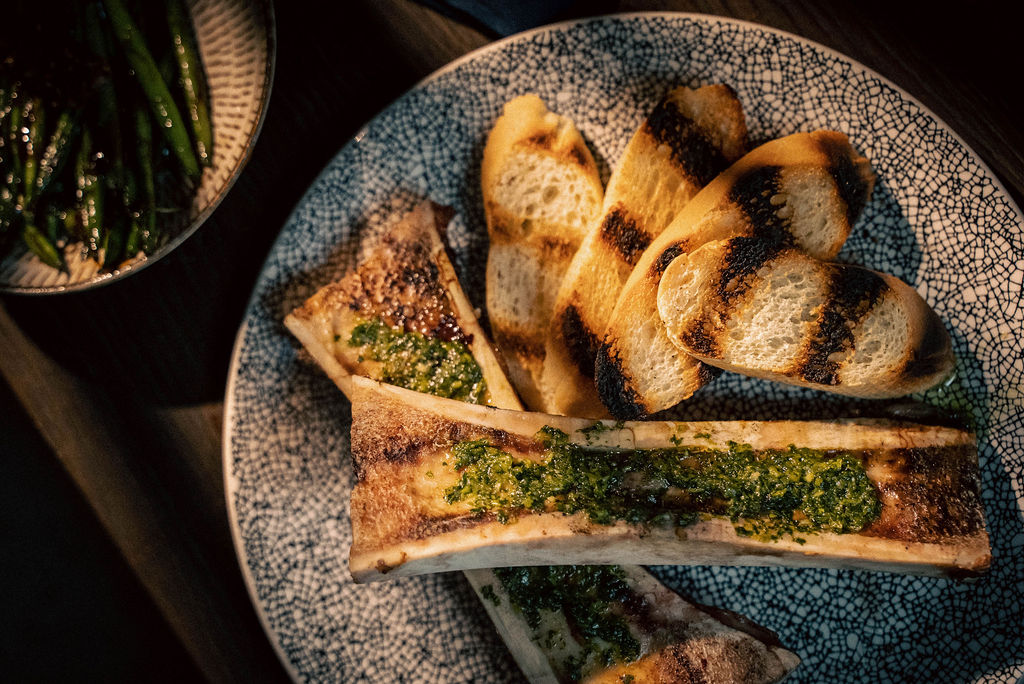
Then it was our turn. We popped bites of tuna-topped crispy rice, fighting as siblings do over the last portion. We unanimously agreed the green beans were the best we’d had. We shared a life-affirming experience over a simple grilled cheese. We slurped our first bone marrow. We sat speechless enjoying a perfectly crispy yet melt-in-your-mouth Tomahawk steak.
Image: Mick Jacob
Just as we licked our fingers for our last bite, the room went dark—the dining room filled with wood smoke. The power had gone out, taking the exhaust fan with it.
An event like this has the potential for panic or uproar from customers feeling robbed of their experience. As a food writer privileged to often get the VIP treatment, I quickly switched to observation mode to see how the Noko team cares for all their guests, not just invited ones.
They quickly and calmly funneled us to their patio and informed everyone of their options: stick around for a parking lot party or opt for a special reservation for a subsequent night. To my surprise, nearly everyone stayed…all smiles. Junior brought the grill’s flaming wood outside and Jon refreshed drinks—on the house. When the power was restored soon after, everyone filed back in, chalking it up to a special experience as opposed to an annoying inconvenience.
That night sealed my status as a super fan, but was solidified in stone during their first birthday celebration a year later. On a Monday night when the restaurant is typically closed, a group of food writers and creators were invited to share a meal with the team to celebrate a groundbreaking year. But, while they kept us well-fed, they opted to bring in their charity partner to speak to the room of influential Nashvillians instead of making the evening about themselves.
This philanthropic spirit is a foundation at Noko—one percent of annual revenue is donated to Nashville Children’s Alliance, a nonprofit providing resources to children who have experienced abuse or violence.
If you’ve dined at Noko, you can likely relate to that VIP treatment. They’re known to make any visit a special one—from friendly staff serving one of the best meals you can find in Nashville to little happies in celebration of a special occasion and even phone calls from the owners to check in the day after your meal.
Southern hospitality isn’t a novel idea, but the way Jon, Wilson, and Junior put it into practice at Noko is the gold standard. For this reason, Noko Nashville is the recipient of our first-ever Southern Charm Award, which recognizes excellence in hospitality.
Here’s the story behind Nashville’s budding hospitality group.
Jon Murray | Image: Mick JacobWilson Brannock | Image: Mick JacobJunior Vo | Image: Mick Jacob
A Serendipitous Story
Jon Murray entered the restaurant industry by washing dishes at Applebee’s. A career in hospitality wasn’t on his radar—in fact, he worked in the music business for six years. But, while living in Charleston during the recession, restaurants were one of his only options for a livable wage. He started serving at O-Ku, climbing the ladder as the years went on. Eventually, he moved to Atlanta to manage that location.
Atlanta-born Wilson Brannock was a karate instructor during his teenage years, but started working in restaurants soon after high school. Just down the road, Dung “Junior” Vo had moved to an Atlanta suburb from Vietnam and was cutting his teeth at a hibachi restaurant learning all things sushi and guest experience.
One fateful day, Jon hired both Wilson and Junior to work at O-Ku. Little did he know, the ball was in motion for what would become a standard-defining team.
“During Covid, we’d go over to each other’s houses and we’d whip up dishes we all loved, and we always steered toward Asian ingredients,” Jon said. The group had all moved to Charleston at this point, and Wilson had moved into Junior’s home.
“I had a legit dream with Wilson in it… that he and I were supposed to start a company,” Jon laughs. “I’ll never forget it. I was driving to Raleigh and called Wilson like I was asking a girl out on a date. Without hesitation, he said yes. And then we bamboozled Junior into coming in.”
They set their sights on Nashville, and after a call to a broker, the ball was in motion to open their own restaurant. Inspired by backyard cooking, Noko would be a neighborhood-focused destination serving Asian-inspired, wood-fired dishes paired with excellent cocktails and high-touch service.
Redefining Southern Hospitality
So what’s their secret to gold-standard hospitality? Start by investing in the team, and the rest will follow.
“We treat them the way they want to be treated, and it goes down the line,” Junior says.
Noko offers their team members paid time off, a consistent work schedule (a rarity in restaurants), a travel stipend—going so far as to help employees plan and book travel, a daily gratitude circle, and much more.
“Our leading stance is to love our people, and then they end up loving our guests,” Jon adds. “Instead of hiring people who have these great resumes, we just hire good people. If you hire good people, good people will do good things. We owe it all to our team.”
In addition to the belief that hospitality starts with hiring, Wilson adds a parting thought for all business owners: “Being kind costs your business nothing.”
Junior likens Noko’s success to a recipe—they didn’t create the idea of an Asian, wood-fired restaurant, just like they didn’t create the idea of hospitality.
“We all lived through these things, and now we have the experience to create our own recipe,” he says. “It isn’t perfect, but we’re working on it every day, week, month.”
Image: Mick Jacob
The First Southern Charm
Receiving Modern South Magazine’s debut Southern Charm award was, unsurprisingly, met with humility.
“The three of us never chase awards; we chase change,” Jon adds. “Part of our story is making sure we change hospitality for the better—not striving to win awards or be the number one restaurant, but to be the best for our people and the best for ourselves.”
Kase | Image: Mick Jacob
The Noko team recently debuted their second restaurant right next door. Kase is a 14-course, 14-seat omakase experience led by Junior. Reservations are Nashville’s hottest commodity these days.
And rumor has it, they aren’t stopping there.
To learn more about the Southern Charms program, click here.
Since early 2023, the bar for premier hospitality was raised in Nashville when Noko opened its doors. Friends and restaurateurs Jon Murray, Wilson Brannock, and Dung “Junior” Vo banded together to create an Asian wood-fired restaurant in a tucked-away East Nashville strip mall, and while everything from the tuna crispy rice to the massive Tomahawk steak and the street food-inspired grilled cheese kept patrons talking, it was the hospitality that stood out above the rest (more on that later).
Noko received Modern South’s inaugural Southern Charm Award for Excellence in Hospitality. Learn more.
Nearly two years later, Noko remains one of Nashville’s buzzy-est and busiest restaurants, so when they teased the addition of a sister spot, the crowd went wild. The highly anticipated omakase experience, Kase, opens December 13, and we’ve got all the details.
The Experience
Kase is a 14-course omakase meal – a Japanese dining experience with a menu selected and led by the chef. Just like Noko next door, the emphasis here is on community and connection– the restaurant hosts three intimate seatings nightly (5:30, 7, and 8:30 p.m.) capping at 14 people per seating. During the 90-minute meal, a team of talented sushi chefs prepare, plate, and share stories behind each impeccable bite.
Each guest is required to do the tasting experience which runs $75 each, an impressive pricepoint compared to comparable experiences, with add-ons like additional fish and hand rolls available.
“We want this to be a lively, fun, energetic experience,” says Jon during a sneak peek for Modern South. “It’s not a traditional omakase, it’s a neighborhood omakase.”
While there are no set pairing menus, Kase offers craft cocktails, wine, sake (including three that aren’t available anywhere else in the state), Japanese whiskey ranging from $9 to $1,000 per pour, and spirit-free beverages.
The Design
The restaurant is located right next to Noko, concealed behind beautiful wooden doors that open to reveal a quaint bar area for guests to gather prior to their seating. The dining room itself is moody and intimate, with just 14 seats surrounding a chef’s counter. Stunning pieces of art are displayed throughout by Dwight Hwang, a master in the art of gyotaku, a thousand-year-old Japanese art form that was originally used to measure fish – ink is applied to the fish itself, then pressed upon rice paper to leave a beautifully detailed impression.
The Menu
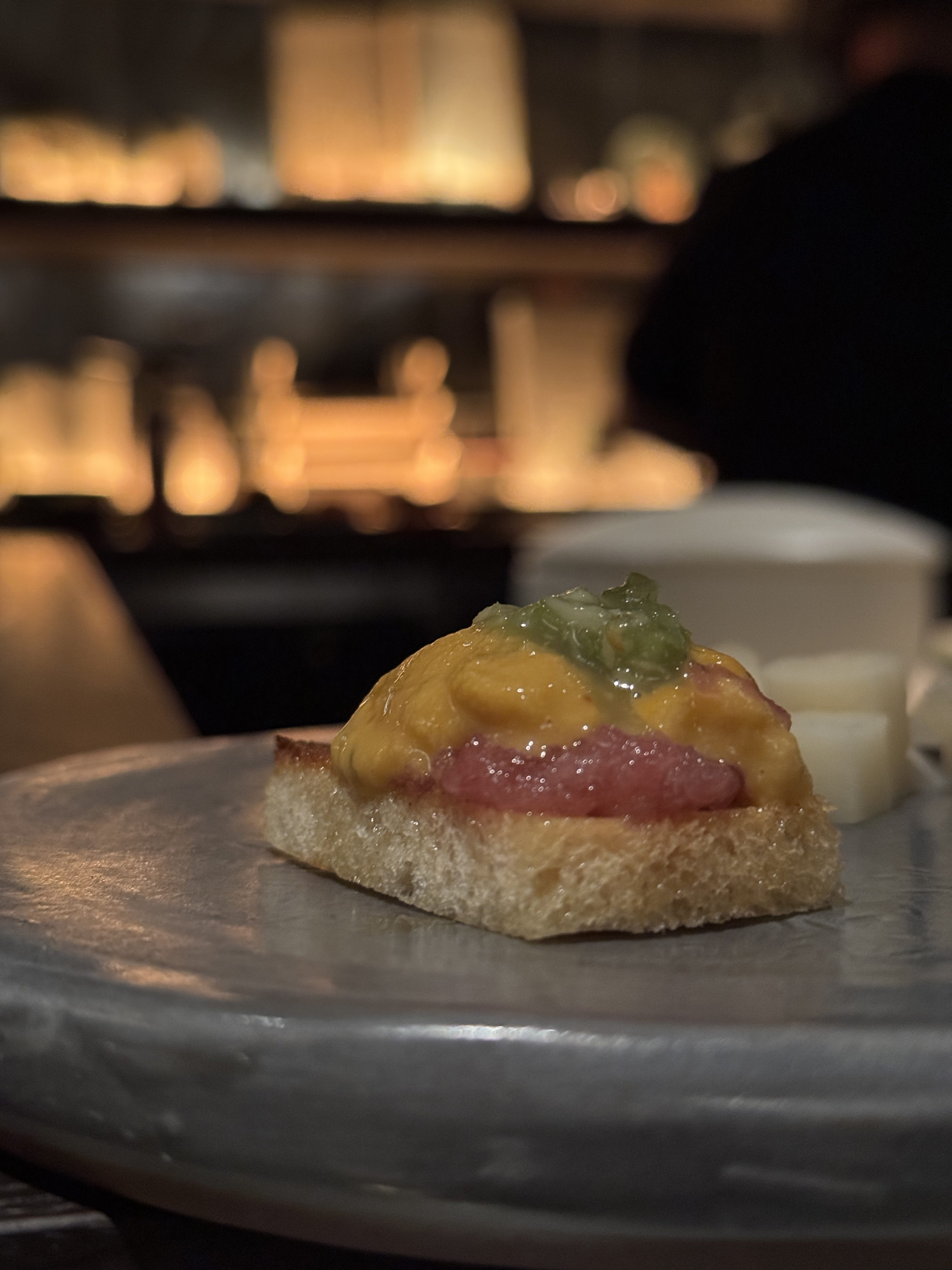
During its debut, Kase will feature carefully prepared fish sourced from places like Japan, New Zealand, Spain, and Hawaii. During my tasting, we enjoyed decadent bites like toast topped with torro and uni, A5 Wagyu cast in torched fois gras, and salmon topped with caviar. But the beautiful thing is, the menu will change, so you’ll have to keep coming back for more.
“Kase loosely translates to ‘a family bond,” Jon adds. “Which is fitting because it’s right next door to Noko.”
Reservations are now available via OpenTable six weeks in advance, with new reservations dropping at midnight nightly. So far, it’s a battle to secure your spot, but we can assure you it’s worth it. May the odds be ever in your favor.
Get Chef Vo’s recipe for mochi pound cake from the Kase x Noko menu.