Featured Image: Sharon Brandwein
But there’s an app for that…
Over the last few years, a renaissance of sorts has been quietly happening across America. A growing number of people are leaving city life behind and returning to nature through farming – my husband and I among them. Enter the era of homesteading.
According to Business Insider, this exodus is fueled by a growing “skepticism of the companies and systems we rely on to sustain us.” That’s another topic for another time, but I will say that for many of us, homesteading and small-scale farming aren’t about building an agricultural empire — not even close. Instead, it’s more of a hard lean-in to self-reliance (which has been lost for so long). Personally, it’s also a move to disconnect and reclaim a slower, steadier life.
And slow and steady it is. There’s a rhythm to farming and caring for animals that feels good for the soul, and in many ways, this life really does feel like stepping backward in time. We wake with the sun instead of an alarm. We collect eggs from the coop and watch our cattle graze in the pasture, confident in the knowledge that someday, we’ll know exactly where dinner came from.
Yes, we’re disconnecting — but maybe not entirely.
In the 13 months since we began this journey, the biggest lesson I’ve learned is: I don’t know what I don’t know. I wasn’t raised on a farm, so there are cosmic gaps in my knowledge, many of which I can’t even see until it’s too late — like the fact that donkeys will try to kill tiny intruders, newborn lambs included.
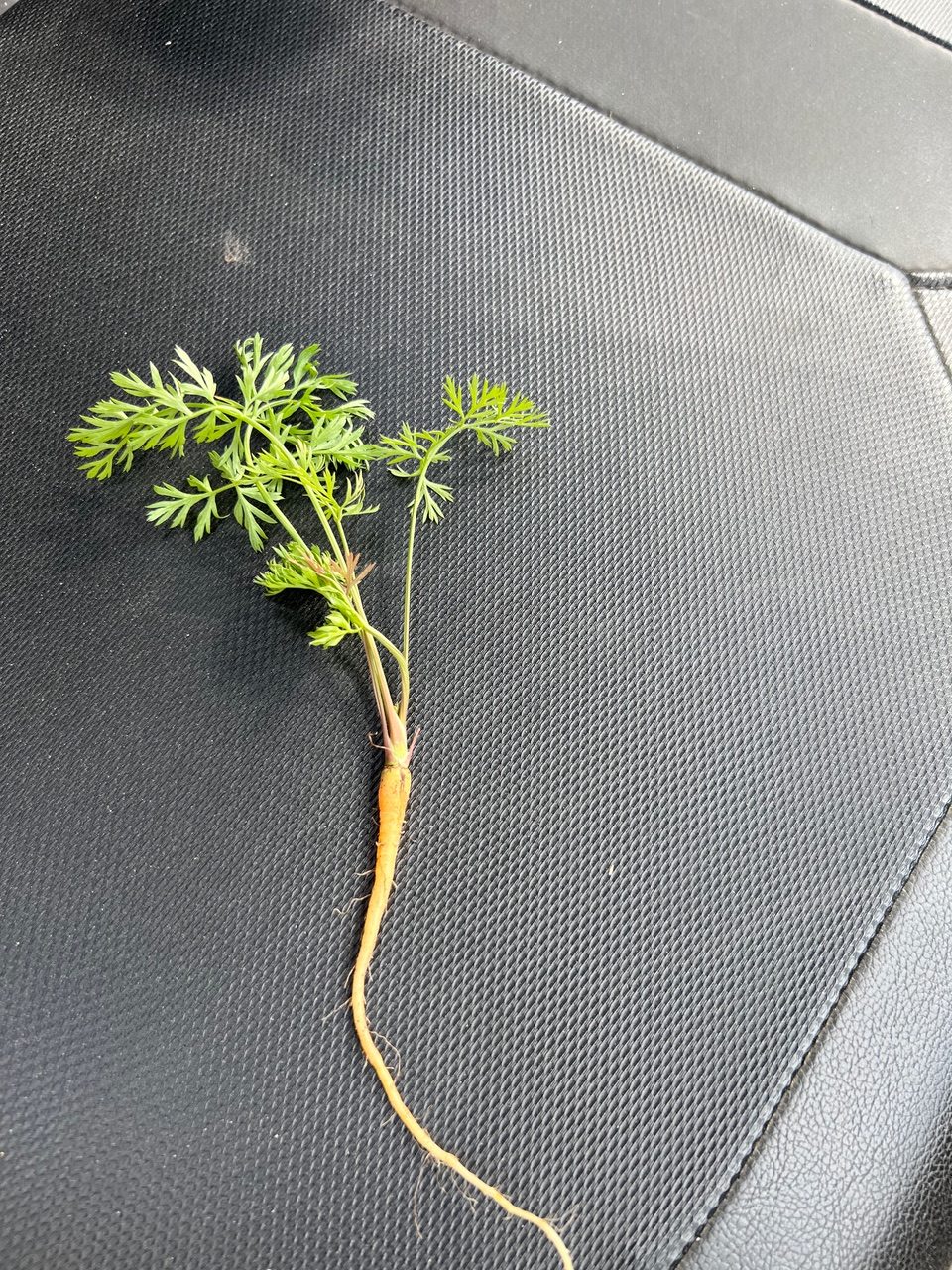
Admittedly, I also have what might be the worst brown thumb known to man. I started carrots in July (they don’t like that). I started those carrots in tiny pots (they really don’t like that). And my okra harvest amounted to 3 whole pods — even though okra is supposed to be idiot-proof.

Knowing that success and failure hinge on information, research has become a daily habit. And while I invested a small fortune in books about farming, most of that research happens online (blasphemy—I know).
Over the last year or so, my husband has done some pretty deep dives into pasture management techniques, cattle nutrition, and fencing solutions — none of it from books. I, meanwhile, have spent countless hours at “YouTube University,” watching expert gardeners explain how to start onions from seed and that Swiss chard should be started in January (yes, January), all of them speaking with the kind of confidence that only comes from years of never having sabotaged a seed packet.
But learn I did. It’s March in Alabama, and I have my carrots directly sown in their outdoor planting beds, as well as my lettuces, peas, and kale (for the cows, not me). Indoors, I have onions sprouting and seeds for tomatoes, cabbages, and all members of the brassica family (cauliflower and broccoli — didn’t know that either) planted in starter pots for spring transplanting. I did the research, and I’m off to the races — sort of.
I had all the information, but planning my outdoor garden was another kettle of fish.
The sheer amount of information I collected left me feeling overwhelmed and paralyzed. Instead of getting out there, turning up dirt and sowing my seeds, I did what any committed procrastinator would do: I bought a book on gardening and then another (because that’s what I needed, more information). I hid behind planning and put off the actual “doing” — my empty plant beds judging me more with each passing day.

How much room does a head of cabbage really need? (I don’t know.)
Which plants make good companions for onions? (Don’t know that either)
How do I save myself from having 10 heads of lettuce that must be used now? (Nope)
Are snow peas direct-sown, or should they be started indoors? (What?)
So, more videos it is… and that’s ok, because here’s another lesson (we’ll call this #363). Things don’t have to be all-or-nothing, black-or-white. There’s usefulness in the in between. We started this farm to return to a simpler way of life, but that doesn’t mean we have to throw the baby out with the bathwater; using technology doesn’t make this lifestyle any less authentic. I need help, and in the absence of a community or older generations to show me, I have to use the tools available to me, YouTube and Facebook reels included.
The fact is, farmers have always used the best tools available to them. Historically, that meant steel plows, tractors, and irrigation systems. Today, those tools have gone digital, and if the World Wide Web helps me avoid planting broccoli with my tomatoes, while harvesting fewer failed batches of Swiss chard — I’ll take it because it allows me to spend more time on the things that matter — hugging donkeys, rocking lambs in my arms, and letting Maple give me sweet cow kisses.
For more stories about life in the South, click here.